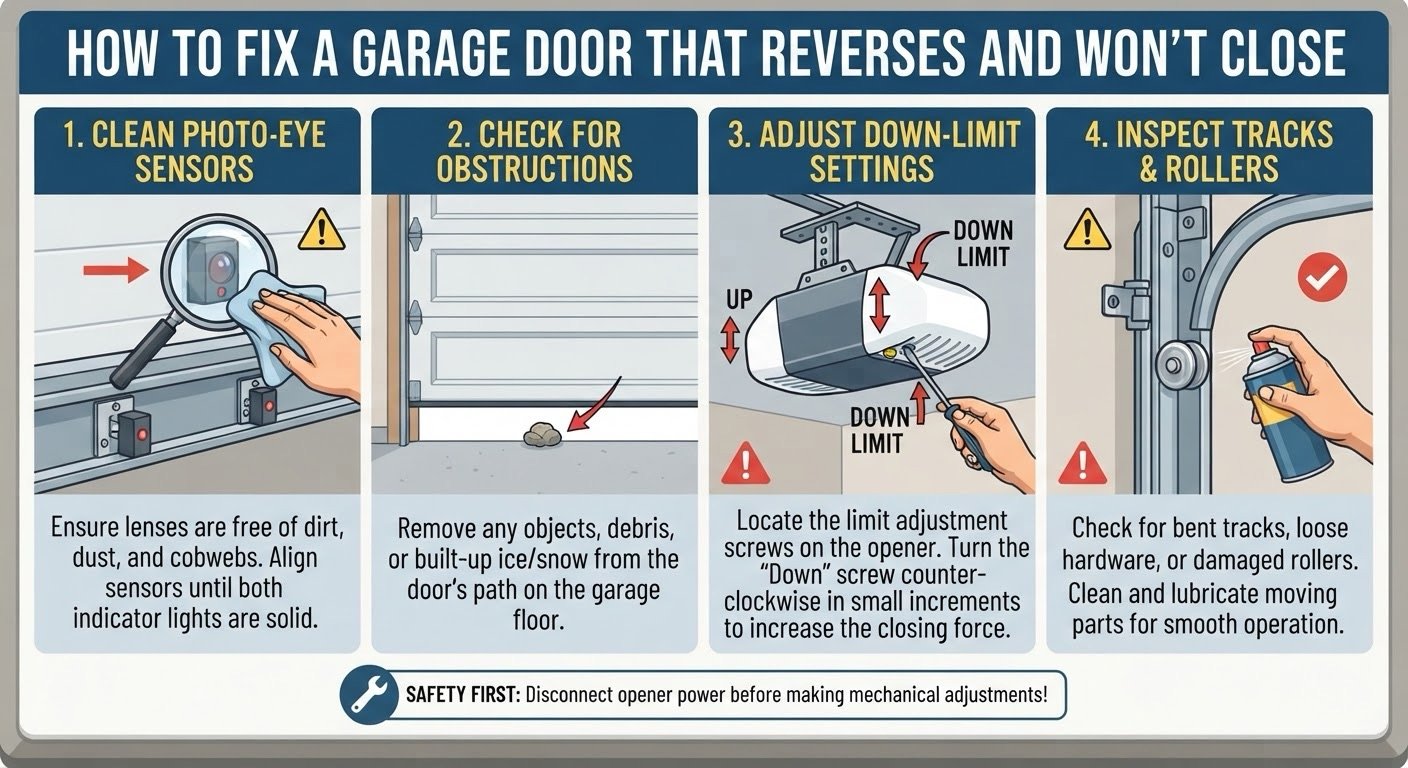
If your garage door opens smoothly but acts up when closing—sometimes reversing back up halfway or requiring you to hold down the wall button until it fully shuts—it can be extremely frustrating.
This is a very common issue, and in most cases, you don’t need to call an expensive technician. Here is a simple step-by-step guide to diagnosing and fixing the problem in under 15 minutes.
Why Does This Happen?
Modern garage doors are equipped with a mandatory safety reversal system. If the system detects an obstruction, misalignment, or sensor failure, it automatically reverses the door to prevent accidents. When your door reverses for no apparent reason, it usually comes down to one of three common culprits.
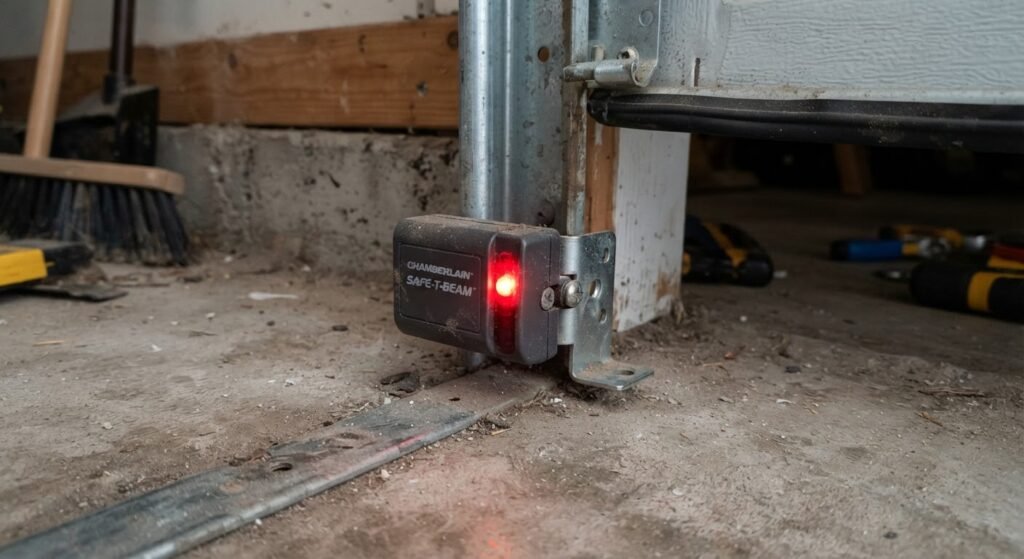
Step 1: Clean and Align the Safety Sensors (The Photo-Eye)
The most frequent cause of a garage door reversing midway is dirty or misaligned safety sensors (the small electronic “eyes” located near the bottom of the tracks on both sides).
- Check the Indicator Lights: Look at the small LED lights on both sensors. If a light is blinking, flickering, or turned off, the sensors are misaligned or blocked.
- Wipe the Lenses: Dust, spider webs, or mud often accumulate on the lenses. Gently wipe them clean with a soft microfiber cloth.
- Adjust the Alignment: If one sensor was bumped, gently bend or adjust its bracket until both sensor lights turn solid green or red, indicating a clear, unbroken invisible beam between them.
Step 2: Clear Track Obstructions and Lubricate Moving Parts
Sometimes physical friction tricks the safety mechanism into thinking something is blocking the door.
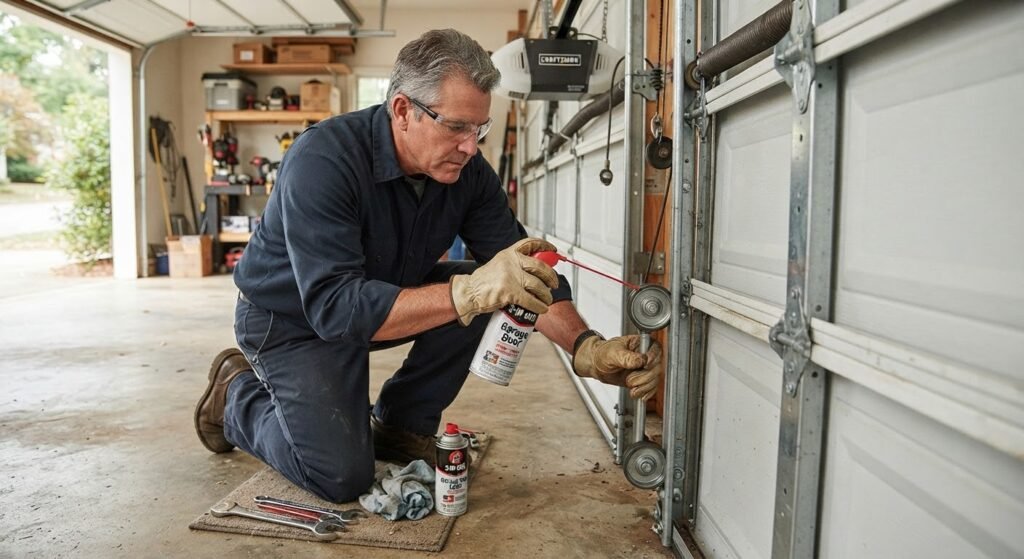
- Inspect the Tracks: Check the metal tracks for accumulated dirt, debris, or small pebbles. Wipe them down thoroughly.
- Lubricate Rollers and Hinges: Apply a silicone-based or specialized garage door lubricant to the rollers, hinges, and springs. Avoid heavy grease, as it attracts dust and grime.
Step 3: Adjust the Close-Limit Switch
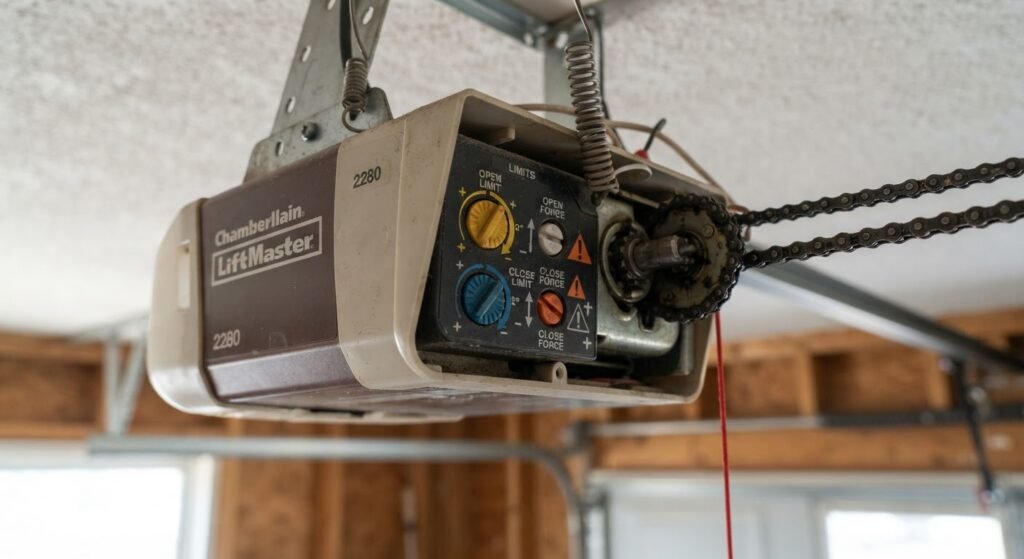
If your garage door touches the ground and then immediately reverses back up, your Close-Limit Switch (found on the side or back of your garage door opener motor unit) needs a minor adjustment.
- Locate the adjustment screws on the motor unit (usually labeled Up and Down or with arrows).
- Using a screwdriver, turn the Down limit screw very slightly (about a quarter to a half turn) in the direction that decreases the travel distance.
- Test-close the door. If it still bounces back, adjust it slightly more until the door closes firmly and stops without reversing.
Wrapping Up
If your garage door requires you to hold down the wall button to close, it is almost always a safety sensor issue (Step 1). If it reverses halfway down on its own, cleaning the tracks or tweaking the limit switch usually fixes it right up.
Take a few minutes to check these components before spending money on a professional repair service!
Disclosure: This post may contain affiliate links. If you use these links to buy something we may earn a commission at no additional cost to you.
Leave a Reply