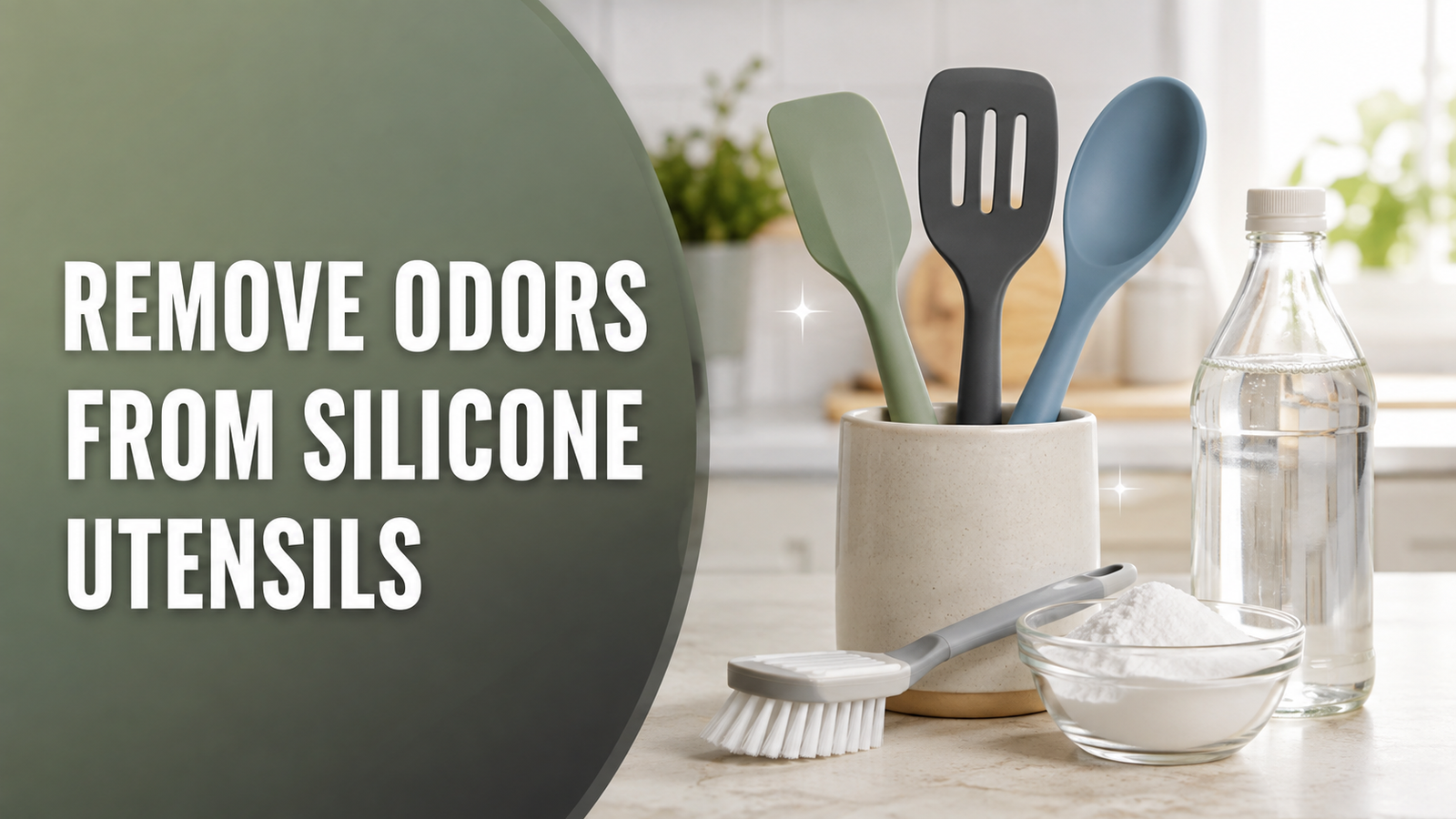
To remove food odors from silicone kitchen utensils, begin by washing away any invisible grease with hot, soapy water while paying close attention to edges, slots, and handle seams. If the smell remains after the utensil dries, soak the silicone portion in baking soda and warm water or in equal parts warm water and plain white vinegar. Wash and rinse it again before allowing it to dry completely.
Do not bake, boil, or fully submerge an unknown utensil simply because its head appears to be silicone. Wood, plastic, adhesives, internal supports, and bonded handles may have different care limits.
Why Silicone Utensils Can Still Smell After Washing
Strongly aromatic foods such as garlic, onions, fish, curry, and tomato-based sauces often leave behind more than a visible stain. A thin oily film can remain on the utensil, especially around textured surfaces, drainage holes, flexible edges, and the seam where a silicone head meets its handle.
Sometimes the silicone is not the actual problem. Food may be trapped inside a removable head, underneath a loose edge, or around a rigid internal core. A scented dishwasher detergent can also leave a fragrance that is mistaken for a food odor.
Similar buildup can hide in other removable silicone parts, so it may also help to learn how to clean a water bottle lid and silicone gasket properly.
A quick inspection can help identify the source:
- A greasy or tacky surface usually needs more thorough washing with dish soap.
- An odor concentrated near the handle may indicate trapped food or moisture.
- A floral or chemical smell may come from detergent residue.
- A burned smell after high-heat use may indicate heat damage rather than leftover food.
Check the Utensil’s Construction First
Silicone kitchen tools are not all constructed the same way. Before soaking, dishwashing, boiling, or applying heat, determine which type you have:
- One-piece silicone utensil: The handle and working end appear to be one continuous piece.
- Removable silicone head: The flexible head separates from a wood, metal, or plastic handle.
- Bonded mixed-material utensil: The silicone is permanently attached to another material.
- Silicone-coated tool: A thin silicone exterior covers a rigid internal structure.
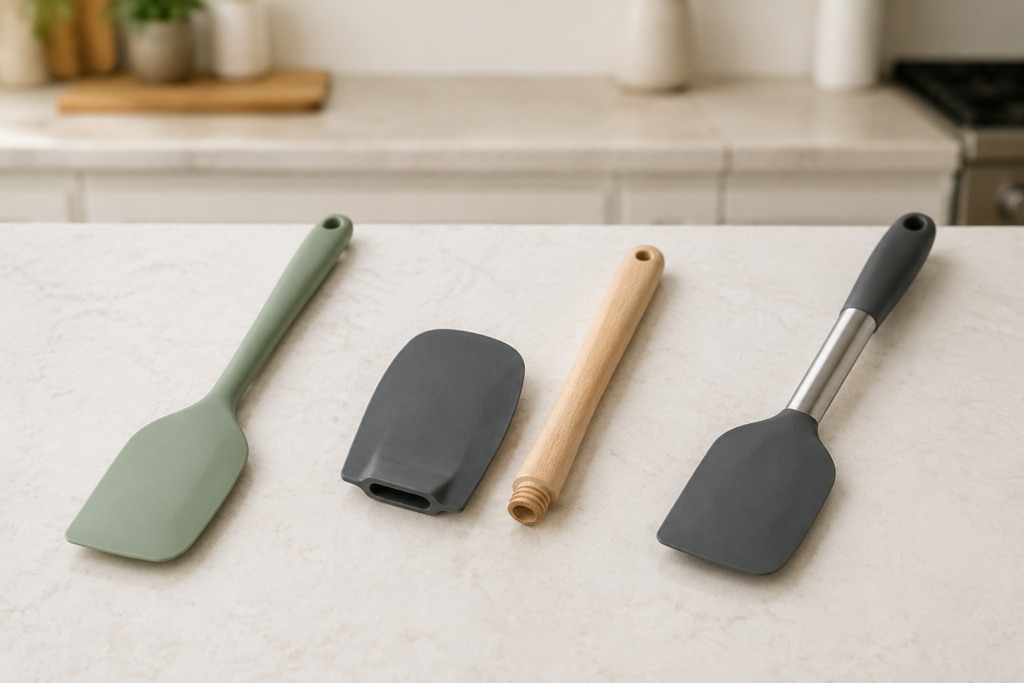
Check the product label or manufacturer’s care instructions when available. For example, Le Creuset’s silicone care guidance says its accessories made entirely from silicone can go in the dishwasher, while the wooden handles of its removable-head utensils should be washed by hand and dried thoroughly. That guidance applies to those products and should not be assumed for every brand.
Step-by-Step Method for Removing Food Odors
1. Let the Utensil Cool and Remove Loose Food
Allow a hot utensil to cool before cleaning it. Rinse away loose food, checking any slots, grooves, flexible edges, and the joint between the head and handle.
Remove the silicone head only if it was designed to detach. Forcing apart a bonded utensil can tear the silicone or create a gap where food and water collect.
2. Wash Away the Oily Film
Fill a basin or bowl with comfortably hot water and mild dish soap. Wash the utensil with a soft sponge or nylon dish brush. Give extra attention to:
- Both sides of the utensil
- Thin scraping edges
- Slots and drainage holes
- Raised logos or textured areas
- The point where the head meets the handle
A brush is particularly helpful when a sponge cannot reach narrow openings.
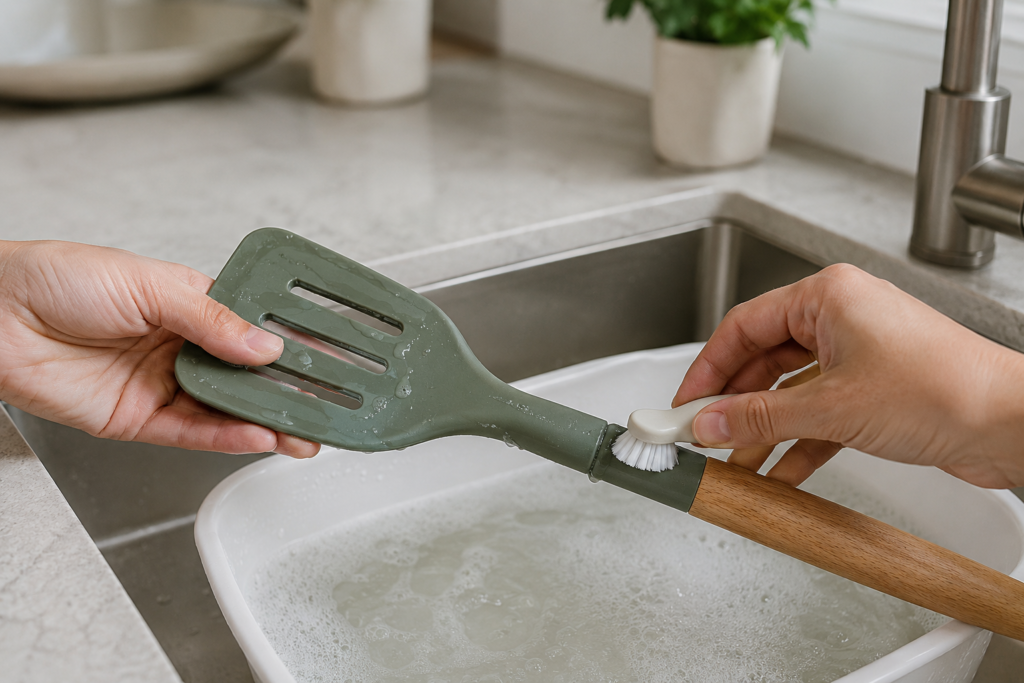
Rinse the utensil thoroughly. If it smells like dish soap rather than food, wash it once more with a small amount of unscented dish soap and give it an extra rinse.
Let the utensil dry before judging the result. Water and detergent fragrance can temporarily mask the original odor.
3. Use a Baking Soda Soak for Lingering Odors
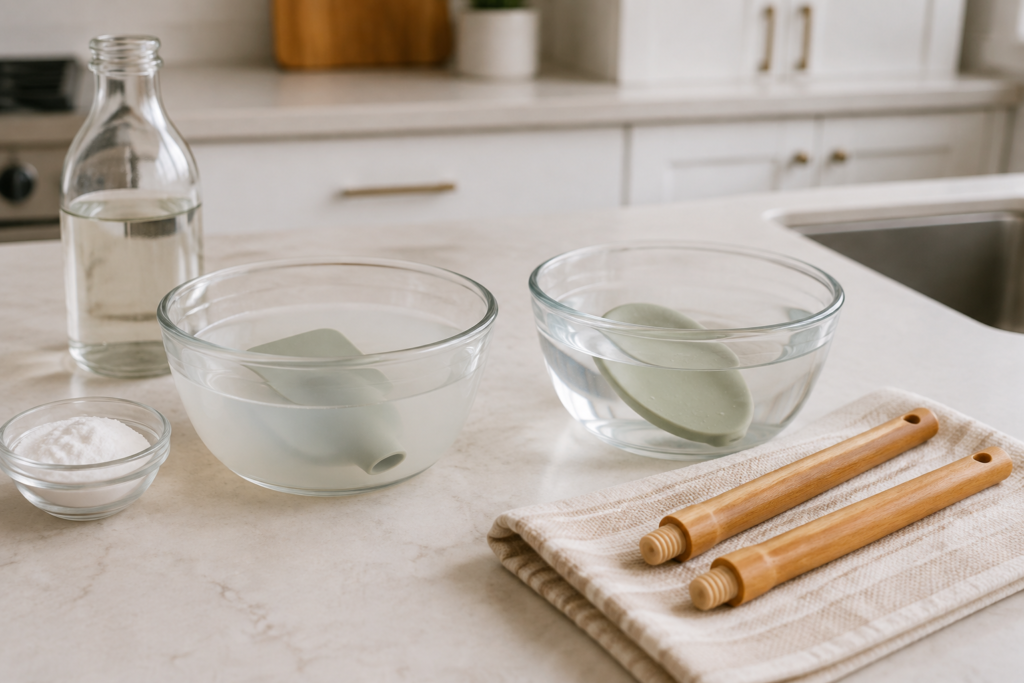
If regular washing does not work, stir baking soda into a bowl of warm water and soak the silicone portion for a few hours. Keep wood and any material that should not be submerged out of the water.
After soaking:
- Scrub the silicone gently with a soft sponge.
- Wash it again with dish soap.
- Rinse until no powdery residue remains.
- Allow it to air-dry fully.
For a utensil that cannot be submerged, mix baking soda with enough water to form a loose paste. Spread it over the silicone, let it sit, and then wash it away without using a harsh scouring pad.
4. Try Diluted White Vinegar as an Alternative
For an intact silicone piece, equal parts warm water and plain white vinegar provide another deodorizing option. This approach is also included in Stasher’s care instructions for its silicone products.
Immerse only the portion that can safely be soaked. Check the item periodically rather than leaving a mixed-material tool submerged indefinitely. Wash with dish soap afterward to remove the vinegar smell, rinse well, and dry.
Use baking soda and vinegar as separate treatments. Combining them creates plenty of foam but does not produce a stronger cleaning solution.
5. Use the Dishwasher Only When Approved
A dishwasher can provide a longer wash and more complete rinse than quick hand-washing, but only use it if the utensil is labeled dishwasher-safe.
Separate removable components when the manufacturer recommends doing so. Position the pieces so water can reach all surfaces and so hollow areas do not collect dirty water. Hand-wash wood handles and other components excluded by the care instructions.
After the cycle, check that the utensil is clean and completely dry before returning it to a drawer.
Should You Bake or Boil Smelly Silicone Utensils?
Heat is sometimes recommended online as a universal solution for silicone odors, but it is not appropriate for every utensil.
Some manufacturers approve oven treatment for specific solid-silicone products. Stasher, for example, provides an oven method for stubborn odors on its own oven-safe silicone bags and bowls. That does not establish a safe temperature or heating time for an unrelated spatula, spoon, or set of tongs.
Do not put a utensil in the oven when it has:
- A wood or plastic handle
- Adhesive or bonded joints
- A rubberized grip
- Unknown internal components
- Cracks, splits, or exposed material
- No clear oven-safe instructions
The same caution applies to boiling. Use heat only when the manufacturer confirms that the entire utensil—not merely the silicone head—is suitable for that treatment.
Odor Removal Is Not the Same as Sanitizing
Baking soda and vinegar may help with odors, but they should not be treated as guaranteed sanitizers. Cleaning removes food residue and dirt; sanitizing is a separate process intended to reduce remaining germs.
The CDC’s household cleaning guidance notes that careful cleaning with soap and water is sufficient in many routine household situations. If a utensil was exposed to raw meat juices, recalled food, floodwater, or another meaningful contamination risk, follow the manufacturer’s approved sanitizing instructions or use a dishwasher sanitizing cycle when the item permits it.
Never mix bleach with vinegar, dish soap, or another cleaner. The CDC warns that mixing bleach or disinfectants with other cleaning products can release dangerous vapors.
Cleaning Mistakes That Can Make the Problem Worse
Avoid these approaches when deodorizing silicone kitchen tools:
- Soaking a wooden handle: Wood can absorb water, become rough, or eventually crack.
- Using steel wool or a metal scraper: Cuts and scratches can create places where residue collects.
- Baking an unknown utensil: A heat-resistant silicone head does not make the entire tool oven-safe.
- Using strong solvent cleaners: A food-contact utensil should be cleaned only with products appropriate for its material and intended use.
- Masking the odor with highly scented detergent: Fragrance may add another persistent smell without removing the original residue.
- Storing the utensil while damp: Moisture can remain around joints and enclosed areas.
When to Replace a Silicone Utensil
A lingering smell does not automatically mean an intact utensil is unsafe. However, replacement is sensible if you notice:
- Deep cuts, tears, or peeling silicone
- A loose head that traps food but cannot be cleaned properly
- An exposed internal core
- Persistent stickiness after repeated washing
- A strong chemical or burned odor following overheating
- Mold or residue inside an inaccessible crack
- Significant warping that affects normal use
Discoloration alone can occur after contact with strongly colored foods and does not necessarily mean the utensil has failed. Evaluate the condition of the material, its cleanliness, and any manufacturer guidance before deciding.
How to Keep Odors From Returning
Wash silicone utensils soon after using them with oily or aromatic foods. Once residue dries around a seam or textured edge, it becomes more difficult to remove.
A few habits can also help:
- Scrub slots and edges instead of wiping only the flat surfaces.
- Separate removable heads from handles for cleaning and drying.
- Rinse thoroughly after using scented dishwasher detergent.
- Allow every component to dry completely before reassembly or storage.
- Keep utensils loose in the dishwasher rather than nesting them together.
- Consider dedicating one spatula or spoon to strongly spiced dishes if odors repeatedly transfer.
Frequently Asked Questions
Q. Is baking soda safe for silicone kitchen utensils?
A. A baking soda and warm water soak is a practical option for many intact silicone items. Use a soft sponge rather than aggressive dry scrubbing, rinse away all residue, and check the manufacturer’s instructions when the utensil includes other materials.
Q. Will vinegar damage silicone utensils?
A. Diluted white vinegar is used in the care guidance for some silicone products. The greater concern is often the utensil’s handle, adhesive, or internal construction. Soak only the silicone portion unless the complete item is approved for immersion.
Q. Why does my silicone spatula smell like dishwasher detergent?
A. Fragranced detergent or incomplete rinsing may be responsible. Rewash the spatula with a small amount of unscented dish soap, rinse it thoroughly under running water, and let it dry before checking again.
Q. Can I boil a silicone spatula to remove odors?
A. Only boil it if the manufacturer confirms that the complete utensil is suitable for boiling. A silicone head may tolerate heat while a plastic handle, adhesive, or internal component does not.
Q. Can I use bleach just to remove the smell?
A. Bleach is not necessary for ordinary deodorizing. Begin with dish soap, followed by baking soda or diluted vinegar when appropriate. If sanitizing is genuinely needed, follow the product label and utensil manufacturer’s directions, and never combine bleach with another cleaner.
Conclusion
Most food odors can be removed from silicone utensils by first eliminating oily residue, then using either a baking soda soak or diluted white vinegar on the silicone portion. Check the utensil’s construction before soaking or heating it, rinse thoroughly, and allow every component to dry. If the tool is split, sticky, burned, or impossible to clean around its joints, replacing it is safer than repeatedly applying harsher treatments.