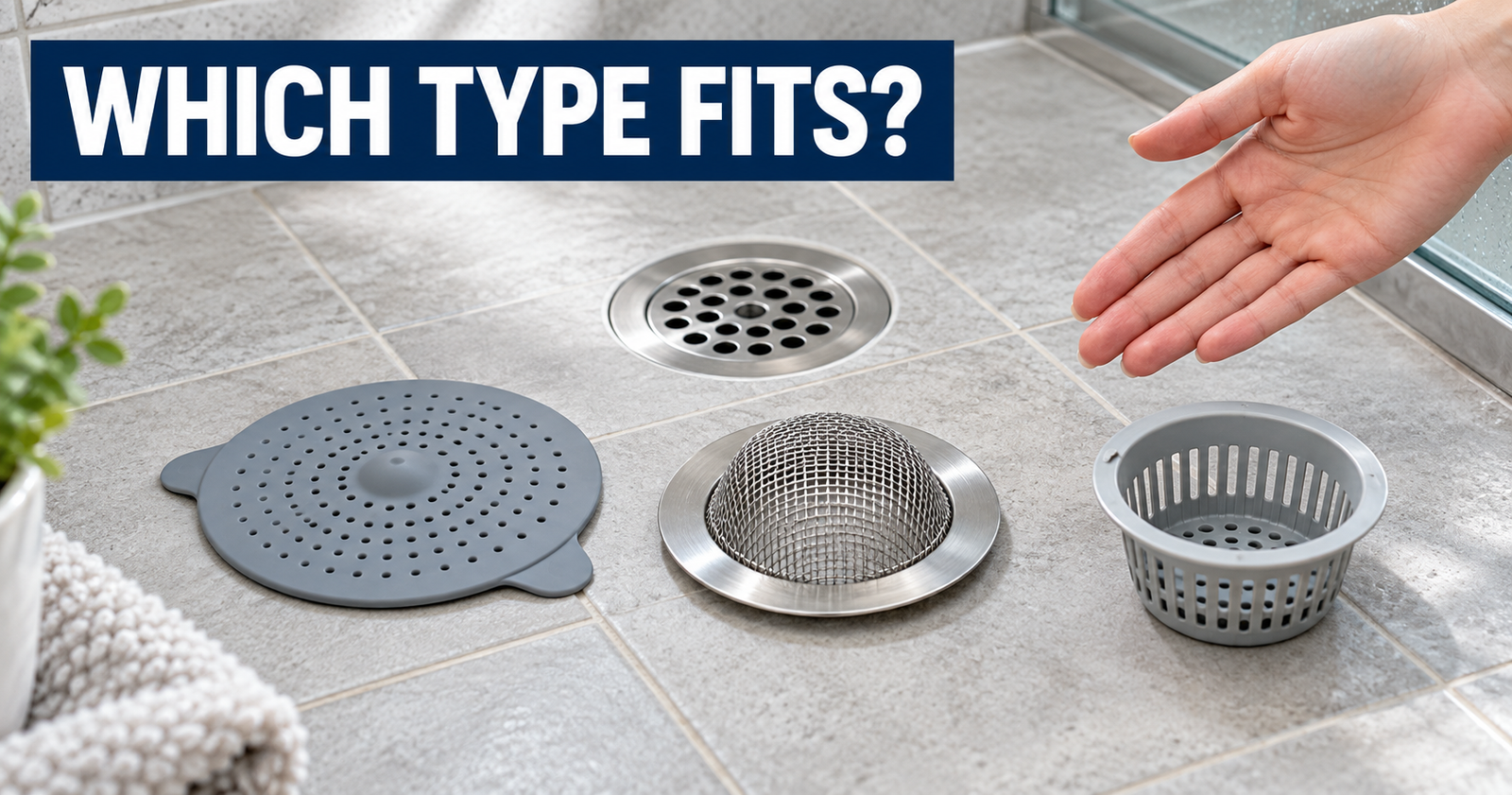
A shower drain hair catcher is useful only when it matches the drain already in your shower. A flat surface catcher usually works with a low, unobstructed grate. A domed design can clear some raised stoppers. An in-drain catcher needs an accessible opening with enough space below it. Linear drains often require a system-specific basket or strainer.
Before buying anything, check the drain shape, the usable surface around it, and whether the existing grate or stopper is meant to be removed. A product described as “universal” can still rock, leave gaps, restrict water, or interfere with a stopper on a particular drain.
Quick Fit Guide
| What you see | Type to consider first | Common reason it may not fit |
|---|---|---|
| Flat or nearly flat grate on a smooth surface | Flat silicone or mesh over-drain catcher | Raised screws, deep grout lines, or a rim prevent full contact |
| Raised or pop-up stopper | Domed over-drain catcher | The dome is too short or narrow, or it blocks stopper operation |
| Open drain or a stopper designed for tool-free removal | Basket-style or in-drain catcher | Internal crossbars, shallow depth, or an incompatible stopper mechanism |
| Long linear drain | Manufacturer-compatible basket or strainer | Generic round catchers do not match the channel or removable grate |
Use this table as a starting point, not a compatibility guarantee. The actual measurements and installation instructions for both the drain and the catcher control the final choice.
Identify the Drain Before Comparing Materials
Remove loose hair and wipe away surface residue so you can see the drain clearly. Do not unscrew a fixed grate, pry out a sealed component, or force a stopper loose just to install a generic accessory. Renters should obtain approval before altering any attached drain part.
Flat or Nearly Flat Grate
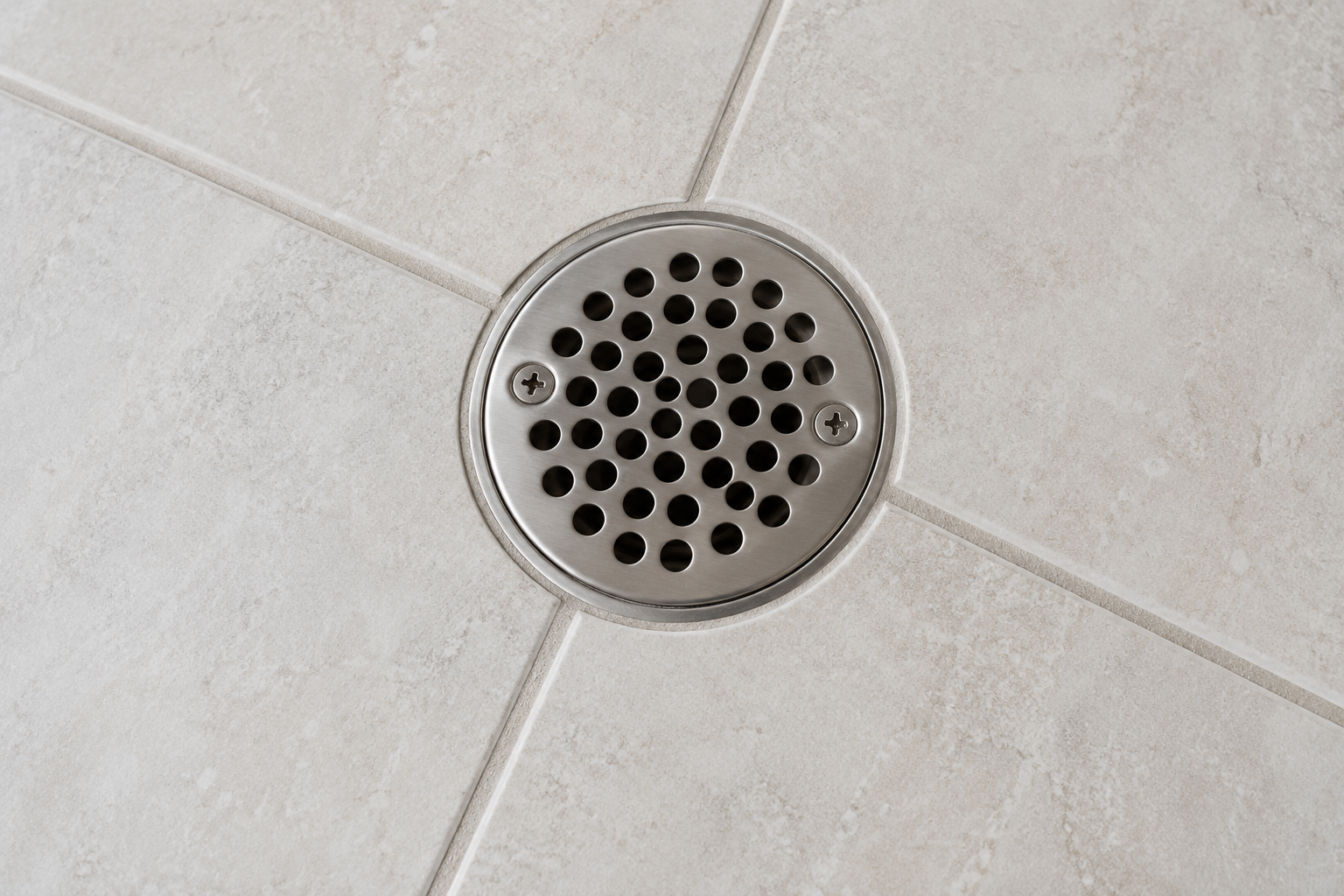
A surface catcher is the simplest option when the grate sits close to the shower floor. Look beyond the overall diameter. The edge must rest on a level area rather than on screw heads, a raised metal rim, tile edges, or grout channels.
If the shower floor is textured, a flexible catcher may not form consistent contact. A rigid catcher can also rock if the grate or surrounding tile is uneven. Either problem may let hair pass underneath.
Raised or Pop-Up Stopper
A flat cover may balance on top of a raised stopper instead of sealing around the drain. A domed catcher provides clearance, but its inside height and width must accommodate the stopper while its outer edge rests flat on the shower surface.
If the stopper is used to hold water, confirm that it remains accessible and functional. A catcher that pushes the stopper down, holds it partly closed, or prevents normal operation is not a suitable match.
Open Drain or Removable Stopper
An in-drain catcher may keep the shower floor clear, but it has more compatibility variables than a surface cover. Check the opening width, available insertion depth, internal crossbars, and the way the stopper attaches.
Only remove a stopper or grate when the manufacturer intends it to be removed for routine cleaning. An insert should slide in and lift out without force. If it binds on internal hardware or disappears too deeply to retrieve comfortably, use a surface design instead.
Linear Drain
A linear drain is a channel system rather than an oversized round drain. Many designs have a removable grate with a debris basket or cleaning access beneath it. Check the drain manufacturer’s care instructions and compatible components instead of placing a generic insert inside the channel. For example, official guidance for the Schluter KERDI-LINE system explains that its grate can be removed to clean the drain housing and pipe.
Silicone, Metal, and In-Drain Catchers Compared
Material affects flexibility and cleaning, but it does not correct a poor shape match. Start with the drain configuration, then compare the practical tradeoffs.
Flexible Silicone Over-Drain Catchers
Silicone catchers sit on the shower floor and require no internal installation. Flat versions suit some low grates, while domed versions are designed to clear certain raised drains or stoppers. Some include a weighted section to help them stay down.
They are easy to lift for cleaning, but the broad edge needs reliable contact. Textured tile, deep grout, a sloped transition, or a raised drain rim may allow the edge to curl or shift. Fine openings can also collect soap residue, so a clean catcher may still drain more slowly than the uncovered grate.
Choose this type when you want a removable surface option and have enough smooth, level space around the drain. Skip it if the edge cannot remain flat during normal water flow.
Rigid Metal or Mesh Catchers
Rigid catchers include flat screens, shallow baskets, and cup-like strainers. They do not flex into grout channels, which can be helpful on a truly level surface but problematic on an uneven one. The rim should sit securely without wobbling and should not have rough, bent, or sharp edges.
Do not assume every silver-colored catcher has the same metal or finish. Check the manufacturer’s material and care information. Avoid dragging metal across acrylic, coated metal, natural stone, or another surface that may scratch.
Very fine mesh can capture small debris, but it can also lose flow sooner as hair and residue accumulate. A coarser pattern may drain more freely but allow shorter hair to pass. The useful balance depends on the household and the shower’s normal flow.
In-Drain Catchers
An in-drain catcher collects hair below the visible shower surface. This can leave more open floor area, but the design must fit both the opening and the internal space. Product-specific fit ranges are more useful than a general “universal” label.
This type makes sense when the drain is intentionally accessible, the insert does not interfere with a stopper or crossbar, and it can be removed easily for cleaning. It is a poor choice when installation requires forcing, unscrewing an unfamiliar assembly, or leaving a retrieval part where it creates a tripping or snagging issue.
Measure the Parts That Actually Affect Fit
You do not need to dismantle the drain. Record only the visible dimensions and obstructions that relate to the catcher style you are considering.
- Identify the visible drain type: fixed grate, removable grate, open drain, raised stopper, or linear channel.
- Measure the drain opening or grate, plus the level area surrounding it.
- For a domed catcher, measure the stopper at its widest and tallest visible points.
- For an in-drain design, look for crossbars and compare the visible depth with the product’s fit diagram. Do not probe deeper with a sharp object.
- Note raised screws, grout lines, tile transitions, and textured surfaces that could create a gap.
- Confirm how the catcher is removed and cleaned before ordering it.
Take a clear overhead photo with the measurements visible. It is easier to compare that photo with a manufacturer’s fit diagram than to rely on memory while shopping.
Test the Catcher Without Hiding an Existing Clog
A hair catcher prevents some new hair from entering the drain; it does not clear a restriction already in the pipe. If the uncovered drain is slow, first clear the existing shower drain safely or arrange appropriate service.
After normal drainage is restored, place the clean catcher according to its instructions. Run the shower at its usual flow while standing where you can observe safely without stepping into pooling water. Check four things:
- Water reaches the drain without spreading farther across the shower floor.
- The catcher does not float, rotate, rock, or expose a large edge gap.
- The stopper remains usable when applicable.
- The catcher can be lifted out without tools or force.
Recheck after the first few showers. Hair visible beyond the edge suggests a fit problem. Pooling with a clean catcher may mean its openings are too restrictive or the drain is still slow. Remove the catcher and compare the bare-drain flow before deciding what is wrong.
Cleaning and Finish-Safety Checks
There is no single cleaning interval that fits every household. Long hair, multiple users, pet washing, and residue from hair products all affect how quickly a catcher fills. Inspect it frequently at first, then use the amount you actually find to set a routine.
Place captured hair in the trash rather than washing it back into the drain. Rinse the catcher and follow its care instructions. Avoid abrasive pads on silicone, polished metal, coated parts, or delicate shower finishes. Do not combine cleaners, and do not leave a cleaning chemical on the catcher or shower surface longer than its label permits.
Check flexible edges for curling, metal rims for damage, and in-drain inserts for easy removal. A catcher that has become distorted, rough, or difficult to retrieve should be replaced or discontinued. This quick inspection also fits naturally into a seasonal home maintenance routine.
When a Hair Catcher Is Not the Solution
Stop treating the problem as routine hair collection if the shower drains slowly with the catcher removed, more than one fixture is slow, sewage odor persists, or water appears outside the shower. Those symptoms can point to a deeper blockage, venting issue, failed seal, or another plumbing problem that a surface accessory cannot correct.
Also stop if the grate is corroded, the drain body moves, the surrounding tile or shower base is damaged, or access would require plumbing disassembly. Renters should report those conditions to the property manager. A qualified plumber can determine whether the issue is local to the shower or part of a broader drainage problem.
Frequently Asked Questions
Can a shower hair catcher make the drain slower?
Yes. A clean catcher may restrict flow if its openings are too fine, its edge blocks part of the grate, or it does not sit correctly. Test the uncovered drain first. If the bare drain is also slow, address that restriction before choosing another catcher.
Do I have to remove the original drain cover?
Usually not for an over-drain catcher. An in-drain model requires an accessible opening, but a fixed, screwed, sealed, or system-specific cover should not be removed merely to fit a generic accessory. Follow the drain manufacturer’s instructions.
Is silicone or stainless steel the better material?
Neither is better for every shower. Silicone can conform to a smooth surface but may lift on texture or grout. Metal stays rigid but can wobble on an uneven grate and must have a smooth, finish-safe rim. Shape, stability, drainage, and cleaning access matter more than material alone.
What if the catcher collects almost no hair?
Inspect the surrounding floor and underside of the catcher. Hair outside the edge or beneath the rim indicates that water is bypassing it. If hair is not visible anywhere and the drain remains clear, collection may simply be light; continue observing rather than assuming the product is defective.
Conclusion
Choose a shower drain hair catcher by matching its design to the drain, not by relying on a universal-fit claim. Identify the grate or stopper, measure the clearances that affect placement, and test normal water flow with the catcher clean. The right option is one that stays stable, allows drainage, and comes out easily for cleaning. If the bare drain is already slow, solve that problem before covering it.