
A musty smell in a front-load washer usually comes from moisture mixed with detergent, fabric softener, lint, or soil left in a damp part of the machine. The door gasket is the first place to inspect, followed by the detergent dispenser and the inner drum.
Avoid adding more cleaner before locating the strongest source of the odor. A cleaning cycle may freshen the drum temporarily, but it cannot remove debris trapped inside a gasket fold or residue left in a dispenser housing.
Find Where the Washer Smell Is Strongest
Open the washer after it has been empty for a while and check each accessible area separately.
| What you notice | Likely area to inspect first |
| Odor is strongest around the door opening | Door gasket and inner door glass |
| Odor is strongest near the detergent drawer | Dispenser drawer and housing |
| Clothes smell sour after sitting in the washer | Damp laundry and moisture inside the drum |
| Odor returns soon after a cleaning cycle | Gasket folds, dispenser, or an accessible pump filter |
| Smell resembles a drain or sewer odor | Drain hose, standpipe, or household plumbing |
| Smell is hot, burning, or electrical | Stop using the washer and arrange service |
A drain-like smell may be coming from the plumbing behind the washer rather than from residue inside the machine. Do not disconnect or reposition the drain hose without checking the washer’s installation instructions.
Clean the Door Gasket First
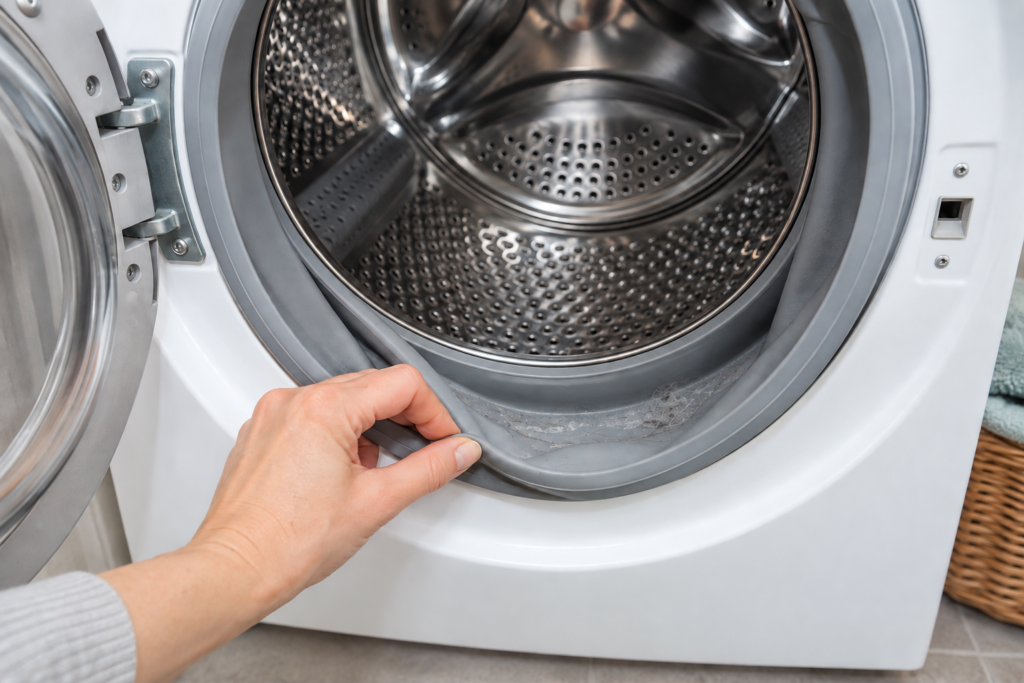
Turn the washer off and make sure the drum is empty. Inspect the entire rubber gasket, including the lower folds where water, hair, lint, and small objects may collect.
Do not pull the gasket farther than it moves comfortably. Some designs have drainage openings or molded sections that can be damaged by sharp tools.
- Remove loose hair, lint, and small objects by hand.
- Wipe the visible gasket surfaces with a soft cloth dampened with warm water.
- If residue remains, use mild soap or a cleaner specifically permitted by the washer manufacturer.
- Work around the full door opening rather than cleaning only the visibly dirty section.
- Wipe away remaining cleaner and dry the gasket thoroughly.
A small soft-bristle detailing brush can help loosen residue in reachable creases when a cloth is not enough.
Avoid steel wool, abrasive pads, stiff brushes, and sharp objects. They can scratch the door glass or damage the flexible gasket. Follow the manufacturer’s instructions before applying bleach, vinegar, or another chemical because permitted products and dilution directions vary by model.
If the gasket is torn, permanently deformed, pulling away from the opening, or leaking during a wash, stop using the machine and arrange an appropriate repair. Cleaning cannot restore a damaged seal.
Manufacturer guidance provides additional model-aware precautions for cleaning a front-load washer door seal.
Check the Detergent Dispenser and Its Housing
Detergent and fabric softener can leave a sticky film inside the drawer, its removable inserts, and the housing behind it. Because these areas may remain damp between loads, the odor can return even after the drum has been cleaned.
First, confirm that the drawer is designed to be removed. The release tab and removable pieces differ among models, so do not force anything that does not release easily.
For a removable dispenser:
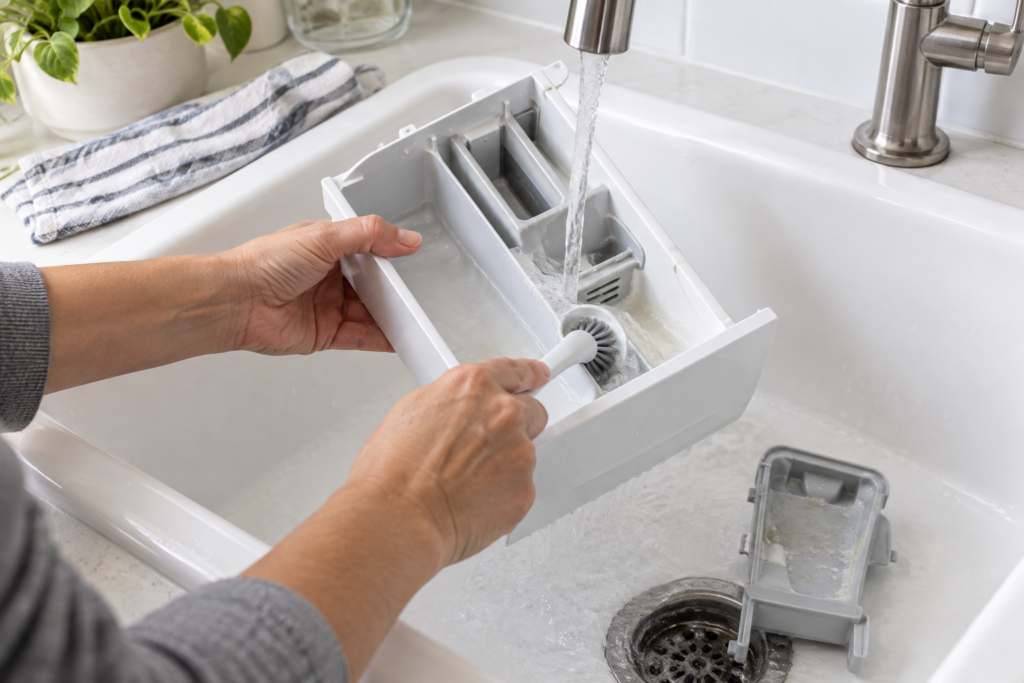
- Release and remove the drawer according to the owner’s manual.
- Separate removable cups or inserts only if the instructions allow it.
- Rinse the pieces under warm running water.
- Use a soft cloth or brush to remove residue from reachable channels and corners.
- Wipe the dispenser housing without pushing debris deeper into its openings.
- Dry the components and reinstall them correctly.
Do not place dispenser parts in a dishwasher unless the washer manual specifically permits it. Heat and dishwasher detergent may affect parts that were intended only for hand-washing. Whirlpool’s official guidance also describes hand-cleaning a removable front-load washer dispenser.
Run the Washer’s Cleaning Cycle
After removing visible residue, run the washer’s dedicated Clean Washer, Tub Clean, or similarly named cycle. The cycle name and approved cleaning product vary, so check the control panel and owner’s manual.
The drum should normally be empty during a washer-cleaning cycle. Do not add clothing unless the manufacturer specifically instructs otherwise.
If the manual permits it, a washer-cleaner tablet labeled for front-load or high-efficiency machines provides a measured option for the cleaning cycle.
Use only one cleaning method at a time. Never combine bleach, vinegar, ammonia, detergent, or separate cleaning products. Follow the product label, provide appropriate ventilation, and keep cleaning products away from children and pets. The CDC advises against mixing cleaning or disinfecting chemicals.
A cleaning product cannot compensate for excess detergent used in everyday loads. Use high-efficiency detergent when the washer requires it, and follow both the detergent label and washer instructions rather than filling the dispenser automatically to its maximum line. Excess suds or residue can contribute to film and odor.
Whirlpool’s washer odor guidance identifies detergent residue, the cleaning cycle, the dispenser, and damp laundry as areas to check.
Inspect the Pump Filter Only if Your Manual Shows One
Some front-load washers have a user-accessible pump filter behind a small lower service door. Others place the filter where routine homeowner access is not intended.
Before opening any filter compartment:
- Confirm the location and procedure in the manual for your exact model.
- Turn the washer off and unplug it.
- Allow recently heated water to cool.
- Prepare for residual water using towels and a shallow container.
- Follow the specified draining procedure before loosening the filter.
Do not remove a large panel, tilt the appliance, force a stuck filter, or reach toward wiring or internal components. Stop if the instructions are unclear, water continues to spill, the filter will not release normally, or the washer begins leaking afterward.
Official instructions for an accessible front-load washer pump filter illustrate why this step must be matched to the model.
Keep Moisture and Residue From Building Up Again
Remove wet laundry after the cycle instead of leaving it in the sealed drum. When the washer is finished for the day, wipe visible moisture from the door glass and lower gasket fold.
Absorbent microfiber cleaning cloths can be kept near the washer for drying the gasket and door after the final load.
If the manufacturer permits it, leave the washer door and dispenser slightly open between loads so moisture can escape. Do this only when the open door does not create a hazard for children, pets, or anyone walking through the laundry area.
Other useful habits include:
- Using the detergent type and amount specified for the washer and load
- Cleaning visible dispenser residue before it hardens
- Checking pockets for tissues and small objects
- Running the manufacturer’s cleaning cycle when directed
- Avoiding unnecessary fabric softener if it repeatedly leaves residue
- Drying the gasket after the last load
If you maintain a household task list, add these checks to your seasonal home maintenance checklist so the washer is inspected before a strong odor develops.
When Routine Cleaning Is Not Enough
Stop troubleshooting and arrange qualified service if the washer has a burning or electrical odor, repeatedly displays a drain error, leaks onto the floor, damages clothing, or has a torn gasket.
A sewage-like odor that is strongest near the wall drain or standpipe may require a plumber or building-maintenance professional. Renters should report leaks, drain odors, damaged seals, and any repair requiring appliance disassembly to the landlord or property manager.
Persistent odor after the gasket, dispenser, approved cleaning cycle, and user-accessible filter have been addressed may indicate residue in a hose or internal component that cannot be safely reached through routine maintenance.
Frequently Asked Questions
Q. Why does the smell return after a washer-cleaning cycle?
A cleaning cycle treats the inner wash system, but it may not remove debris trapped in the gasket or thick residue inside the dispenser. Clean those visible areas separately and review detergent use before running another cleaning cycle.
Q. Can vinegar or bleach be used in a front-load washer?
Only use a chemical if the owner’s manual permits it and follow the stated location, amount, and procedure. Never combine vinegar, bleach, ammonia, or other cleaning products.
Q. Do all front-load washers have a pump filter I can clean?
No. Access and service procedures vary. Clean the pump filter only when the manual for the exact model identifies it as a user-maintenance item.
Conclusion
When a front-load washer smells musty, begin with the door gasket and dispenser rather than repeatedly adding cleaner. Remove visible residue, use the washer’s approved cleaning cycle, and check the pump filter only when the model instructions provide a safe routine procedure.