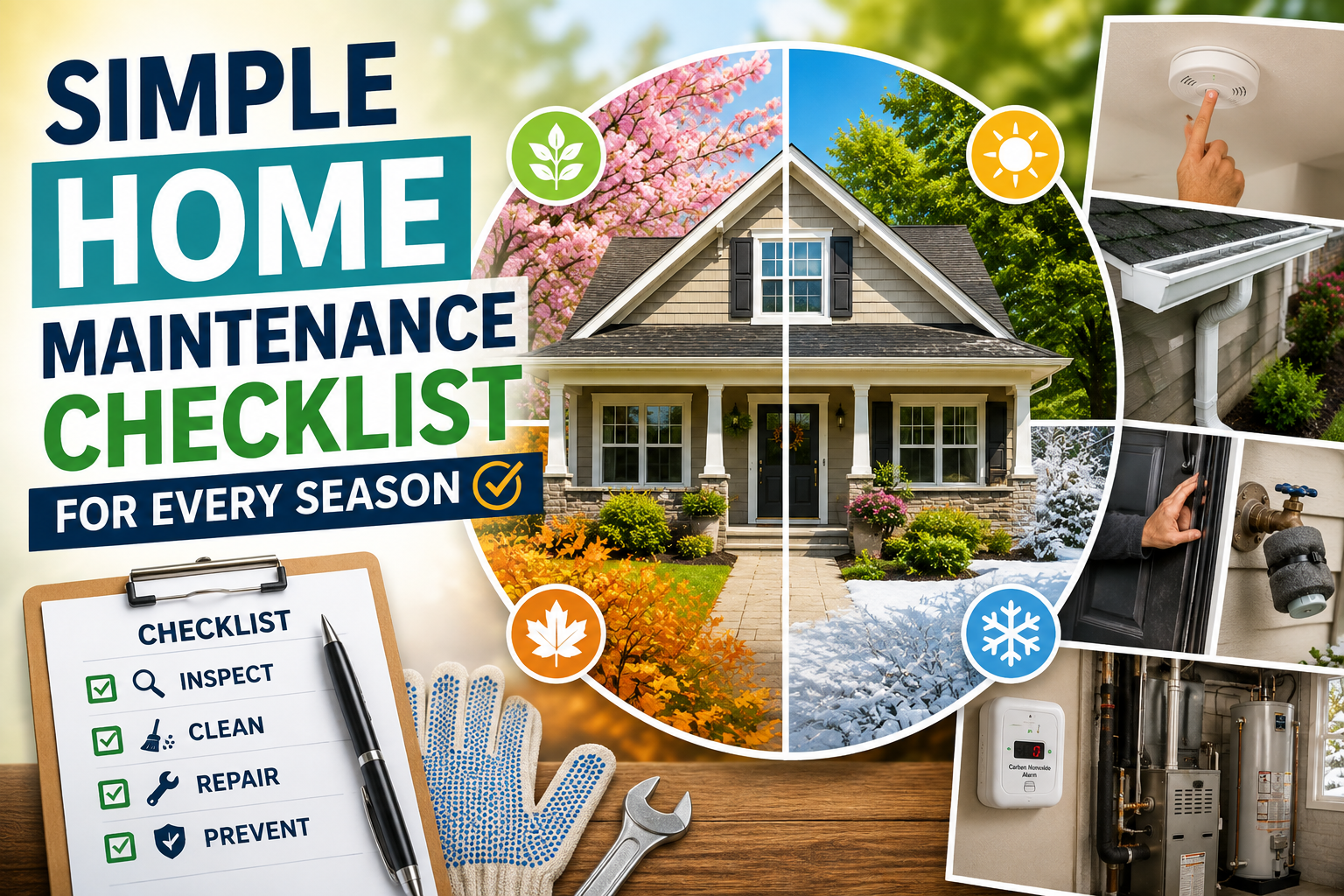
Home maintenance is easier when it is divided into small seasonal tasks. Instead of waiting for something to leak, stop working, or become visibly damaged, you can inspect the most vulnerable parts of your home as weather conditions change.
This simple home maintenance checklist covers the main areas that deserve attention in spring, summer, fall, and winter. The exact schedule will vary according to your climate, home design, equipment, and manufacturer instructions, but the checklist provides a practical starting point for most homeowners.
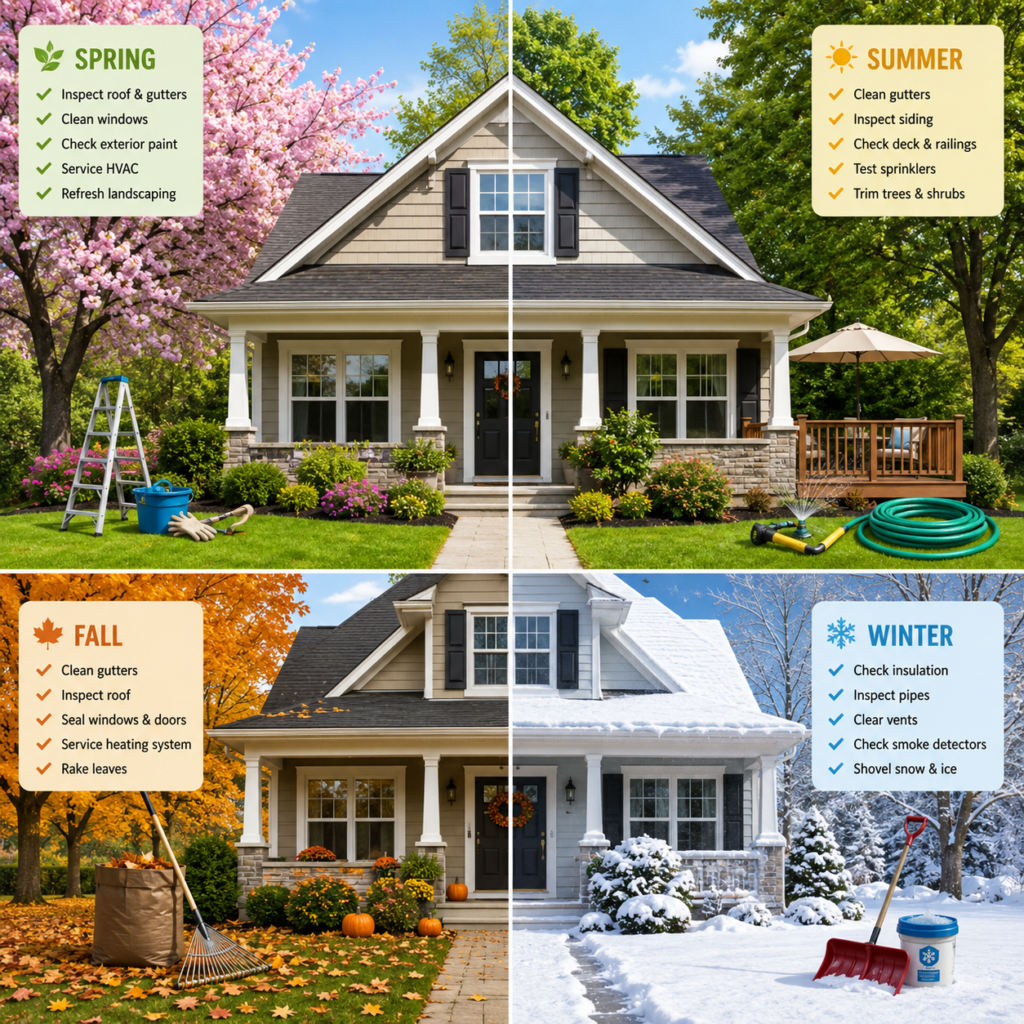
How to Use This Seasonal Home Maintenance Checklist
You do not need to complete every possible maintenance project at once. At the beginning of each season, walk around the inside and outside of your home and look for changes since your previous inspection.
Pay particular attention to:
- Water stains, damp materials, and musty odors
- Cracks that appear new or are becoming larger
- Loose, missing, or deteriorated exterior materials
- Unusual equipment sounds or odors
- Doors and windows that no longer operate normally
- Water pooling near the foundation
- Changes in indoor temperature or humidity
Keep a simple maintenance record with the date, what you inspected, and any repairs you completed. Include model numbers, filter sizes, paint colors, warranties, service records, and contractor information when useful.
Treat this checklist as general guidance rather than a substitute for your equipment manuals or local requirements. Maintenance needs can differ significantly between a house in a cold, snowy region and one in a hot, humid, coastal, or wildfire-prone area.
Home Maintenance Tasks to Check Throughout the Year
Some safety and moisture-related tasks should not wait for a particular season.
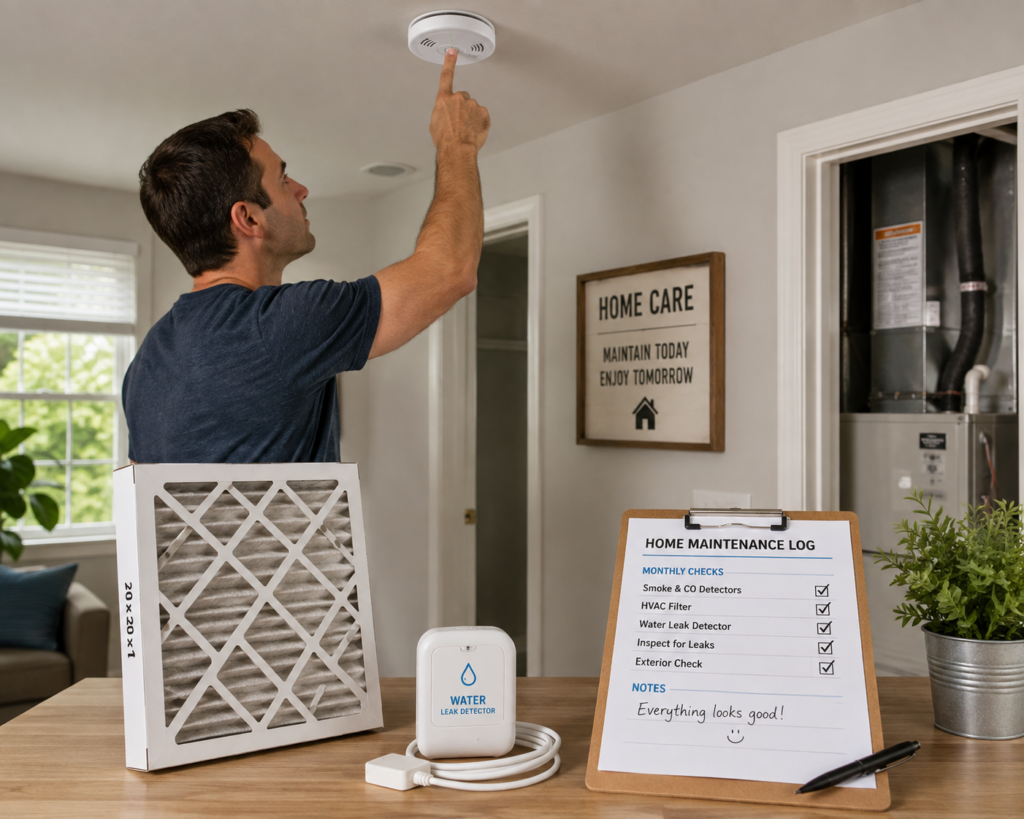
Test Smoke and Carbon Monoxide Alarms
Test smoke alarms monthly using their test buttons. The U.S. Fire Administration advises following the manufacturer’s care instructions and generally replacing common smoke alarms when they reach 10 years of age. Battery-replacement requirements depend on whether the alarm uses a replaceable battery, sealed long-life battery, or hardwired backup battery.
Carbon monoxide alarms should also be tested and replaced according to their manufacturer instructions. The U.S. Consumer Product Safety Commission recommends CO alarms with battery power or backup on every level of the home and outside sleeping areas. Local codes may impose additional requirements.
Review the official U.S. Fire Administration smoke alarm guidance and CPSC carbon monoxide guidance for placement and maintenance details.
Look for Water Leaks
Check under sinks and around toilets, showers, tubs, water heaters, washing machines, dishwashers, refrigerators, and exposed pipes. Do not ignore a small stain simply because it feels dry during your inspection. It may indicate an intermittent plumbing, appliance, condensation, or roof problem.
If water begins pooling during a shower, follow these steps to unclog a shower drain safely before the blockage becomes complete.
If you find moisture, identify and correct its source before repainting or covering the area. The EPA notes that moisture control is central to preventing indoor mold growth and recommends drying wet materials promptly.
If a kitchen faucet moves at its base, learn how to fix a loose kitchen faucet before repeated movement damages the seal or plumbing connections.
Check the HVAC Filter
Inspect your heating or cooling system’s filter regularly, particularly during periods of heavy use. ENERGY STAR recommends checking filters monthly and cleaning or replacing them when needed. However, filter construction, equipment design, household conditions, and manufacturer requirements can affect the appropriate replacement schedule.
Confirm the correct filter size and airflow direction before installing a replacement. Avoid substituting a more restrictive filter unless your system is designed to use it.
Maintain the Clothes Dryer
Clean the lint filter each time you use the dryer. Check that the exterior vent opens while the dryer is operating and that the duct is not crushed or visibly damaged.
The U.S. Fire Administration recommends cleaning dryer vent ductwork annually. Homes with long duct runs, frequent dryer use, or recurring airflow problems may need more frequent inspection. Stop using the dryer and investigate if clothes begin taking unusually long to dry, the machine becomes excessively hot, or you notice a burning smell.
Spring Home Maintenance Checklist
Spring is a useful time to look for damage caused by cold temperatures, wind, snow, ice, or extended rain. In warmer climates, it is also the time to prepare cooling and drainage systems for humid or stormy weather.
Check the Roof, Gutters, and Drainage
Inspect the roof from the ground with binoculars or from another safe location. Look for missing, lifted, cracked, or visibly damaged roofing materials. Check flashing around chimneys, vents, and roof edges for obvious separation.
Avoid climbing onto a wet, steep, or unfamiliar roof. A roofing professional can perform a closer inspection when you see damage, active leakage, or areas that cannot be evaluated safely from the ground.
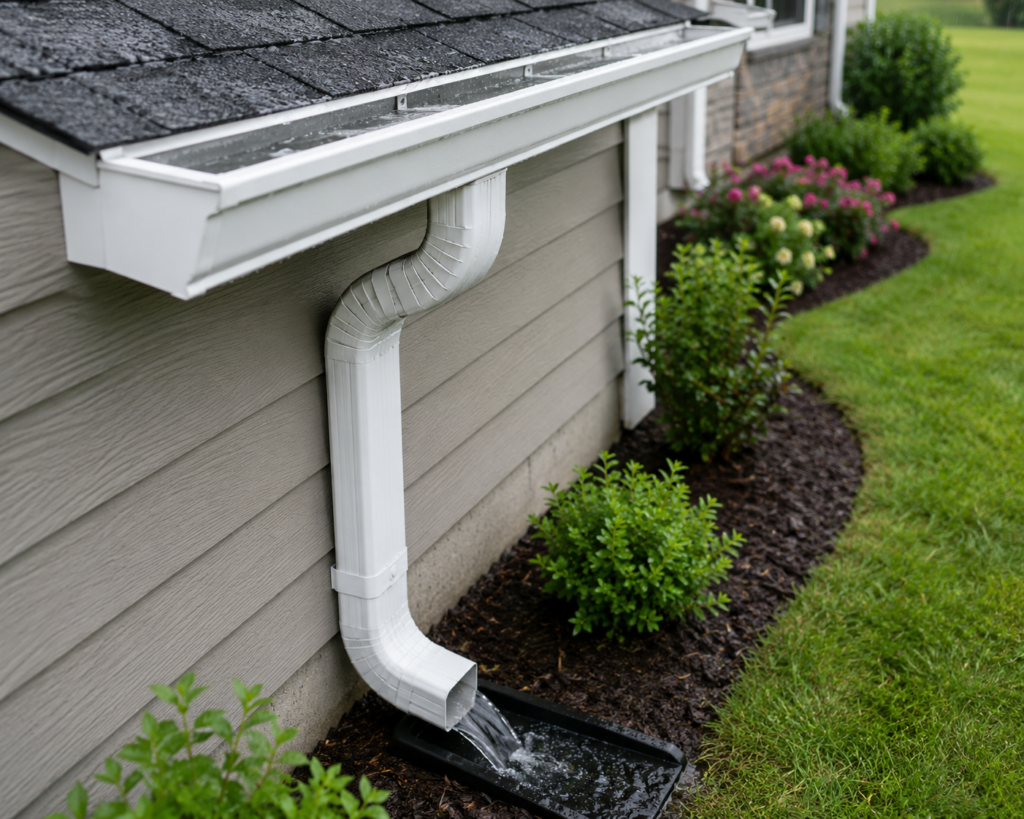
Remove leaves and debris from gutters if you can reach them safely. Confirm that gutters remain securely attached and that downspouts discharge water away from the house rather than beside the foundation.
The EPA recommends maintaining roof gutters and ensuring that the ground slopes away from the foundation to reduce moisture problems. During the next steady rainfall, observe whether water overflows the gutters or collects against the house.
Inspect the Exterior
Walk around the house slowly and examine:
- Siding, brick, stucco, and exterior trim
- Peeling or blistering paint
- Cracked, separated, or missing sealant
- Foundation walls and visible concrete
- Deck boards, railings, steps, and porches
- Exterior doors, screens, and windows
- Driveways and walkways
- Outdoor lighting and visible wiring covers
Include the garage door in this inspection. If it starts closing and immediately moves back up, check why a garage door reverses when closing before adjusting force settings or hardware.
Small surface cracks may be cosmetic, but cracks that are widening, displaced, repeatedly wet, or affecting doors and windows deserve closer evaluation. Do not seal over an active water or structural problem without identifying its cause.
Clean exterior surfaces using methods appropriate for the material. High-pressure washing can damage wood, paint, sealants, roofing, and some types of siding if performed incorrectly.
Prepare Cooling and Plumbing Systems
Before sustained warm weather arrives:
- Remove leaves and loose debris from around the outdoor air-conditioning or heat-pump unit.
- Maintain the clearance specified by the equipment manufacturer.
- Inspect visible condensate drains and pans for standing water or blockage.
- Schedule service if the system cools poorly, leaks, short-cycles, or makes unusual noises.
- Check outdoor faucets and irrigation components for freeze damage or leaks.
- Test the sump pump, if installed, according to its instructions.
- Inspect window screens and repair openings.
Turn off electrical power before performing any manufacturer-approved cleaning near HVAC equipment. Refrigerant, internal electrical, and control problems require a qualified technician.
Summer Home Maintenance Checklist
Summer maintenance focuses on cooling performance, moisture control, landscaping, and exterior areas that receive frequent use.
Control Heat and Indoor Moisture
Check the HVAC filter and watch the condensate drain while the cooling system is operating. Water near an indoor air handler, furnace, ceiling register, or drain pan may indicate a blockage, insulation problem, frozen coil, or another issue that needs attention.
Routine HVAC checks can also support practical efforts to lower your electric bill this summer without sacrificing basic comfort.
Inspect bathrooms, kitchens, basements, crawlspaces, laundry rooms, and areas around cold-water pipes for condensation or musty odors. Bathroom and kitchen exhaust fans should discharge outside rather than into an attic or enclosed cavity.
If water begins pooling because the shower drains slowly, learn how to unclog a shower drain before it develops into a recurring backup.
According to the EPA’s residential moisture guidance, moisture control includes maintaining gutters, keeping air-conditioning drain lines clear, using ventilation where moisture is produced, and responding quickly to wet materials.
Do not simply paint over mold or water stains. Correct the moisture source first. Persistent odors, recurring growth, contaminated water, extensive damage, or possible mold hidden inside walls may require professional assessment.
Maintain the Yard and Exterior
Summer plant growth can interfere with the house more quickly than expected. Check for:
- Branches touching the roof or siding
- Dense vegetation blocking HVAC airflow
- Vines growing into siding, gutters, or roof edges
- Soil or mulch piled against siding
- Sprinklers repeatedly spraying the foundation or walls
- Standing water near the house
- Loose deck boards, railings, and stair treads
- Cracks or movement in patios and walkways
Tree work near roofs, electrical lines, or large limbs should be handled by an appropriately qualified professional. Before digging for drainage, fencing, irrigation, or landscaping work, use the utility-location service available in your area.
Watch for Pests and Gradual Damage
Look for damaged screens, gaps around utility penetrations, droppings, nests, chewed materials, mud tubes, or unexplained wood damage. The appropriate response depends on the pest and the extent of activity.
Avoid sealing an opening while an animal may still be trapped inside. Be especially cautious around stinging insects, bats, wildlife, and areas containing droppings or contaminated insulation.
Fall Home Maintenance Checklist
Fall is the main preparation period for heating equipment, colder temperatures, falling leaves, and possible freezing weather.
Prepare the Heating System
Replace or clean the HVAC filter as appropriate and test the system before the first severe cold period. Listen for unusual sounds and notice whether the system starts, runs, and shuts down normally.
The CPSC recommends having home heating systems, including associated chimneys and vents, professionally inspected and serviced annually. Fuel-burning equipment requires particular care because incomplete combustion, damaged heat exchangers, blocked vents, or disconnected flues may create fire or carbon monoxide hazards.
Do not attempt internal repairs on gas, oil, or other fuel-burning appliances unless you have the required knowledge, tools, and authorization. Never use a gas oven or range to heat the home.
If you use a fireplace or wood stove, have the chimney and venting system evaluated and cleaned as appropriate for the appliance and level of use. Confirm that the damper, doors, screens, and nearby clearances are suitable before lighting the first fire of the season.
Protect Exterior Plumbing
In climates where freezing occurs:
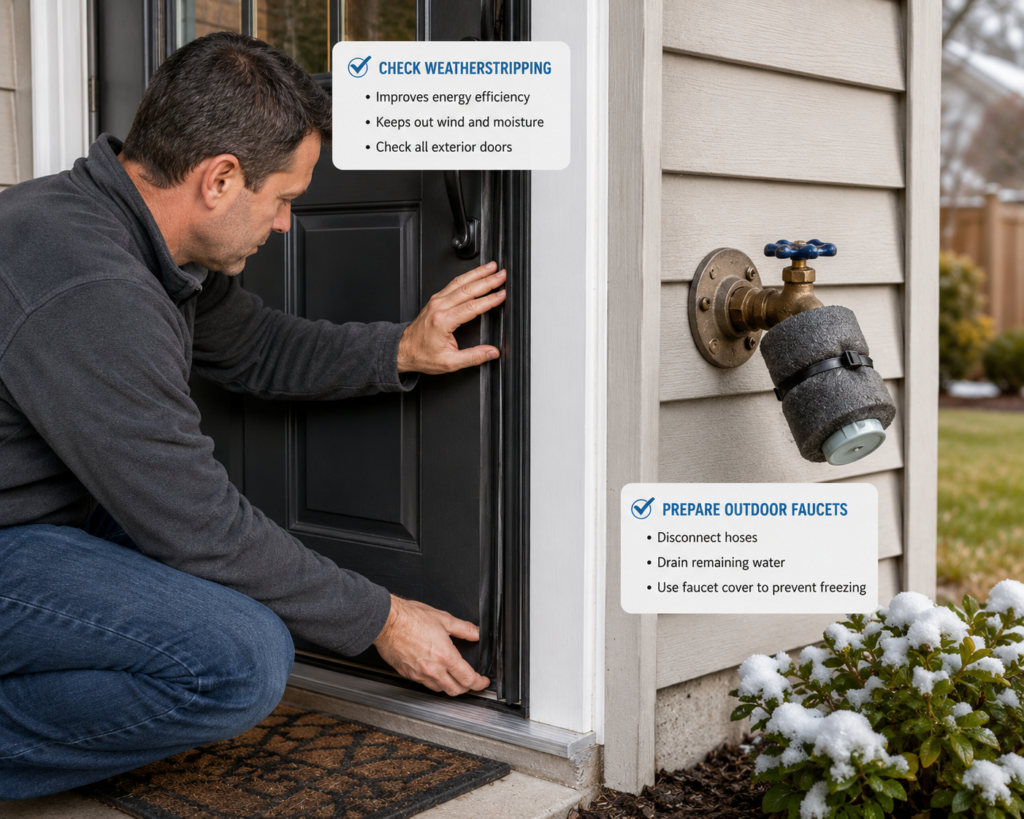
- Disconnect garden hoses.
- Drain or protect outdoor faucets according to their design.
- Follow the irrigation system’s winterization procedure.
- Insulate vulnerable pipes where appropriate.
- Close crawlspace openings only if doing so is compatible with the home’s moisture-control design.
- Learn where the main water shutoff is located.
Some frost-free faucets can still be damaged when a hose or attachment prevents them from draining. Irrigation blowout procedures can involve hazardous air pressure and may be better left to a trained service provider.
Check Doors, Windows, and Weatherstripping
Inspect weatherstripping and exterior sealant for missing, brittle, or separated sections. Repairing appropriate air gaps may improve comfort, but do not block designed drainage openings, combustion-air supplies, or required ventilation.
Clean leaves from gutters after most nearby trees have dropped their foliage. Recheck downspouts, roof valleys, and ground drainage before winter storms arrive.
Winter Home Maintenance Checklist
Winter inspections are mostly about monitoring. Cold temperatures, indoor heating, snow, and ice can reveal problems that were not visible earlier.
Reduce the Risk of Frozen Pipes
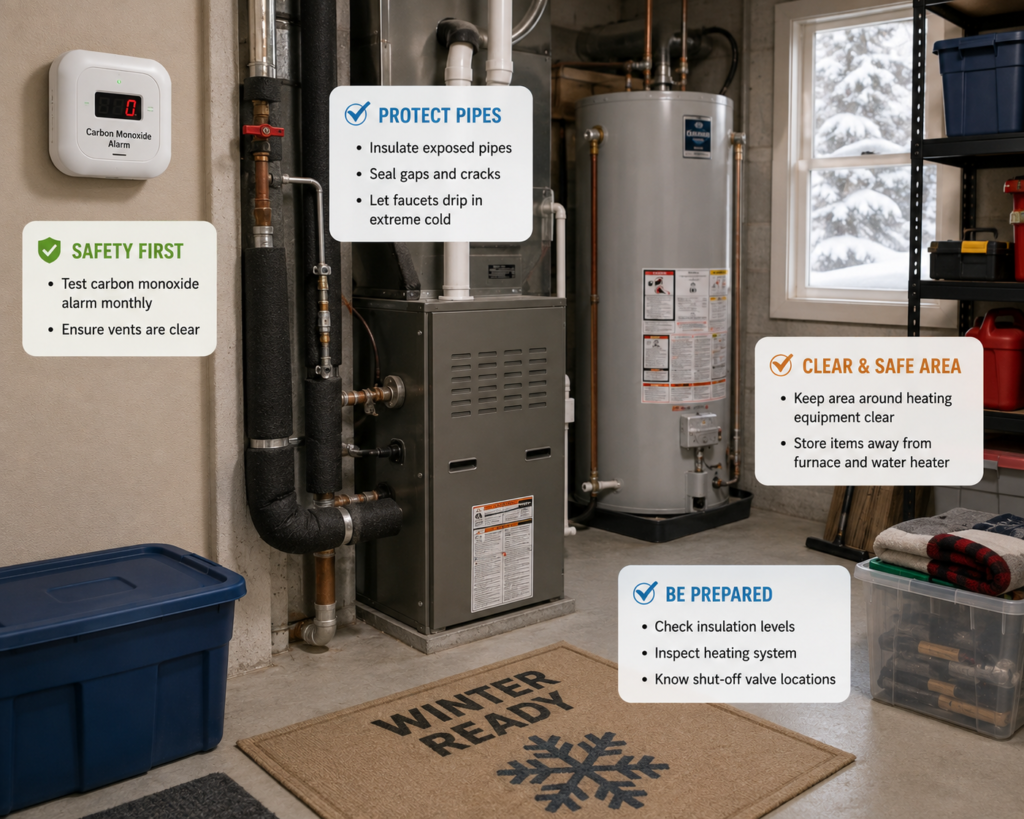
Identify pipes located in exterior walls, garages, crawlspaces, cabinets, or other cold areas. During severe cold, follow local emergency guidance and the recommendations appropriate for your plumbing system.
Know how to shut off the main water supply before an emergency occurs. If a pipe freezes, do not use an open flame to thaw it. Shut off the water if the pipe has split or begins leaking, and contact a plumber when the location or condition cannot be handled safely.
After a freeze, inspect ceilings, walls, cabinets, and exposed plumbing for delayed leakage.
Monitor the Roof and Indoor Moisture
Look for:
- New ceiling stains
- Icicles or recurring ice buildup along roof edges
- Sagging gutters
- Condensation on windows and pipes
- Musty odors in closets or exterior corners
- Water around attic access points
- Unusual drafts near doors and windows
Heavy snow, suspected roof damage, or recurring ice dams should be evaluated without walking on an icy roof. A professional can determine whether roofing, ventilation, air leakage, insulation, or drainage problems are contributing to the condition.
Use Heating Equipment Safely
Keep combustible materials away from furnaces, boilers, water heaters, fireplaces, and portable heaters. Confirm that vents and exterior exhaust openings remain free of snow, nests, and debris without altering the appliance’s approved installation.
Never run a vehicle in an attached garage, even with the garage door open. Gasoline-powered equipment and charcoal grills should not be used inside the home or garage.
If a carbon monoxide alarm sounds, move outside to fresh air and call emergency services. Do not search for the source or reenter until responders say it is safe.
Quick Seasonal Home Maintenance Checklist
Spring
- ☐ Inspect the roof from a safe location.
- ☐ Clean and check gutters and downspouts.
- ☐ Look for exterior and foundation damage.
- ☐ Check drainage during rainfall.
- ☐ Prepare the cooling system.
- ☐ Test outdoor faucets, irrigation, and the sump pump.
- ☐ Inspect screens, decks, steps, and railings.
Summer
- ☐ Check the HVAC filter and condensate drainage.
- ☐ Inspect bathrooms, basements, and pipes for moisture.
- ☐ Trim vegetation away from the house and HVAC equipment.
- ☐ Look for pest entry points and wood damage.
- ☐ Check decks, patios, walkways, and outdoor lighting.
- ☐ Confirm sprinklers are not soaking the foundation or siding.
Fall
- ☐ Test the heating system before severe cold arrives.
- ☐ Arrange appropriate heating and chimney service.
- ☐ Clean gutters after leaves fall.
- ☐ Check weatherstripping and exterior sealant.
- ☐ Disconnect hoses and protect exterior plumbing where necessary.
- ☐ Locate and confirm access to the main water shutoff.
- ☐ Test smoke and carbon monoxide alarms.
Winter
- ☐ Watch vulnerable pipes during freezing weather.
- ☐ Check for ceiling stains, condensation, and drafts.
- ☐ Keep heating equipment and vents clear.
- ☐ Monitor gutters, roof edges, and drainage after storms.
- ☐ Check for delayed plumbing leaks after a freeze.
- ☐ Keep emergency contacts and basic supplies accessible.
Common Home Maintenance Mistakes to Avoid
Waiting for Visible Damage
Water and equipment problems may develop before the damage becomes obvious. Unexplained odors, sounds, condensation, or small stains deserve attention.
Covering the Symptom Instead of Fixing the Cause
Paint, caulk, and surface cleaners will not correct an active roof leak, plumbing problem, drainage failure, or hidden moisture source.
Ignoring Manufacturer Instructions
Filters, drainage systems, alarms, appliances, roofing materials, and exterior finishes have different maintenance requirements. Generic advice should not override the manual or warranty terms for a specific product.
Taking Unnecessary Ladder or Roof Risks
A seasonal checklist does not require every homeowner to climb onto a roof. Ground-level observations and professional inspections are safer when access conditions are uncertain.
Attempting Specialized Repairs Without Proper Training
Gas systems, refrigerants, live electrical components, structural movement, chimney defects, and significant roof damage are not routine DIY maintenance tasks.
When to Call a Professional
Arrange qualified help when you find:
- An active or recurring roof leak
- A widening, displaced, or significant structural crack
- A persistent plumbing leak or repeated drain backup
- Electrical arcing, scorch marks, burning odors, or hot outlets
- Suspected gas leakage or a carbon monoxide alarm
- Heating equipment or venting problems
- Large, recurring, or hidden mold growth
- Major pest or wildlife activity
- Unsafe trees or limbs near the house or utility lines
- Roof, gutter, or chimney work that cannot be accessed safely
- HVAC refrigerant, combustion, or internal electrical problems
For urgent gas, fire, electrical, or carbon monoxide hazards, leave the affected area and contact the appropriate emergency service or utility provider.
Frequently Asked Questions
Q. How often should I complete a home maintenance checklist?
A. A focused inspection at the beginning of each season is a practical baseline. However, smoke and carbon monoxide alarms, HVAC filters, leaks, and other safety-sensitive items may need attention more frequently. Follow manufacturer instructions and adjust the schedule for your climate and equipment.
Q. What are the most important home maintenance tasks for a new homeowner?
A. Start by locating the main water shutoff, electrical panel, gas shutoff if applicable, HVAC filter, smoke alarms, carbon monoxide alarms, and fire extinguishers. Then inspect the roof, gutters, drainage, plumbing, heating and cooling systems, and visible exterior surfaces.
Q. Should renters use a seasonal home maintenance checklist?
A. Yes, but renters should focus on observation, basic cleaning, alarm testing where permitted, and promptly reporting leaks, mold, equipment problems, or structural damage. Repairs and equipment servicing should be coordinated with the property owner or manager according to the lease and local requirements.
Q. How should I prioritize maintenance on a limited budget?
A. Address immediate safety hazards and active water intrusion first. Next, focus on problems that may allow damage to spread, such as failed drainage, plumbing leaks, loose exterior materials, or malfunctioning heating and cooling equipment. Cosmetic work can usually wait until the underlying systems are sound.
Q. Does every home need the same seasonal maintenance?
A. No. Climate, building age, foundation type, roofing material, heating system, water source, landscaping, and local hazards all affect the schedule. A home with a basement and gas furnace will have different needs from a slab-on-grade home with a heat pump.
Q. What records should I keep for home maintenance?
A. Keep dates, photographs, receipts, warranty information, inspection reports, service notes, filter sizes, model numbers, and contractor details. These records can help you spot recurring problems and explain the property’s maintenance history when arranging repairs or selling the home.
Conclusion
A useful home maintenance routine does not need to be complicated. Inspect the house at the beginning of each season, respond quickly to water and safety problems, and keep a record of completed work.
Begin with the year-round essentials: test alarms, watch for leaks, check the HVAC filter, and maintain the dryer vent. Then use each seasonal transition to inspect the roof, drainage, exterior, plumbing, and heating or cooling equipment. When a task involves unsafe access, fuel-burning appliances, live electrical components, structural movement, or persistent moisture, stop the DIY inspection and bring in a qualified professional.