A sour-smelling dishcloth usually has a moisture-and-soil problem, not a fragrance problem. The cloth stays damp while holding traces of food, grease, and soap. Research on used kitchen towels has found that moist environments and collected food residues can support bacterial growth, which helps explain why careful washing and drying matter. Rinsing helps, but it does not replace a proper wash and complete drying.
To freshen a sour dishcloth, stop using it, rinse away loose soil, wash it with an appropriate detergent on the hottest cycle permitted by its care label, and dry it completely before reuse or storage. If the odor affects every cloth after laundering, the washer, detergent dose, or drying routine may need attention.
Why Dishcloths Develop a Sour Smell
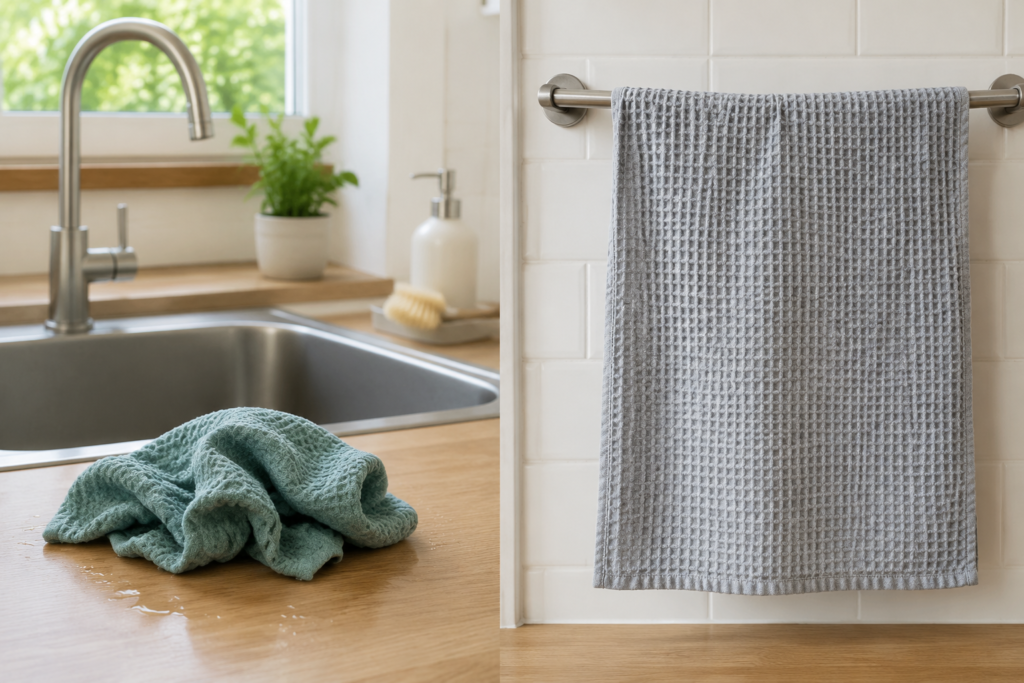
Dishcloths repeatedly collect water and small amounts of organic material. Even a cloth that looks clean may retain cooking oils, food particles, or detergent. When it is folded over itself, left in the sink, or placed wet in a hamper, evaporation slows and the odor can develop quickly.
Common contributing factors include:
● Remaining damp between uses. A thick or tightly folded cloth dries more slowly than one spread open with airflow on both sides.
● Rinsing without laundering. Running water removes loose crumbs but may leave grease and other soil within the fibers.
● Using too much laundry detergent. More detergent does not necessarily mean a cleaner cloth. If the washer cannot rinse it away, residue may remain on the fabric.
● Using one cloth for too many jobs. A cloth used for dishes, greasy stovetops, floors, pet areas, and food-preparation spills receives very different types of soil.
● Putting cloths away before they are dry. A slightly damp stack in a closed drawer can make several freshly washed cloths smell stale.
● A washer that needs maintenance. Residue in a detergent dispenser, gasket, filter, or wash drum may transfer odors back to laundry. The relevant parts and cleaning procedure vary by machine.
A sour odor cannot identify a particular microorganism or prove that a cloth is safe or unsafe. Treat it as a practical signal to stop using the cloth around dishes or food, then wash or replace it.
What the Timing of the Smell Can Tell You
The point at which the odor appears provides a useful troubleshooting clue.
The cloth smells after sitting beside the sink
It may be staying wet too long or holding food residue. Rinse it thoroughly and hang it fully open where air can move around both sides.
It smells immediately after washing
Check the detergent dose, load size, washer cleanliness, and whether the cloth dried completely. If several items from the same load smell stale, inspect the washer according to its manual.
It smells clean when dry but sour when wet
Residue may remain in the fibers. Rewash the cloth separately using the correct detergent amount, then dry it completely.
Only one older cloth smells
Its fibers may be holding stubborn grease or residue. If a proper wash and complete drying do not correct the problem, consider retiring it.
Every clean cloth smells after storage
Make sure the entire stack was fully dry before storage. Also check whether the cabinet, drawer, or basket itself smells damp or stale.
How to Freshen Sour-Smelling Dishcloths
1. Remove the cloth from kitchen use
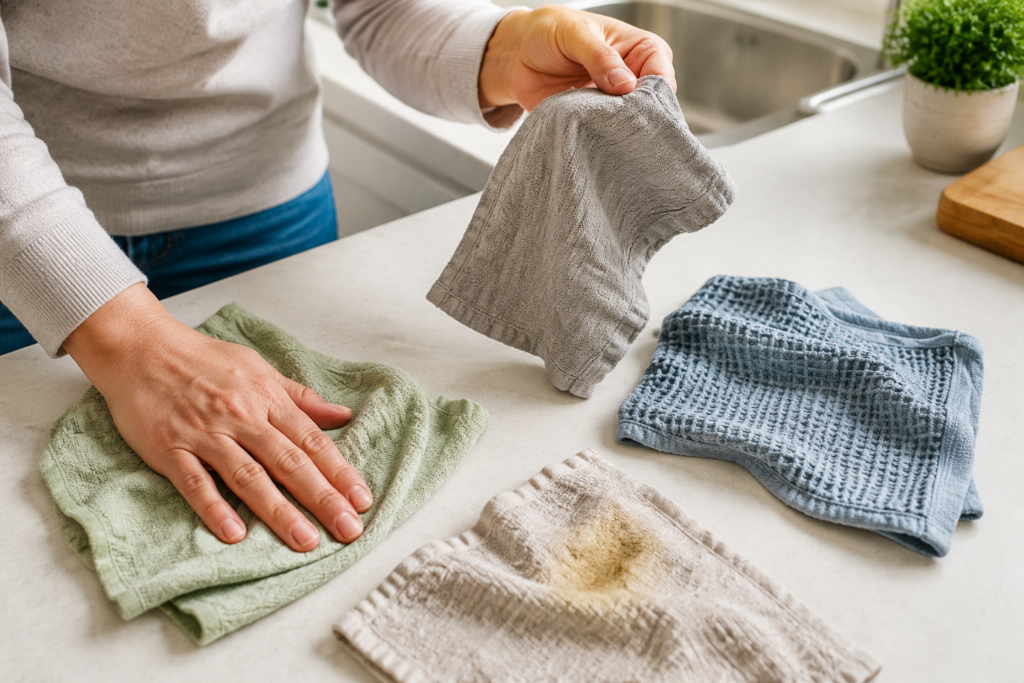
Do not continue wiping dishes or food-preparation surfaces with a cloth that smells sour. Rinse out visible food and grease, squeeze out excess water, and hang it open until laundry time. Avoid putting a wet cloth into a sealed container or the bottom of a hamper.
If the cloth contacted raw meat, poultry, seafood, eggs, or their juices, keep it separate from ready-to-eat food and clean utensils. FoodSafety.gov recommends washing dishcloths often using the hot cycle of a washing machine as part of preventing cross-contamination in the kitchen.
2. Check the fabric and care label
Cotton, microfiber, Swedish-style cellulose cloths, and decorative blended fabrics may have different temperature and drying limits. Follow the cloth’s care label and the washing-machine instructions.
For ordinary washable dishcloths used around food, choose the hottest permitted wash setting. If a decorative cloth cannot tolerate suitable laundering, reserve it for a low-soil purpose or replace it with a durable cloth designed for repeated washing.
3. Measure the detergent for the actual load
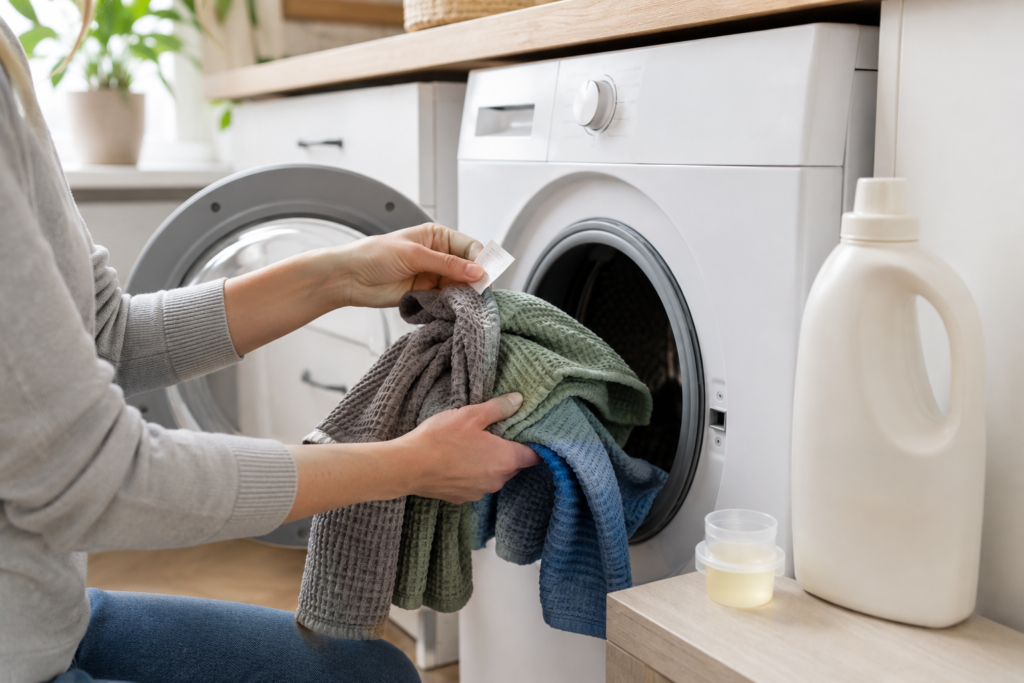
Use a laundry detergent suitable for the fabric and washer. Measure it according to the product label, load size, soil level, and water conditions. Adding an extra capful to a small load may make rinsing more difficult rather than improving cleaning.
If a dishcloth feels coated or has become less absorbent, leave out fabric softener for the next wash and check the textile’s care instructions. Some softening products are designed to leave a water-repelling coating, which may be unhelpful on a cloth meant to absorb water.
4. Use a laundry additive only when permitted
For odor that remains after a normal wash, a fabric-safe oxygen bleach or chlorine laundry bleach may be an option, but only when the cloth label, washer manual, and product directions permit it. Use the dispenser and measured amount specified for your machine and product.
Never combine chlorine bleach with vinegar, ammonia, or another cleaner. The CDC warns that mixing household bleach or disinfectants with other cleaners can release dangerous vapors. Provide ventilation and follow any glove or eye-protection directions on the label.
5. Dry the cloth completely
Drying is part of the cleaning process. Use a dryer setting allowed by the care label, or hang the cloth fully open in a place with good airflow. Do not fold or stack it while the center still feels cool or damp.
Remove machine-dried cloths promptly and allow any remaining warmth or moisture to escape before putting them in a drawer. A clean cloth stored damp can develop the same problem again.
6. Check the washer if the odor affects the whole load
When several cloths, towels, or other laundry items come out smelling stale, the problem may not be the dishcloths. Inspect accessible areas such as the detergent drawer and door gasket, if your model has them. Check the owner’s manual for a washer-cleaning cycle and for instructions covering any user-serviceable filter.
Do not dismantle panels or reach into electrical or mechanical components. If the machine leaks, does not drain correctly, or continues transferring odors after the manufacturer’s cleaning procedure, qualified appliance service may be appropriate.
Habits That Keep Dishcloths Fresher
Prevention depends more on controlling soil and moisture than adding fragrance.
● Start with a clean cloth regularly. University of Minnesota Extension advises replacing a dishcloth with a clean one daily, or more frequently when it becomes very soiled.
● Rinse after each use. Remove visible crumbs and grease rather than letting them dry into the fibers.
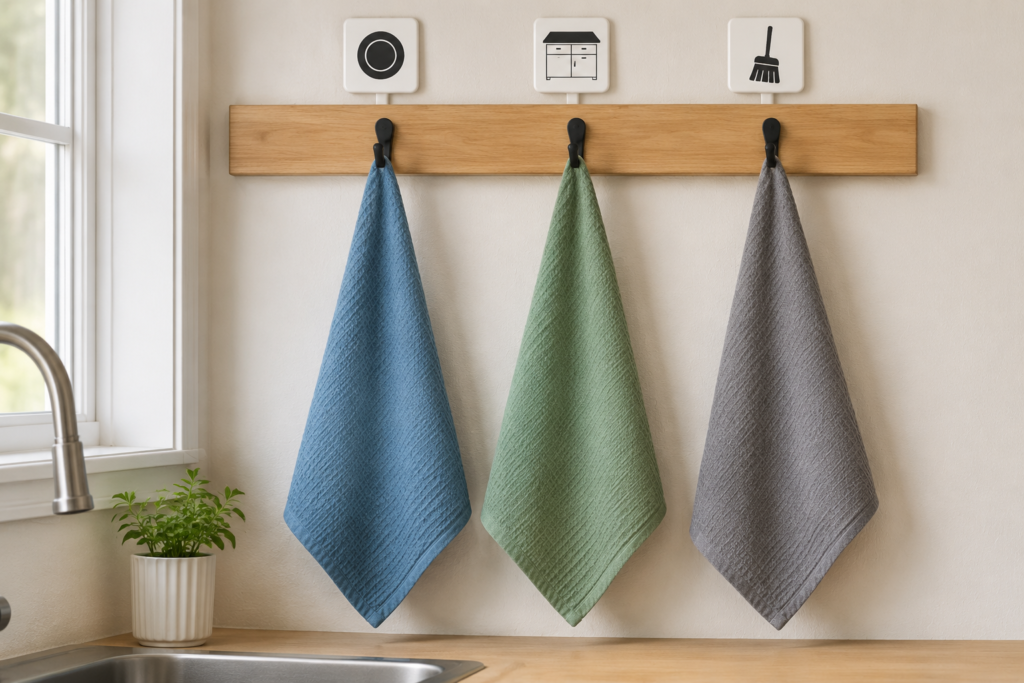
● Hang it open. Use a rail, clip, or rack that exposes as much of the cloth as possible to moving air.
● Separate jobs. Keep one cloth for dishes or food-safe surfaces and different cloths for the floor, pet areas, or heavy grease. Colors or labeled hooks can make the system easy to follow.
● Handle raw-food spills carefully. A disposable paper towel can simplify cleanup of raw meat juices. If a reusable cloth is used, move it directly to laundering and clean the affected surface appropriately.
● Keep a small rotation available. Easy access to clean replacements makes it less tempting to reuse a wet or dirty cloth.
● Store only fully dry cloths. Clean the storage drawer or basket if it smells stale, and avoid compressing damp fabric into a closed space.
When to Replace a Dishcloth
Not every cloth needs to be rescued. Replacement is reasonable when the fabric remains greasy, slimy, or strongly odorous after an appropriate wash and complete drying. Also discard a cloth with recurring visible mold growth, badly damaged fibers, or contamination from a chemical that is not suitable for food-contact areas.
A permanent stain is not automatically the same as active dirt, but it can make changes in the cloth harder to notice. For an inexpensive kitchen tool that repeatedly fails to come clean, replacement is often simpler than repeated chemical treatments.
Frequently Asked Questions
Q. How often should I change a dishcloth?
A. A practical food-safety baseline is to start with a clean cloth daily and change it sooner if it becomes very wet, greasy, visibly dirty, or contacts raw-food juices. A cloth used lightly for a single task may stay cleaner than one used for multiple jobs, but odor should not be the only cue.
Q. Why does my dishcloth smell only after it gets wet?
A. Moisture can make remaining soil and odor compounds noticeable again. Rewash the cloth separately, use the correct detergent dose, rinse thoroughly, and dry it completely. If the smell returns immediately, replacing the cloth may be more practical.
Q. Can I use vinegar on sour-smelling dishcloths?
A. Washer manufacturers differ on the use of vinegar, and it is not required for routine dishcloth care. Check the appliance manual and fabric label before using it. Never use vinegar in combination with chlorine bleach or another product unless the labels explicitly state that the combination is safe.
Q. Should I boil or microwave a smelly dishcloth?
A. A washing-machine cycle that suits the fabric is the more predictable approach. Boiling can damage some fibers or finishes and creates a scalding risk. Microwave guidance applies only to specific microwave-safe items and procedures; do not assume every dishcloth is suitable.
Q. Why do all my dishcloths still smell after laundering?
A. Check whether the load was crowded, the detergent was overmeasured, or the cloths sat damp after the cycle. If other laundry also smells, clean the washer according to its manual and inspect user-accessible dispensers, gaskets, and filters.
Conclusion
Keeping dishcloths fresh requires removing food residue, limiting the time they remain damp, washing them appropriately, and drying them all the way through. Begin with a clean cloth each day, separate food-area cloths from dirtier jobs, and investigate the washer when an entire load develops the same odor. If one cloth continues to smell after proper laundering, replacing it is a sensible next step.
If several towels or clothing items smell stale after the same load, this top-load washer odor guide helps you inspect the machine itself.