The safest way to remove sticky residue from painted walls is to begin with a clean cloth dampened with warm water. If that does not work, add a small amount of mild dish soap and gently work on the adhesive without soaking or scrubbing the wall. A flexible plastic edge can help lift thicker residue, but metal blades, strong solvents, and abrasive pads should be avoided.
The condition and finish of the paint matter as much as the type of adhesive. Flat or matte walls can develop shiny spots from surprisingly little rubbing, while some satin and semi-gloss paints tolerate cleaning better. Even so, no cleaning method is completely risk-free, so test each method in a hidden area first.
Check the Paint Before Cleaning
Look closely at the wall before applying water or cleaner.
Proceed cautiously if the paint is:
- Flat or matte
- Recently applied
- Already peeling, cracking, or blistering
- Soft or tacky
- Chalky when touched
- Covering unprimed drywall
- An unknown type or age
Flat and matte finishes generally show rubbing and changes in sheen more readily than higher-sheen finishes. However, actual washability also depends on the paint formulation, not just its sheen. The manufacturer’s care instructions should take priority when you know which product was used.
Fresh paint may feel dry before it has developed enough durability for cleaning. Sherwin-Williams generally advises waiting at least two weeks before washing a newly painted surface, but the appropriate curing period can vary. Check the paint can, technical data sheet, or manufacturer’s instructions before cleaning recently painted walls.
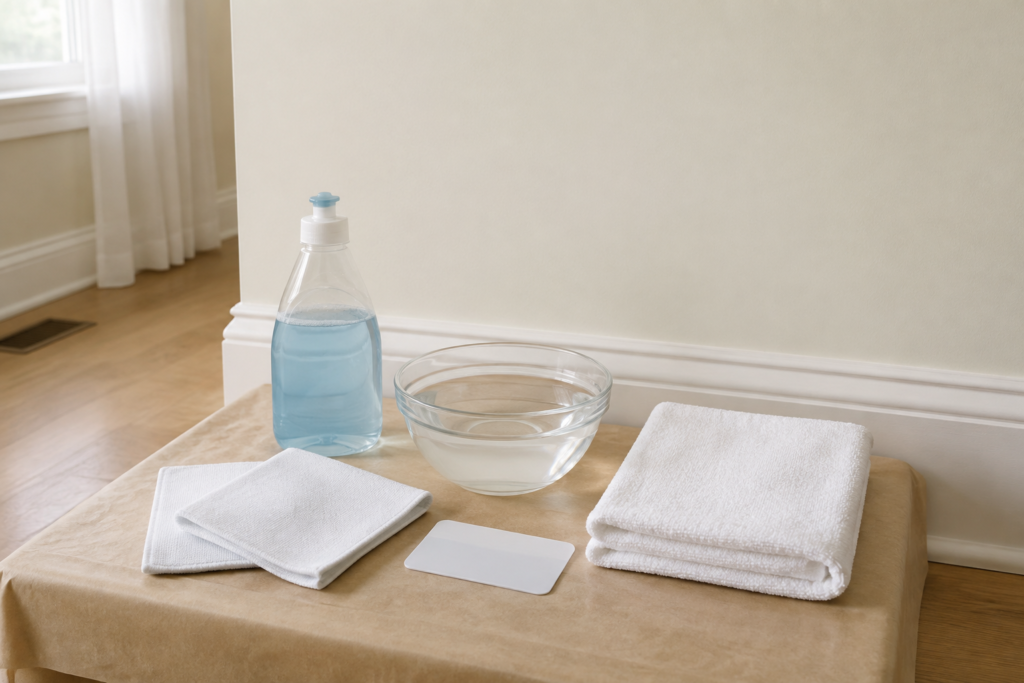
Gather a Small Paint-Safe Cleaning Kit
Start with:
- Two clean white microfiber cloths
- Warm water
- Mild dishwashing liquid
- A clean, flexible plastic card or plastic scraper with a smooth edge
- A dry, soft towel
- Cotton swabs for small spots
- A towel to protect the floor and baseboard
White cloths make it easier to notice paint color transferring from the wall. Avoid rough rags, scrub brushes, and the abrasive side of a kitchen sponge.
How to Remove Sticky Residue From Painted Walls
1. Test the Wall in a Hidden Spot
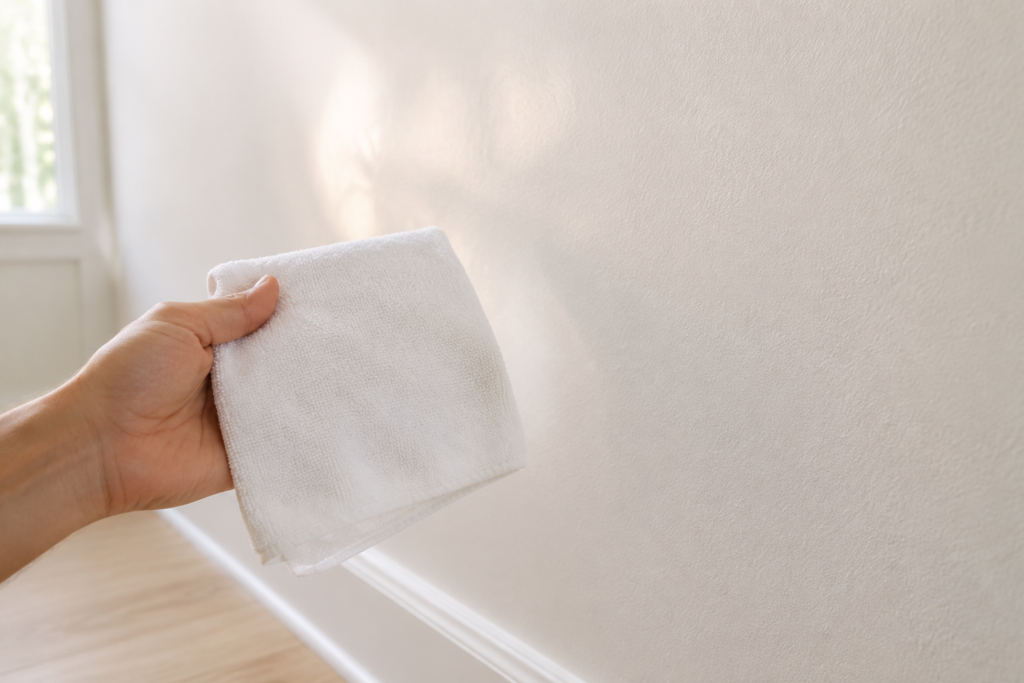
Dampen a microfiber cloth with plain warm water and wring it out thoroughly. Gently wipe a small area behind furniture or near the baseboard.
Let the test area dry before evaluating it. Stop if you see:
- Paint color on the cloth
- A lighter, darker, or shinier patch
- Softened or tacky paint
- Blistering, peeling, or exposed drywall
If water causes a visible change, further cleaning may do more harm than the adhesive. A paint touch-up may be the safer solution.
2. Remove Thick Material Without Spreading It
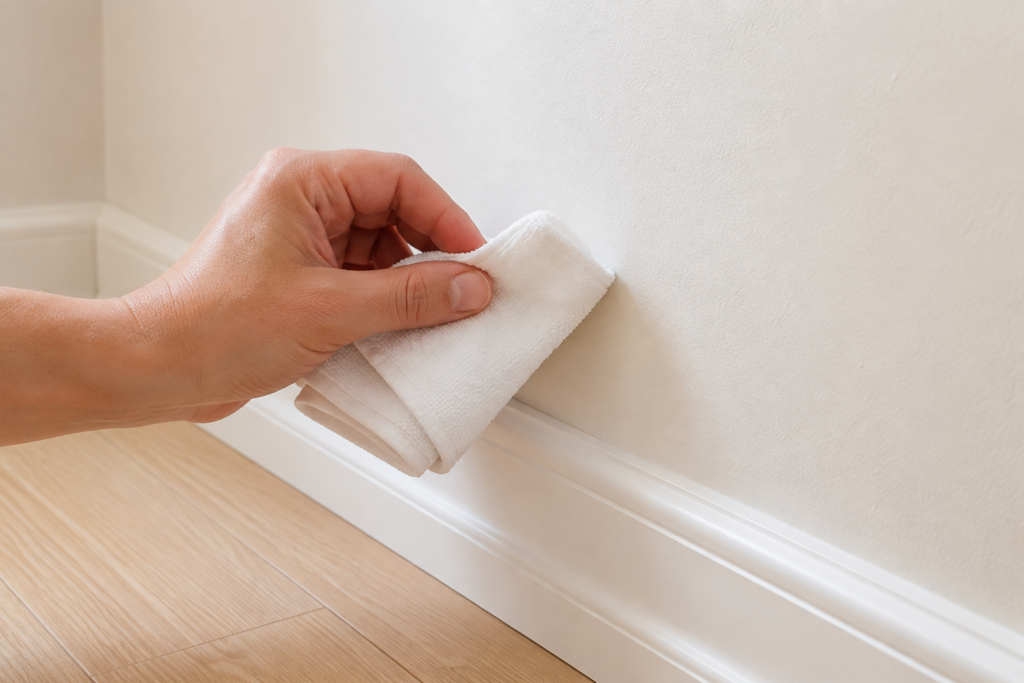
If foam, putty, or a raised layer of adhesive remains, try rolling it inward with a clean fingertip. This can remove loose material without introducing a cleaner.
For a stubborn raised edge, hold a smooth plastic card almost parallel to the wall and gently push toward the center of the residue. Do not dig the edge into the paint.
Stop if the paint begins lifting with the adhesive. Metal scrapers and razor blades can cut through the paint film and should not be used for this job.
3. Soften the Residue With a Damp Cloth
Fold a warm, well-wrung microfiber cloth and press it against the sticky area briefly. The goal is to soften the surface of the adhesive, not saturate the wall.
Remove the cloth and try rolling or blotting the residue again. Work from the outside toward the center so the adhesive does not spread into a larger patch.
4. Try Plain Water Before Adding Soap
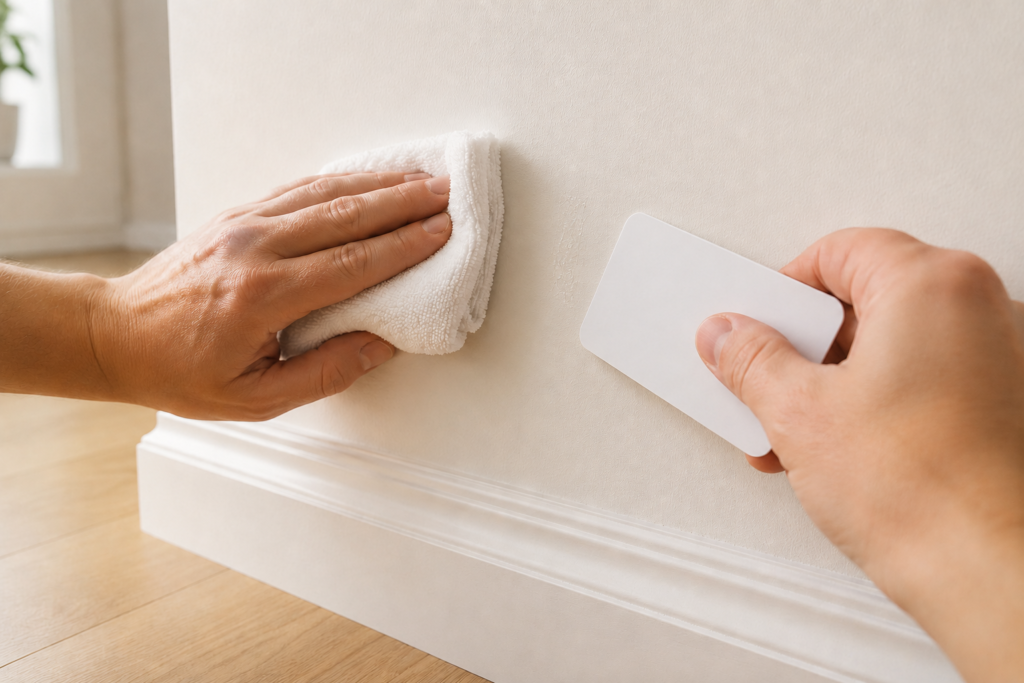
Use a clean section of the damp cloth to wipe the residue with light pressure. Rotate the cloth frequently so removed adhesive is not deposited back onto the wall.
Paint manufacturers generally recommend beginning with water and a non-abrasive cloth or sponge. If warm water is not sufficient, a small amount of mild dish detergent is the next reasonable step.
Avoid repeatedly rubbing the same spot. Excess friction can polish a matte surface and create a permanent shiny area even if the paint color remains intact.
5. Use a Diluted Mild Soap Solution
If water alone leaves the wall sticky, mix a few drops of mild dishwashing liquid into a small bowl of warm water. The solution should not be heavily concentrated or excessively sudsy.
Dip a clean cloth into the solution, wring it out, and gently blot or wipe the residue. Allow the moisture to work on the adhesive instead of relying on scrubbing pressure.
For a small mark, a cotton swab can keep the solution confined to the adhesive. Repeat the treatment gradually rather than trying to remove everything in one aggressive pass.
6. Rinse and Let the Area Dry
Wipe the cleaned area with a second cloth lightly dampened with plain water. This removes soap and loosened adhesive that could otherwise leave a film.
Blot the wall dry with a soft towel and inspect it after it has dried completely. A damp area may temporarily appear darker, particularly on flat paint.
If the wall no longer feels sticky but a shadow remains, stop cleaning. The remaining mark may be discoloration or an oil stain within the coating rather than adhesive on its surface.
Match the Method to the Type of Residue
Sticker or Ordinary Tape Glue
Start with a warm, damp cloth. If the residue remains, gently clean it with diluted mild dish soap.
Old adhesive may have bonded with the paint. Stop if the paint begins to soften, peel, or transfer to the cloth.
Stretch-Release Hanging Strips
Follow the removal directions supplied with the product before applying any cleaner. These strips are generally designed to stretch slowly along the wall during removal.
Do not pull the strip outward toward you. Pulling away from the wall can tear off the paint. For Command-style strips, slowly stretch the strip straight down along the wall while keeping your hand close to the surface.
Foam Mounting Tape
Gently roll away as much of the foam as possible with your fingers. Use a smooth plastic card held nearly parallel to the wall if needed. Clean the remaining sticky film with warm water and mild dish soap.
Permanent mounting adhesives may not separate cleanly from the paint. Stop if the coating begins lifting with the foam.
Mounting Putty or Oily Adhesive
Use diluted mild dish soap to remove oils remaining on the surface. Blot gently instead of scrubbing.
If an oily shadow remains after the wall dries, the oil may have penetrated the paint. Additional cleaning may not remove it, and the area may require stain-blocking primer and matching paint.
Hardened Construction Adhesive
Do not use force, a metal scraper, or a strong solvent on hardened construction adhesive.
These products can bond tightly with the painted surface. Repairing and repainting the affected area may be safer than trying to remove the adhesive without damaging the wall.
What If Mild Soap Does Not Work?
If the paint remains stable and the residue is still raised or sticky, consider an adhesive remover only when its label explicitly permits use on painted walls.
Before treating the visible mark:
- Check the product label for incompatible coatings and required ventilation.
- Test it on a hidden section of the same painted surface.
- Let the test area dry completely.
- Apply a minimal amount to a cloth or cotton swab rather than spraying the wall.
- Keep the cleaner confined to the residue.
- Follow the label’s contact-time instructions.
- Wipe with clean water afterward if directed.
Do not assume that “safe for painted surfaces” guarantees compatibility with every wall paint. Adhesives, cleaners, paint formulas, and curing conditions vary. Mechanical removal can also damage a painted surface regardless of its finish.
Avoid These Common Paint-Damaging Methods
Do not begin with:
- Acetone or nail polish remover
- Paint thinner or mineral spirits
- Heavy-duty spray cleaners
- Undiluted adhesive solvent
- Razor blades or metal putty knives
- Scouring pads or stiff brushes
- Melamine cleaning foam on delicate or matte paint
- Baking soda paste on a finish that may burnish
- Cooking oil, peanut butter, or oily lubricants
- Prolonged soaking
- High heat from a heat gun
Rubbing alcohol is also not a universal wall cleaner. It is recommended for preparing walls for certain adhesive products, but that does not mean it is suitable for removing every adhesive from every paint. It may dull, soften, or lift some coatings.
Never mix cleaning products. If one cleaner has already been used, remove it as directed and allow the area to dry before considering another method.
If the Paint Has Already Been Damaged
Cleaning cannot restore paint that has been polished, dissolved, or pulled away.
Allow the area to dry before deciding what repair is needed. A small damaged spot may be touched up if you have matching paint with the same color and sheen. However, older paint may have faded or accumulated dirt, so a fresh touch-up can remain visible.
If adhesive has exposed primer, drywall paper, or joint compound, the damaged surface may need light preparation and primer before painting. When a touch-up produces a noticeable patch, repainting the wall from corner to corner usually creates a more uniform result.
Frequently Asked Questions
Q. Can vinegar remove sticky residue from painted walls?
A. Vinegar is not the safest first choice for an unknown wall finish. Begin with warm water and mild dish soap. Use another cleaner only when the paint manufacturer or cleaner label confirms compatibility and a hidden test produces no change.
Q. Can I use a magic eraser on painted walls?
A. Melamine foam cleans through mild abrasion. It may remove the residue, but it can also change the color or sheen, especially on flat, matte, dark, or delicate paint. Test it carefully or avoid it when preserving the finish is the priority.
Q. What is the safest method for flat paint?
A. Use a well-wrung soft cloth, plain water, and a blotting motion with very little pressure. Add diluted mild dish soap only if necessary. Stop if the spot becomes shiny or color transfers to the cloth.
Q. Should I use a hair dryer to soften adhesive?
A. Heat can soften some adhesives, but it may also soften paint or spread the glue. A warm damp cloth is the safer starting point. Use heat only when the adhesive manufacturer recommends it, keeping the setting low and checking the surface frequently.
Conclusion
Sticky residue is least likely to damage painted walls when it is removed gradually: test the finish, lift loose material, soften what remains, and use water before introducing soap or a specialty cleaner.
If the wall changes color, sheen, or texture, stop cleaning. A small paint repair is usually preferable to enlarging the damage with stronger solvents or harder scrubbing.
If the affected surface is a fabric shade rather than a painted wall, use this fabric lampshade cleaning guide to avoid creating water marks.