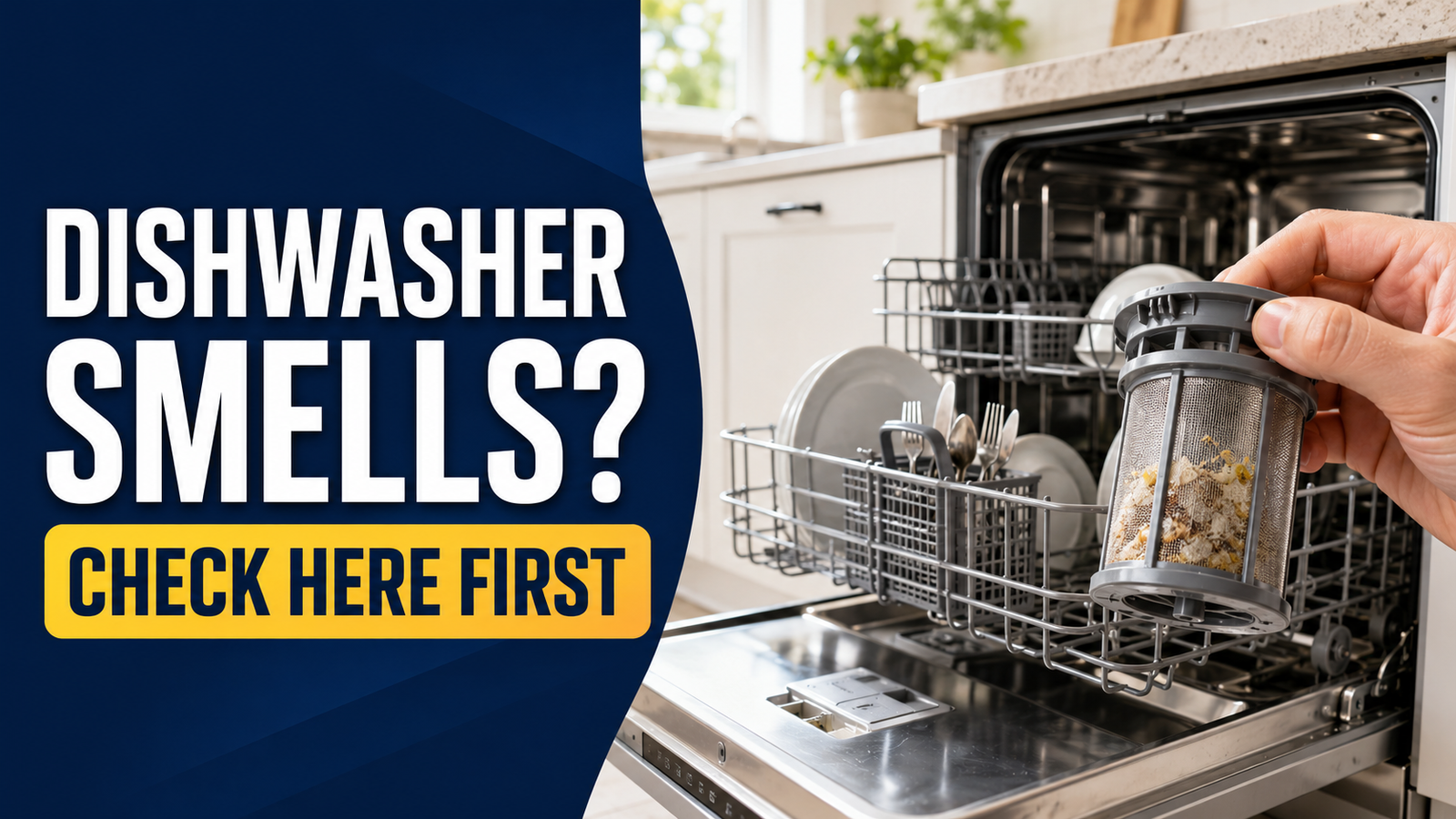
If your dishwasher smells after a cycle, start with the filter, the lower door edge, and any unexpected standing water. Trapped food and residue can remain even after a completed wash. Cleaning those areas may solve the problem, while water that fails to drain calls for a closer look at the drainage system. Whirlpool’s dishwasher odor guidance identifies both leftover food and drainage issues as possible causes.
Before cleaning, distinguish a stale or musty odor from a burning smell. Stop using the dishwasher if it smells like burning plastic or electricity. Disconnect its power if safe and let it cool. A fallen plastic item can contact an exposed heater on some models; unexplained burning or visible damage needs qualified service. Maytag explains this burning-plastic possibility.
Check the Water and Filter First
Once the dishwasher is cool, remove the dishes and lower rack. Look at the bottom before removing any parts. A flashlight can help you see food scraps and the water level around the filter.
Decide Whether the Remaining Water Is Normal
A little water does not automatically mean the drain is blocked. Some models retain water in the recessed sump beneath the filter; others allow a small amount on the tub floor. The expected level depends on the design. GE’s drainage guidance describes these differences.
Confirm that the cycle actually finished. Water above the level described in your manual, especially when dirty or increasing between uses, deserves further checking. Take a photo of the level before cleaning so you can compare it afterward.
Clean the Filter Your Model Uses
Disconnect power before reaching into the bottom of the tub. Check the manual for the filter’s location and removal method. Some dishwashers have a removable filter assembly; others use a different filtration system. Do not force a part that does not release as described.
- Remove the accessible filter as directed and empty loose food into the trash.
- Rinse it under warm running water. Gently loosen remaining residue with a soft brush; avoid wire brushes and abrasive pads.
- Check the visible area around the opening for scraps. Watch for broken glass and avoid reaching blindly into the pump opening.
- Reinstall and secure every filter component according to the manual before operating the dishwasher.
A filter that is present but incorrectly seated still needs attention. Whirlpool’s filter-cleaning instructions explain why proper installation matters.
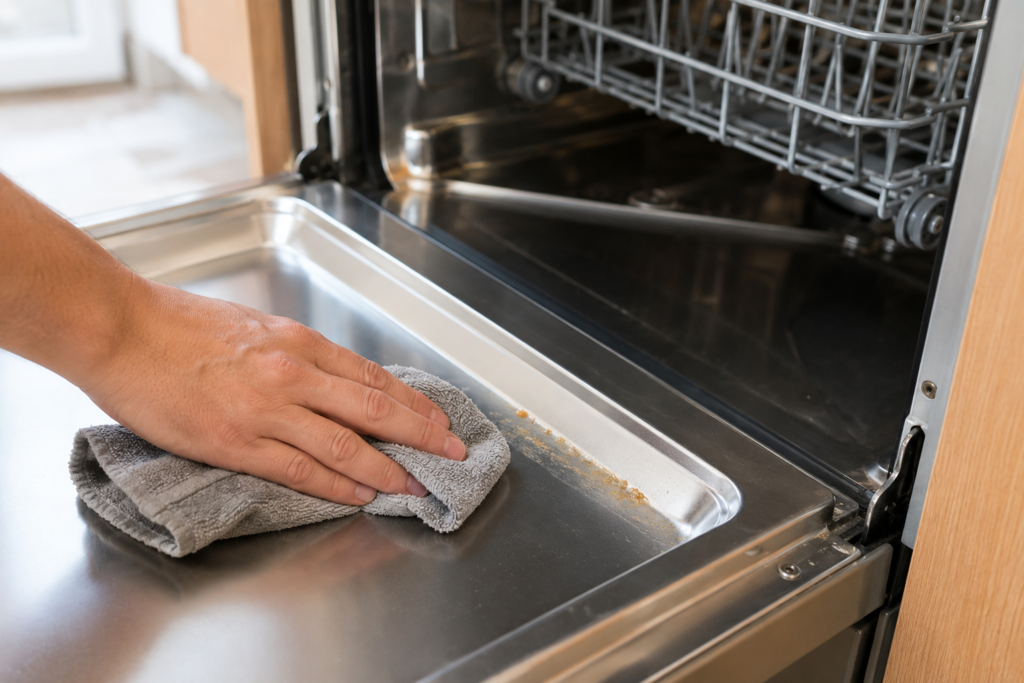
Wipe the Lower Door Edge and Seals
Check the lower inner edge of the door, the door sides, and accessible folds of the seal. Food and greasy film can collect there even when the middle of the tub looks clean.
Use a soft, damp cloth. If your manual permits mild soap, apply a little to the cloth, then wipe away the residue with a clean damp cloth. Do not pull the seal out of its mounting or flood the latch, vents, or controls.
Also inspect utensil-basket corners and visible spray-arm openings for trapped scraps. Follow the manual for clearing blocked openings without damaging them. Whirlpool includes seal cleaning and spray-arm checks in its odor-removal guidance.
If Dirty Water Returns, Check the Sink Connection
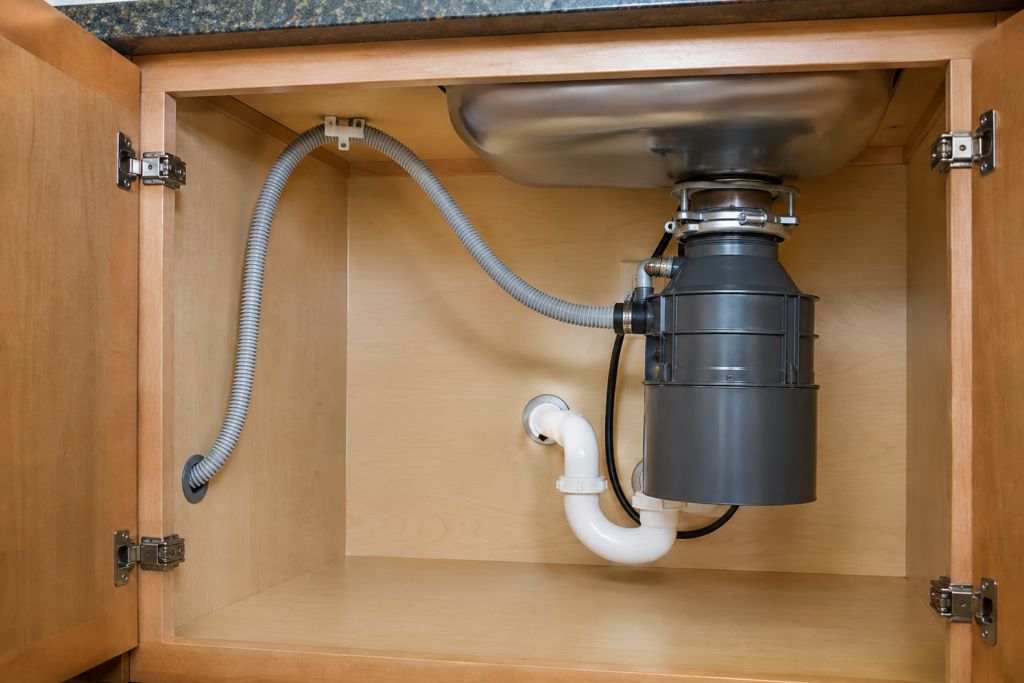
For a built-in dishwasher connected to the sink plumbing, note when water appears. If the machine drains but dirty water returns after you use the sink, that pattern suggests backflow and warrants checking the drain installation.
Look at the accessible plumbing without disconnecting hoses:
- Sink drain: Check whether it drains freely. Run a functioning garbage disposal according to its instructions; never reach inside it.
- Drain hose: Look for a visible kink or a section crushed by stored items.
- Air gap, if fitted: This small fitting near the faucet can collect debris. Clean its removable parts as its manufacturer directs.
- Recently replaced disposal: Ask the installer to confirm that the dishwasher inlet’s knockout plug was removed.
These are among the checks in GE’s dishwasher drainage guidance.
Compare the hose routing with your dishwasher’s installation instructions. A high loop raises and secures the drain hose beneath the counter; some installations require a countertop air gap. Follow the model instructions and local requirements, and do not replace a required air gap with a loop. GE explains how incorrect hose routing can allow sink water back into a dishwasher.
If the sink backs up or the connection needs correction, contact a plumber. If the sink drains normally but the dishwasher still retains excessive water after basic cleaning, an appliance technician can investigate the machine. Avoid pulling it out or opening pump and electrical compartments for an initial odor check.
Run a Suitable Cleaning Cycle and Check the Result
Once the visible debris is removed, the filter is secured, and drainage is working, use a dishwasher cleaner compatible with your appliance. Follow the product label for the amount, placement, whether dishes must be removed, and the cycle to select. A dedicated cleaning program is available on some models, but the correct procedure varies. Samsung’s cleaning guidance illustrates these model and product differences.
Use one cleaning method at a time. Do not combine cleaning chemicals, pour hand dishwashing liquid into the dispenser, or put sink drain opener into the dishwasher.
After cleaning, check the empty machine, then notice what happens with the next normal load. A useful distinction is whether the odor remains continuously or returns alongside another symptom, such as food left on dishes, a drain error, or water backing up. Record that symptom before contacting support; it gives the technician more to investigate than odor alone.
To limit new buildup, scrape solid food off plates, avoid blocking the spray arms, and follow your manual’s filter-maintenance guidance. If the manufacturer permits it, leave the unloaded dishwasher slightly open to release moisture when this is safe around children, pets, and walkways.
Frequently Asked Questions
Q. Can I use vinegar instead of dishwasher cleaner?
A. Use it only if the appliance manufacturer permits it, following the specified amount and cycle. Some manufacturers allow vinegar but caution against frequent use because of possible damage. It should not become an automatic addition to every wash. Maytag’s vinegar guidance includes this limitation.
Q. Is a plastic smell normal in a brand-new dishwasher?
A. A mild material odor can occur during initial use and fade with normal operation, according to GE’s guidance on new-dishwasher smells. A sharp burning smell, smoke, or melting should not be dismissed as a normal new-appliance odor.
Q. Could a rotten-egg smell be coming from the water supply?
A. Yes. Check whether the same odor is present at other hot or cold taps. Hydrogen sulfide can originate in well water, plumbing, or a water heater, so dishwasher cleaning may not address it. Contact your water provider or a qualified water professional if the water itself smells. The Minnesota Department of Health explains how the odor’s location helps identify the source.
Conclusion
Start with the filter and lower door edge, then check whether the dishwasher drains as its manual describes. If dirty water returns after sink use, have the drain connection checked. Removing the source gives a cleaning cycle a useful job to finish.
If the odor is trapped in removable silicone kitchen items rather than the dishwasher itself, see this guide to removing odors from silicone utensils.