To stop sheets from balling up in the dryer, loosen each piece before loading, leave room for it to tumble, and separate a fitted sheet from anything it repeatedly traps. If a bundle has already formed, pause the dryer and open it up before continuing.
Pay attention to where the fabric stays wet. A damp center inside a dry outer layer calls for untangling and better separation. If ordinary clothing loads also dry poorly, the dryer may need attention beyond rearranging the bedding.
First, Untangle the Load That Is Already Balled Up
Restarting the same bundle leaves the damp layers trapped together. Try this sequence:
- Pause the dryer and wait for the drum to stop. Open the door and carefully remove the bundle; the fabric may be hot.
- Separate every item. Pull out hidden pillowcases, unfold the flat sheet, and open the fitted sheet’s gathered corners.
- Set aside pieces that are fully dry. Return the damp items loosely, splitting the load if necessary.
- Resume drying at a temperature allowed by the care label. Recheck the previously damp areas during the cycle.
Give Each Sheet Room to Open Up
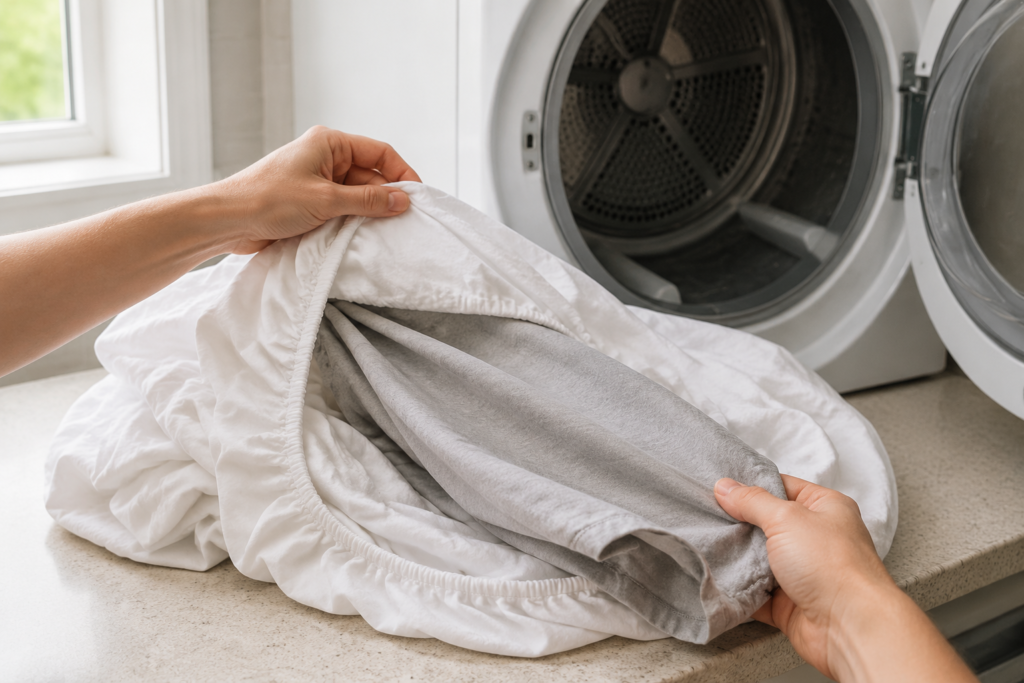
A fitted sheet’s elastic edges create pockets that can catch other laundry. Once a pillowcase or flat sheet is inside, the fitted sheet can wrap around it as the drum turns.
Before transferring a load, lift out each sheet individually. Release any twisted length of fabric and pull apart corners that have tucked into one another. Place the pieces loosely in the dryer.
If the fitted sheet keeps swallowing the rest of the set, try drying it separately. This is a useful troubleshooting change: it shows whether trapping other items is the main problem.
Keep wet bath towels and heavy blankets out of the sheet load. Different fabric weights can finish drying at different times, so a sheet may be ready to remove while a thick towel is still damp.
There is no universal number of sheet sets that fits every dryer. Follow your model’s loading guidance, and reduce the load if you have to compress the bedding to fit it inside. A set that fits comfortably in a large drum may crowd a compact dryer.
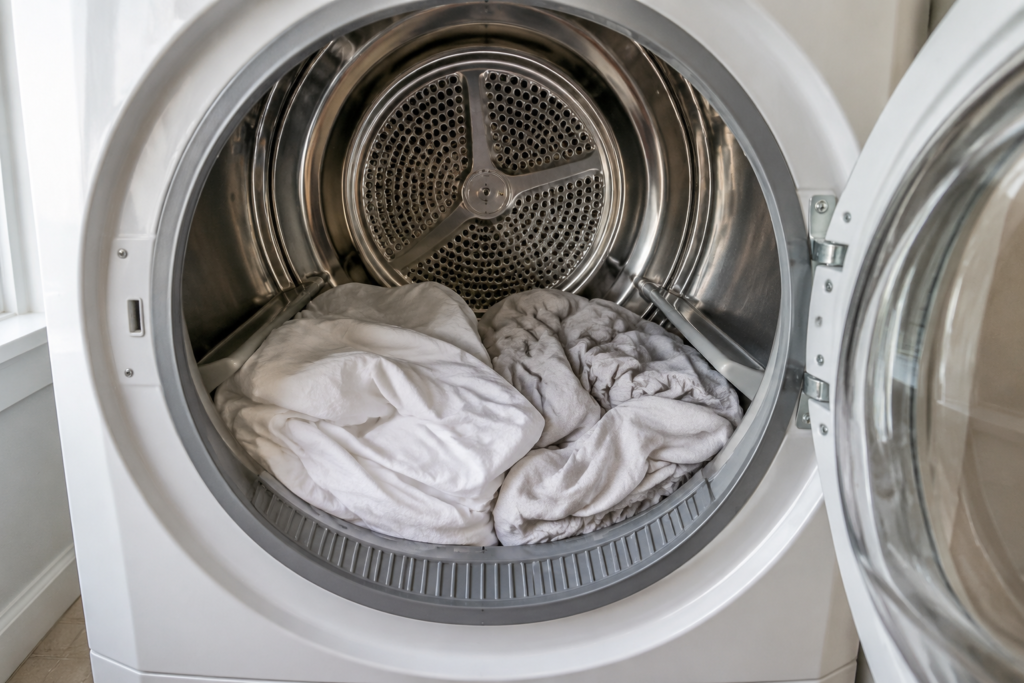
Check the space again during drying. Large linens can take up more room as they dry and fluff. Fitting into the drum while wet does not establish that they will have enough tumbling room throughout the cycle.
Choose the Setting for the Fabric
Read the sheets’ care labels before selecting heat. If tumble drying is permitted, use a temperature within those instructions and a cycle your dryer manual recommends for that load. A Bedding or Bulky setting may be appropriate on some models, but its default temperature still needs to suit the fabric.
High temperatures can contribute to shrinking and wrinkling. Lower heat may protect the fabric, but changing the temperature does not physically open a tight bundle.
For a load that repeatedly tangles, plan a pause partway through. Separate the layers while they are still damp and redistribute them. The useful check is whether the sheets remain loose; there is no single check-in time that suits every dryer and fabric.
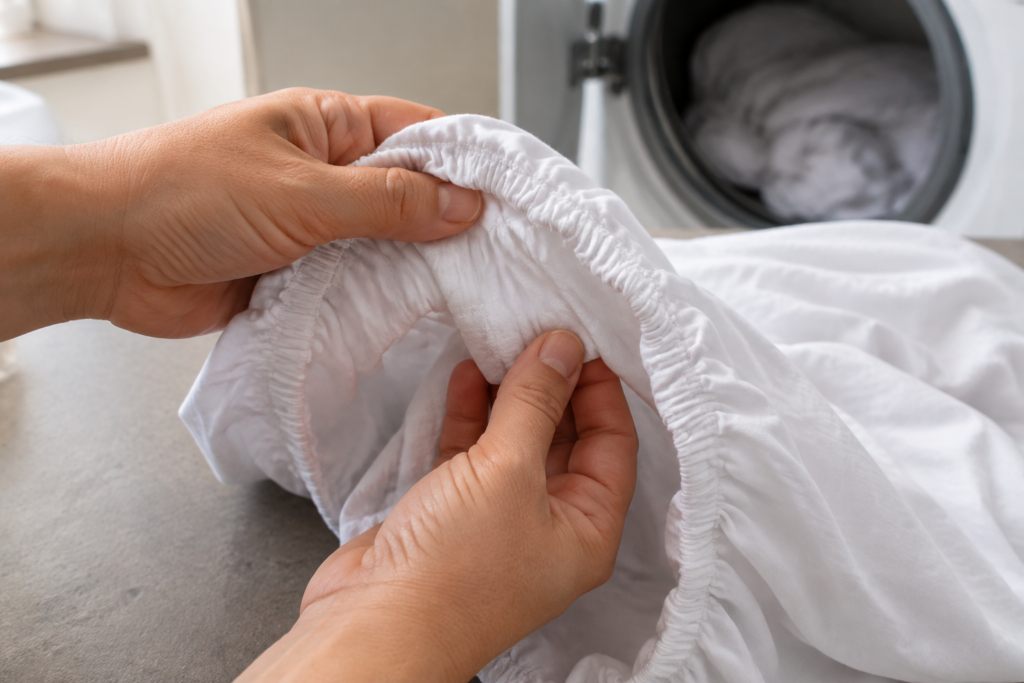
Before folding, open the fitted corners and feel the elastic hems and any previously bundled areas. Warm fabric on the outside does not tell you whether the inner folds are dry. Finish drying any damp sections before putting the bedding away.
Do Dryer Balls or Sheet Clips Help?
Dryer balls may help keep fabric separated as it tumbles. Choose products intended for tumble dryers, follow their directions, and check for any restrictions in your dryer manual. They are optional: a ball can also become trapped inside a fitted sheet, so inspect the load rather than assuming the accessory has solved the problem.
Purpose-made sheet untangling devices are another option. Check their fabric compatibility, temperature limits, and attachment instructions. Avoid improvising with household clips or rubber bands that are not labeled for tumble-dryer use.
Start with loading changes before buying accessories. An added object cannot create more drum capacity.
When Damp Sheets Need a Broader Dryer Check
If separated bedding and ordinary clothing loads are both taking longer than usual, clean the lint filter and follow the dryer’s troubleshooting instructions. The U.S. Fire Administration recommends cleaning the lint filter before use.
On a vented dryer, restricted or crushed exhaust ducting can interfere with drying. Arrange cleaning or inspection if the duct is blocked or inaccessible. Condenser and heat-pump models require their own maintenance checks; use the manual for that design.
Stop using the dryer if you notice a persistent burning smell or unusual overheating, and have the cause checked. Follow the manual’s instructions for error codes instead of repeatedly restarting the machine.
Frequently Asked Questions
Q. Why does an automatic cycle stop while parts of the sheets are still damp?
A. In a mixed load, dry fabric can contact the moisture sensors while other areas remain wet. Very small loads may also fail to contact the sensors reliably. Untangle the sheets first, then follow your model’s guidance for load size, dryness level, or a monitored timed finish.
Q. Should I put sheets in a mesh laundry bag?
A. A bag can keep items contained, but it can also limit airflow between folded layers and lengthen drying. It is not a reliable cure for a damp center. If trying one, use a dryer-compatible bag large enough to avoid packing the sheet tightly, and check the fabric inside before putting it away.
Q. What if one large sheet still rolls into a ball by itself?
A. A sheet can fold around itself even without other laundry. Pause and spread it out again. If it cannot tumble freely in your drum, air-dry it spread over a suitable rack or line according to its care label, or use a larger-capacity dryer. Avoid hanging it in a thick, folded bundle.
Conclusion
For the next sheet load, focus on the item that starts the tangle. Open its corners, separate anything it catches, and check it during drying. Return only damp pieces for further drying at a temperature their care labels allow.
If ordinary loads also need two full cycles, use this dryer airflow troubleshooting guide to check the lint screen, duct, and exterior vent.