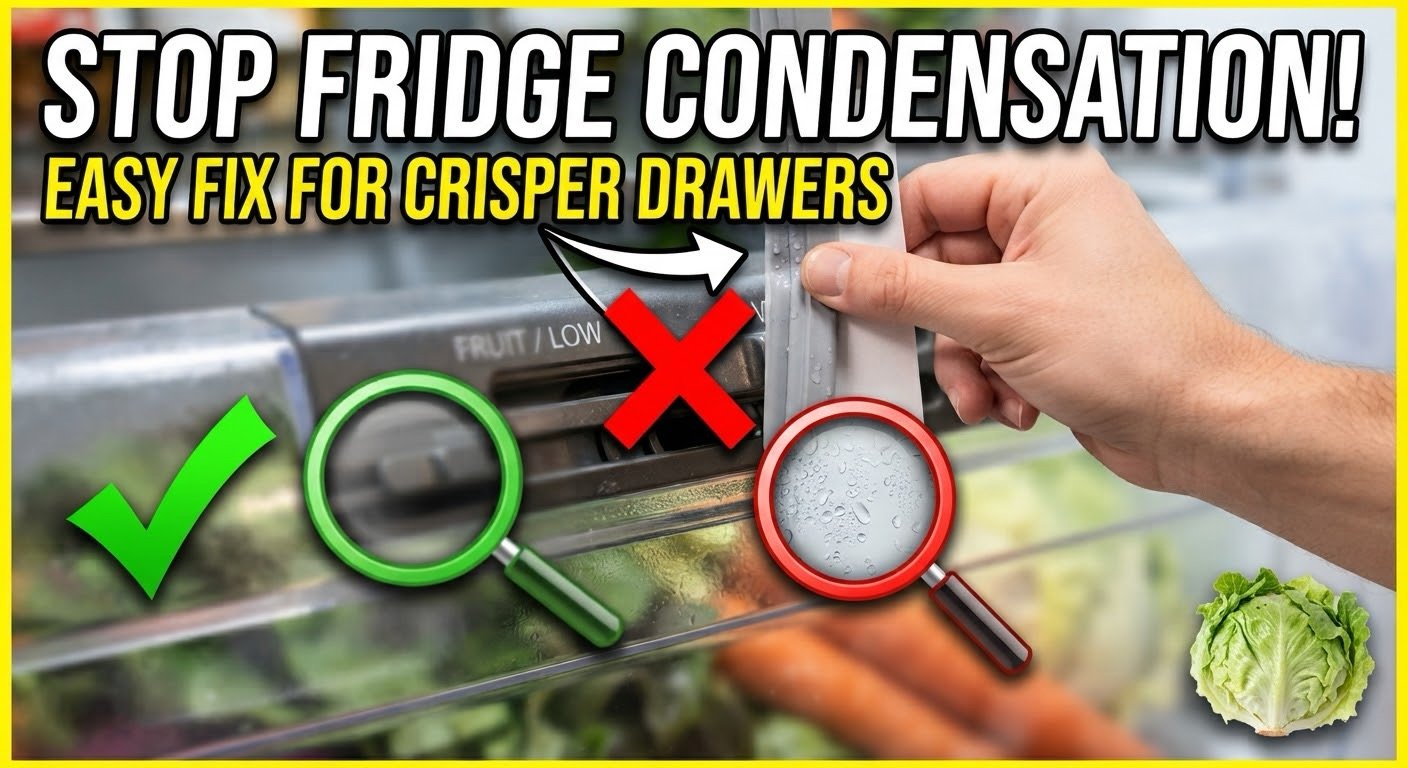
A crisper drawer is supposed to be humid. That’s the entire point of the compartment — it slows the moisture loss that turns lettuce limp. So a faint fog on the underside of the drawer lid isn’t a malfunction. What you want to stop is the next stage: beads of water on the produce, a wet drawer floor, and greens that go slimy in three days instead of lasting a week.
Most of the time the fix is one of three things — the humidity vent is set wrong for what you’re storing, the produce went in wet, or the drawer is packed too full for air to move. Persistent standing water, especially under the drawer, usually points to the refrigerator rather than the vegetables.
Where the Water Actually Comes From
Fruits and vegetables are mostly water, and they keep releasing vapor after they’re picked. A crisper drawer traps that vapor on purpose. Condensation forms when that humid air touches a surface cooler than its dew point — typically the glass shelf above the drawer, the drawer walls, or the produce itself sitting against a cold spot.
Three things push a drawer past the tipping point:
• Produce that was washed and not dried, or that came home damp from a misted grocery display
• Room-temperature or slightly warm items placed straight into a cold sealed drawer
• Warm, humid kitchen air entering every time the door opens, which is more noticeable in summer or in a humid climate
Understanding this helps because it explains why “turning the fridge colder” often makes things worse rather than better. Colder surfaces give the vapor more places to condense.
Match the Humidity Vent to What’s Inside
Most crisper drawers have a small slider or dial. It doesn’t run a dehumidifier — it simply opens or closes a vent. When the crisper is set to high humidity, airflow is cut off from the drawer, trapping moisture released by the produce inside; on the low setting, moisture and air escape through the vent. If your drawer has no slider at all, it’s built as a high-humidity drawer by default.
The general rule is that fruits prefer low humidity and vegetables prefer high humidity, with some exceptions. There’s a second reason to split them up: many fruits give off ethylene as they ripen, and keeping high-ethylene fruit in the low-humidity drawer lets some of that gas escape, which helps everything nearby stay fresh longer.
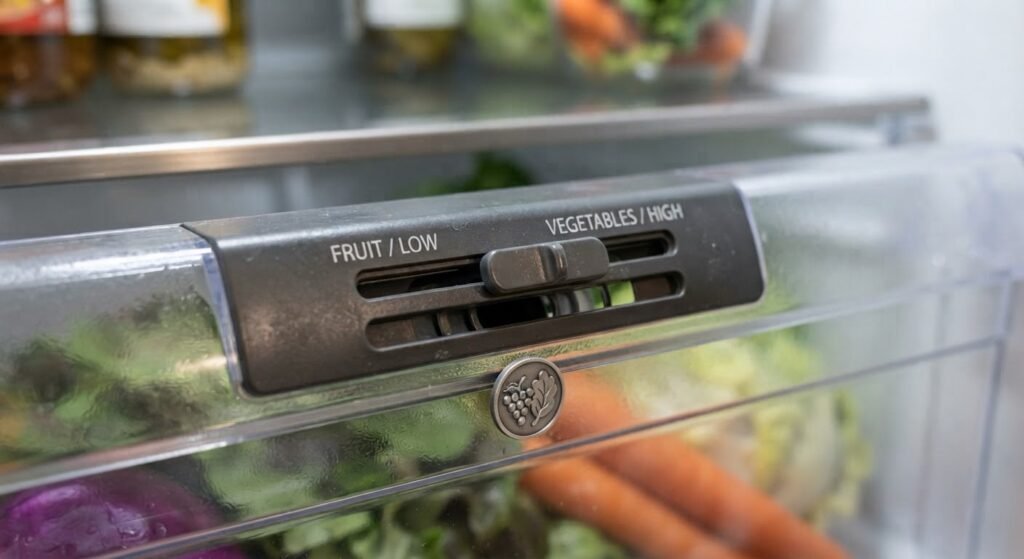
Setting What the vent does Store here Why
High humidity Vent closed, airflow restricted Leafy greens, herbs, broccoli, carrots, celery, cucumbers These wilt and shrivel quickly when moisture escapes
Low humidity Vent open, moisture and gas escape Apples, pears, stone fruit, melons, avocados These rot faster in trapped moisture and ripening gas
If condensation is your main complaint, look first at what’s in the high-humidity drawer. A few apples or a ripening melon sitting in a sealed drawer of greens will raise the moisture load noticeably. Moving them to the low-humidity drawer often solves the problem on its own.
One caution: don’t simply open every vent to the maximum and leave it there. That reduces condensation, but it also dries out the exact produce the drawer exists to protect. Aim to sort the contents correctly rather than defeating the compartment.
Dry Produce Before It Goes In
Water clinging to leaves has nowhere to go inside a closed drawer. It evaporates, hits a cold surface, and comes back down onto the produce.
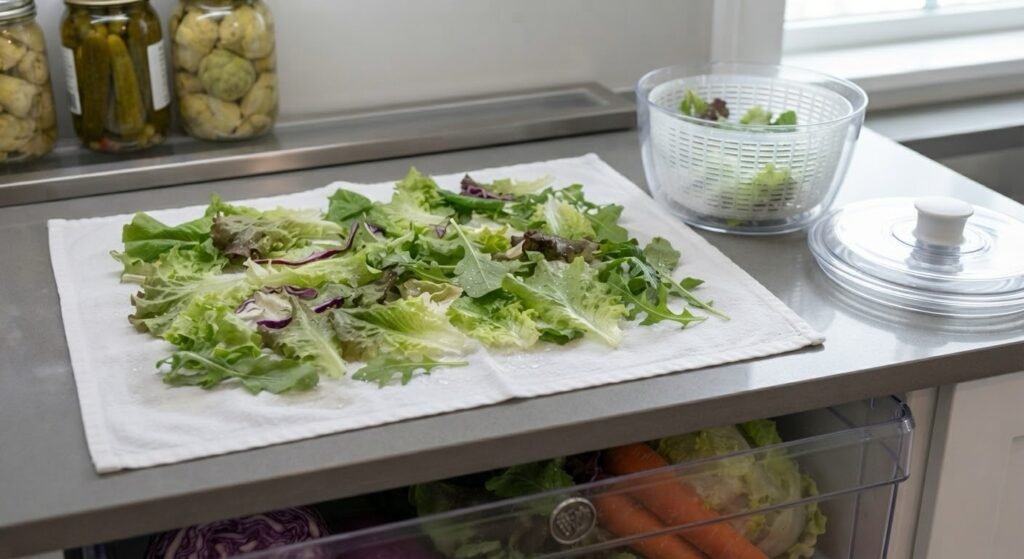
Wash greens shortly before you eat them rather than before you store them. When you do wash ahead of time, dry thoroughly — a salad spinner followed by a few minutes on a clean towel makes a real difference. Bagged greens that arrive with visible moisture inside the packaging are worth opening and drying too.
A folded paper towel or thin clean kitchen towel laid in the bottom of the drawer absorbs whatever moisture still collects. It only helps if you replace it once it’s damp; a soaked towel just holds water against the produce. The same trick works inside a storage container of greens.
For produce you want to keep in its own container, choose one with a vented lid or leave a bag loosely folded rather than sealed tight. Fully airtight packaging traps every bit of transpired moisture around the food.
Leave the Drawer Room to Breathe
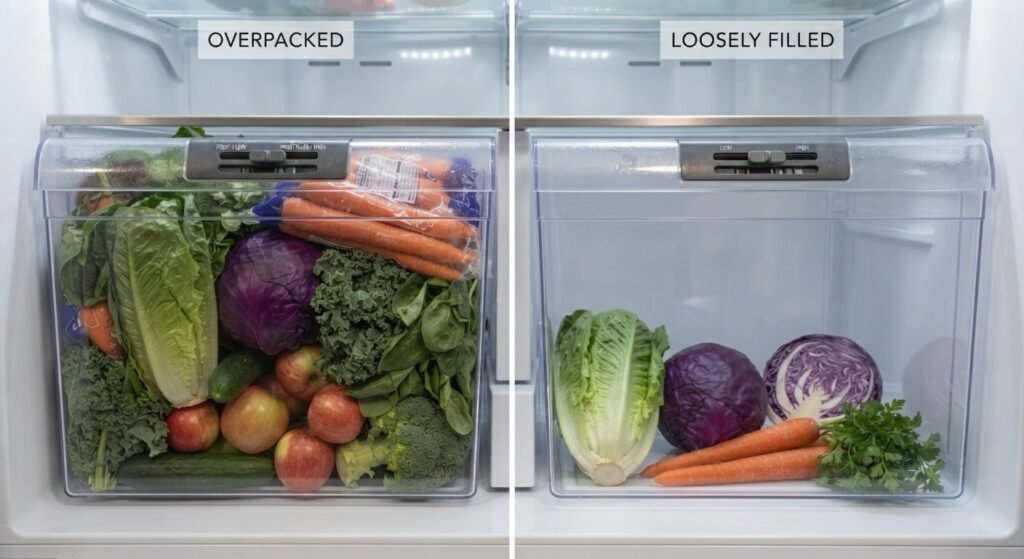
An overstuffed drawer has no space for air to circulate, so temperature evens out slowly and damp pockets form between items. Manufacturers commonly suggest keeping produce loosely arranged rather than packed — KitchenAid, for example, advises leaving produce breathing room and notes that crisper drawers generally work best around two-thirds full.
Also check that nothing inside the fresh-food compartment is blocking the vents where cold air enters. Cold air needs to circulate around refrigerated food to keep it properly chilled, and a large container pressed against a vent can create a cold spot right above the crisper where vapor condenses and drips.
Check the Temperature and Airflow
An appliance thermometer placed on a middle shelf tells you more than the dial on the door. The FDA advises keeping the refrigerator at or below 40°F (4°C), and notes that an appliance thermometer is the reliable way to know. A fridge running warm allows produce to respire faster and releases more vapor into the drawer. A fridge running very cold creates surfaces well below the dew point of the humid drawer air, which encourages droplets and sometimes light frost.
If your model has a digital display, give any adjustment several hours to settle before judging the result, and re-check with the thermometer rather than trusting the number on the panel.
When the Refrigerator Is the Problem
If the drawer stays wet after you’ve sorted the produce, dried it, and loosened the packing, look at the appliance.
Water Pooling Under the Drawer
Standing water beneath the crisper — rather than droplets inside it — is a different symptom. On many refrigerators this points to the defrost drain, which carries meltwater from the evaporator to a pan underneath. When that drain becomes blocked, water can back up and appear at the bottom of the fresh-food compartment.
Some owner’s manuals describe how to clear the drain opening on that specific model; check yours before attempting anything. If the manual doesn’t cover it, if the blockage is out of reach, or if you’d need to remove interior panels to access it, this is a reasonable point to call an appliance technician. Don’t attempt repairs involving the sealed refrigeration system or wiring.
Door Seals and Kitchen Humidity
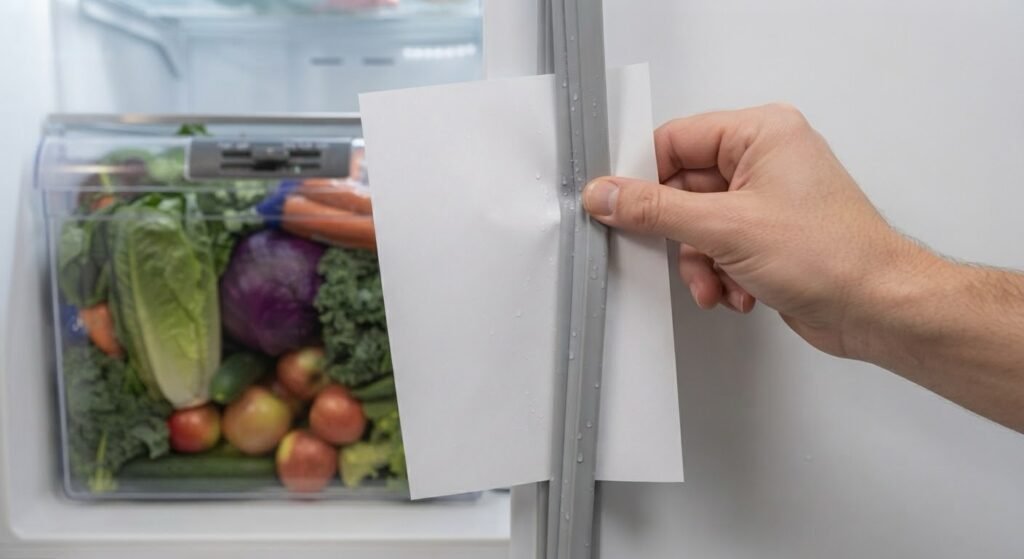
A weak door gasket lets warm, moist room air seep in continuously. A quick check: close the door on a sheet of paper and pull. If it slides out with almost no resistance at that spot, the seal may be worn or the gasket may just need cleaning — dried spills and grime keep gaskets from sitting flat.
Environment matters too. A refrigerator in a hot garage, a kitchen without ventilation during cooking, or a humid summer with frequent door openings all increase the moisture entering the cabinet. You may not eliminate condensation entirely under those conditions, but drying produce and sorting the drawers still reduces it substantially.
A Short Routine That Keeps the Drawer Dry
• Wipe the drawer and the underside of the shelf above it once a week with a dry cloth
• Replace the paper towel liner whenever it feels damp
• Pull out anything soft or spotted before it releases moisture and spreads decay
• Move fruit to the low-humidity drawer when you unpack groceries, not later
• Re-check the appliance thermometer once a month
None of these take long, and together they address the causes rather than mopping up the symptom.
For the freezer section, this bottom-drawer freezer organization guide shows how to keep food visible without blocking airflow.
Frequently Asked Questions
Q. Is a little condensation in the crisper normal?
A. Yes. A high-humidity drawer is designed to hold moisture around produce, so light fogging on the lid or a slight dampness is expected. Droplets falling onto the food, a wet drawer floor, or produce turning slimy quickly are signs the moisture level has gone too far.
Q. Should I just leave the vent open all the time?
A. It will reduce condensation, but leafy greens and herbs will wilt faster in the drier air. Sorting produce between the two drawers usually gives better results than leaving everything on the low setting.
Q. Why is there water underneath the drawer instead of inside it?
A. That pattern often indicates a drainage issue rather than a produce-storage issue, commonly a blocked defrost drain on many models. Check your owner’s manual for guidance specific to your refrigerator, and contact a technician if the drain isn’t accessible.
Q. Do plastic drawer liners or mats help?
A. Ventilated mats can lift produce off a wet drawer floor and make cleanup easier, which helps in some setups. They don’t remove moisture from the air, so they work best alongside drying produce and adjusting the vent rather than instead of those steps.