As an Amazon Associate I earn from qualifying purchases.
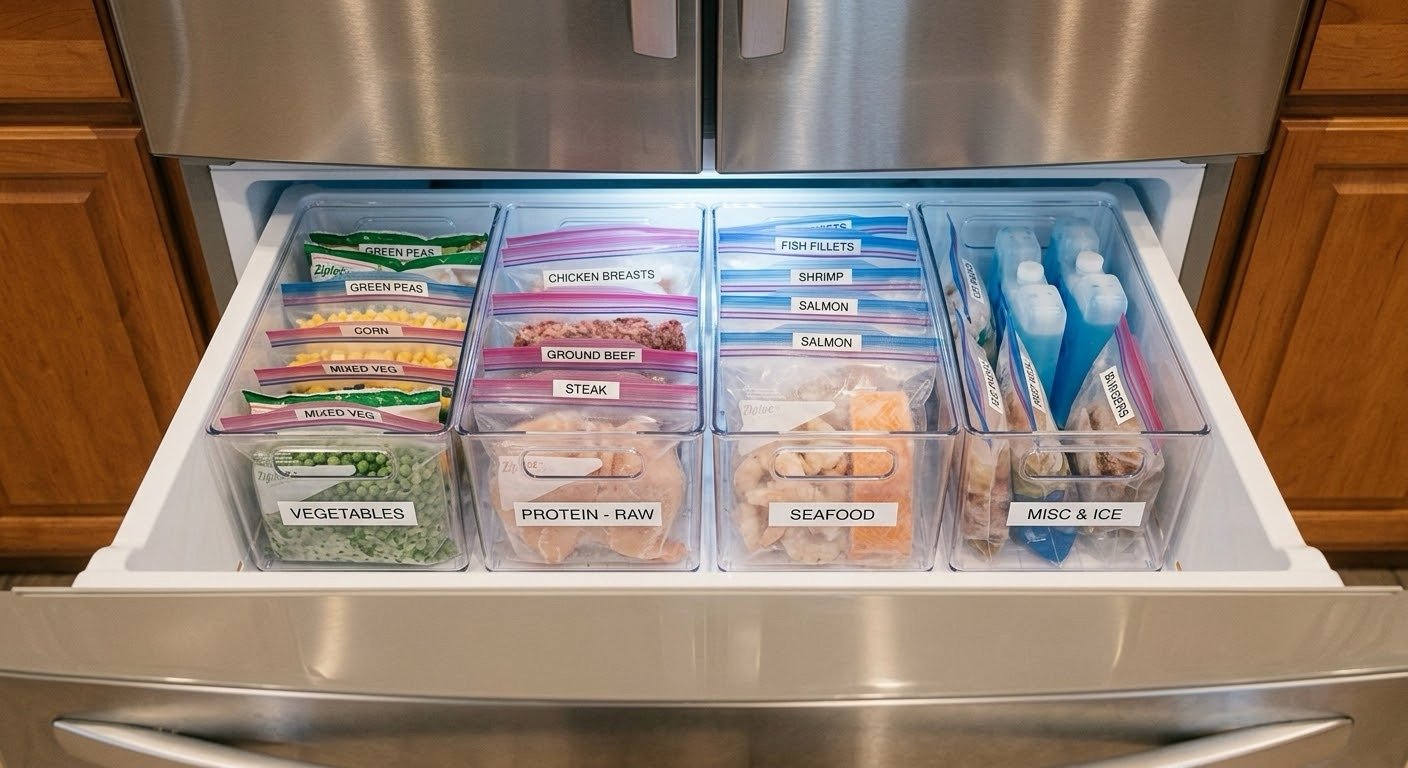
A bottom-drawer freezer is easier to organize when food is grouped into a few accessible zones and older packages stay visible. Start with the dividers and containers you already have. Before buying organizers, measure the usable space and check how the upper tray and drawer move.
The aim is to retrieve food without unloading the whole drawer while keeping the door seal, ice maker, and air passages clear. More bins are not automatically an improvement: an organizer that blocks movement or hides another layer can create a different problem.
Find the problem before changing the layout
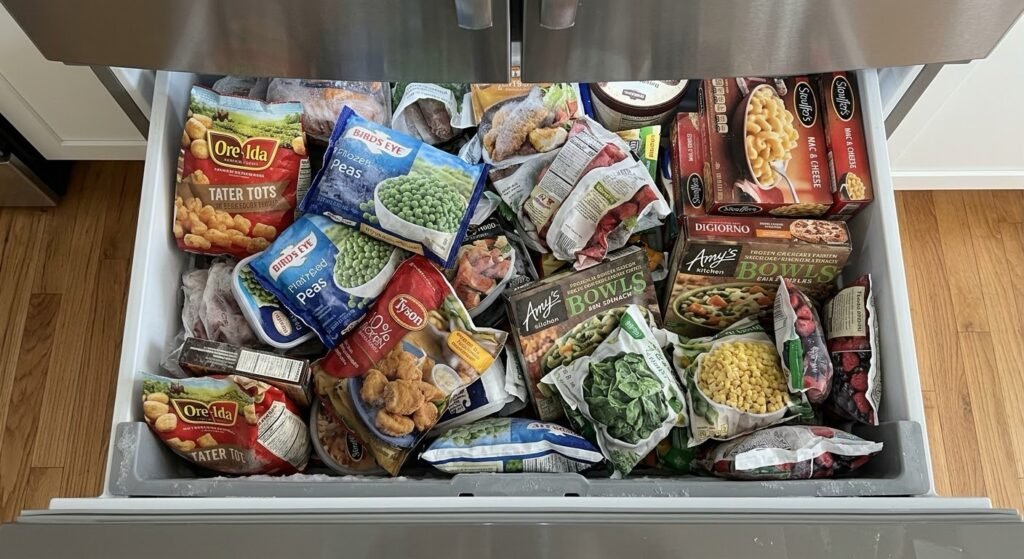
Look at what makes your current drawer difficult to use. If small packages disappear beneath large bags, they need a separate zone. If you keep finding duplicate purchases, labels or a short inventory may help more than another container. If the upper tray catches when closing, check for protruding packages before changing anything else.
Drawer layouts vary. Some have adjustable dividers, a separate ice compartment, or multiple sliding baskets. Use the refrigerator manual to identify the parts you can reposition; do not remove rails, guards, or ice-maker components to fit an organizer.
Sort in small batches and keep food cold
Prepare your categories before opening the freezer. Work with one section at a time, or transfer frozen food to another freezer or a suitable cooler with ice packs while you sort. Avoid leaving the full contents on the counter during a lengthy cleanout.
- Group foods by how you use them, such as meal ingredients, vegetables, prepared meals, and small breakfast items. These are examples, not a required layout.
- Separate damaged or leaking packages from other food. Repackage suitable food in freezer-safe packaging rather than relying on an open outer box.
- Place older dated items where they are easy to reach. Keep a small “use next” zone if it helps you plan meals.
- Do not taste food to decide whether it is safe. If its temperature history is uncertain, follow food-safety guidance before keeping it.
Keep the freezer at 0°F (-18°C), as recommended in the FDA’s food-storage guidance. Freezer burn is a quality problem associated with moisture loss and inadequate packaging; being at the bottom of a drawer does not itself cause it. A package that looks acceptable is not proof of safe handling.
Measure the space the drawer actually uses
Check the usable width, front-to-back depth, and height of each compartment. Measure between obstructions, rather than using the refrigerator’s advertised capacity. Note any sloping sides, raised floor sections, handles, and space occupied by an upper basket.
The usable height is limited by whatever passes above the food when the drawer closes. A bin may fit inside the open drawer yet catch beneath a sliding tray. Choose a layout that leaves the required clearance for your model; there is no universal clearance measurement.
Keep hands away from closing rails. Test the drawer slowly without forcing it, first with empty organizers and again after loading. Stop if a bin shifts into a rail, contacts an ice-maker mechanism, or prevents the gasket from sealing. Keep the manufacturer’s air openings clear.
Choose organizers only for a specific job
A handled bin for loose packages
First try the built-in dividers or an existing container explicitly suitable for freezer use. A handled bin can make a group of small packages easier to remove, but its walls and handles consume space. Clear walls may help with identification; visible labels can work with opaque containers too.
If a separate bin would solve that problem, compare freezer storage bins with handles. Check the listed exterior dimensions, freezer-use rating, and loaded weight before choosing one. “Stackable” does not mean it will fit safely beneath your upper tray.
Freezer-safe bags for portioned food
Flat packages can stand in a supported row once frozen, making labels easier to see from above. Use bags intended for freezing, close them securely, and leave any expansion space specified for liquids. Do not force every food into a flat shape or stand an unfrozen liquid bag upright where it can spill.
Existing disposable freezer bags may already suit this job. If you prefer reusable bags, consider reusable silicone freezer bags only after checking their freezer suitability, cleaning directions, closure, and dimensions. Neither the material nor the price guarantees a flatter package or better food preservation.
Do not wait for hot leftovers to cool completely on the counter before storing them. Divide large amounts into small, shallow containers and refrigerate promptly, then prepare portions for freezing. The FDA explains prompt cooling and safe refrigerator and freezer temperatures. Follow the storage container’s temperature limits as well.
Labels that are readable from above
Write the food name and storage date on packaging or tape already suited to that surface and temperature. Place the label where it remains visible in the final layout. If condensation makes your current labels come loose or illegible, freezer-rated labels may be useful; a special marker is not a requirement for every household.
Keep the layout simple enough to maintain
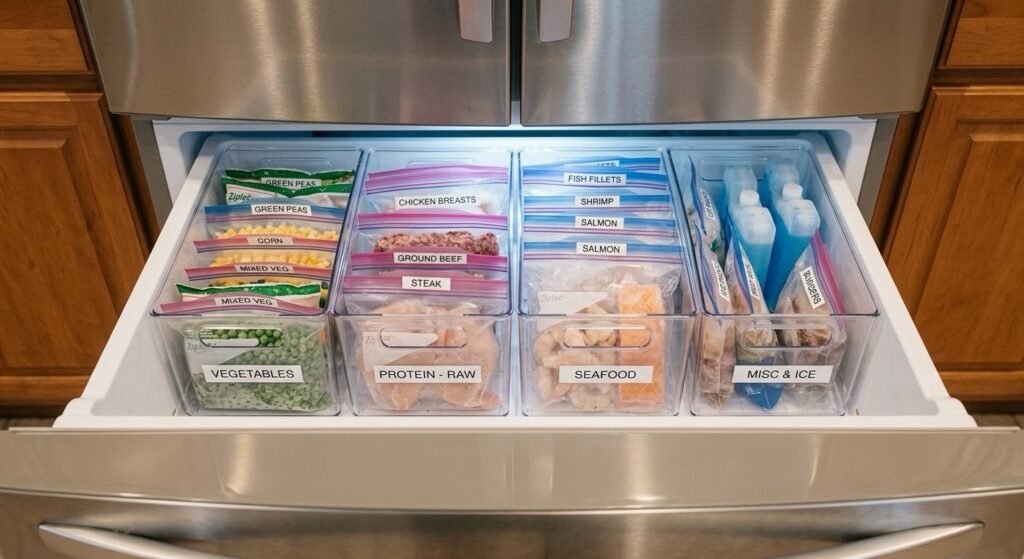
Put new packages behind or beneath older dated ones within each accessible category. Before shopping, check the “use next” zone and update a brief inventory if you use one. If a category overflows, reconsider the quantity or zone size rather than pressing the drawer shut.
For persistent frost, softening food, or a door that will not seal, consult the appliance manual or arrange service. Organizing cannot correct a temperature or sealing fault. For moisture in the refrigerator section, see how to prevent condensation in a crisper drawer.
Conclusion
A workable freezer layout keeps food visible, lets the drawer close freely, and makes older packages easy to use. Sort and measure first, then add only the organizer that fixes an observed access problem.