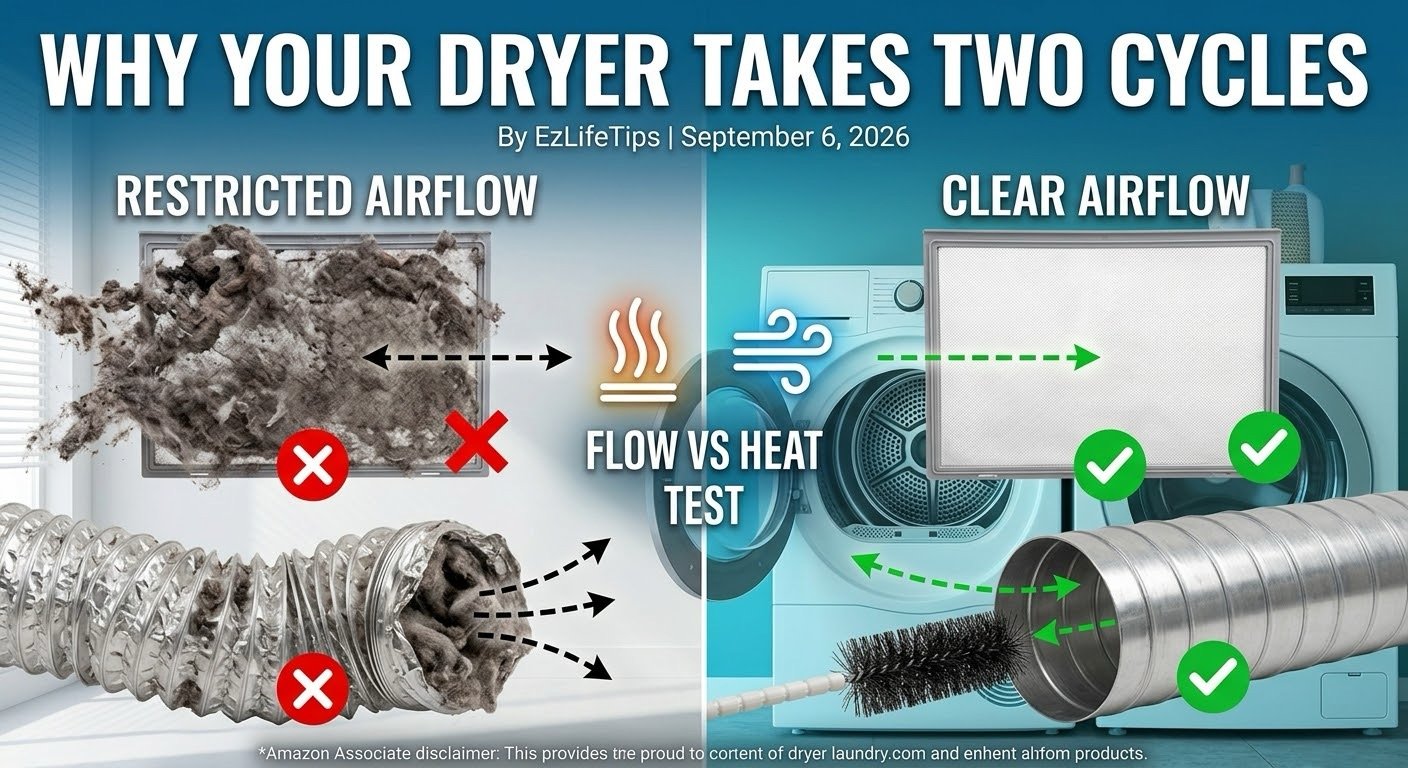
A dryer that takes two cycles to dry one load is usually losing airflow, not heat. Whirlpool names poor ventilation as a leading cause of long dry times, and the restriction normally sits somewhere between the lint screen and the vent hood outside the house. Clear that path and cycle times often return to normal on their own.
Before touching any of it, run one test. It takes five minutes and it decides which half of the problem you have, because a dryer that heats but will not dry and a dryer that never gets hot need entirely different work.
Start with a five-minute heat test
Whirlpool’s check is straightforward. Select a heated cycle, run the dryer empty for five minutes, then open the door and feel inside.
Warm or hot means the heating side is doing its job. Your problem is airflow, and the next section is where to look.
Barely warm or cold means the dryer is not producing heat. No amount of vent cleaning changes that, so skip ahead to the heat section rather than spending an afternoon on the duct.
Five minutes is worth spending here. Both problems produce the same symptom — damp clothes after a full cycle — and they have almost nothing else in common.
If the dryer heats, follow the air
Work through these in order. Each is quicker than the one after it, and the first real restriction you find may be the only one you need to fix.
The lint screen, including the film you cannot see
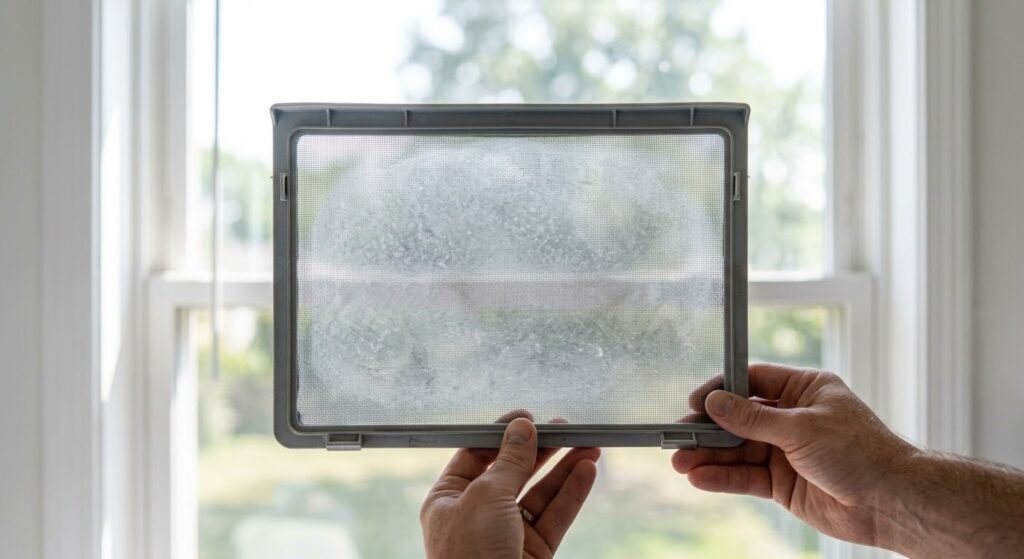
Pulling visible lint after every load is the starting point, not the whole job. GE’s guidance notes that the lint filter can be washed with warm soapy water to remove fabric softener residue, and that step is the one most people have never done.
Softener and dryer sheets leave a film across the mesh that is difficult to see straight on. Hold the screen up to a light and the haze becomes obvious. The screen looks clean, passes a glance, and still blocks air.
Wash it, let it dry completely, then put it back. A damp screen returned to the housing works against you.
The duct directly behind the dryer
Unplug the dryer before pulling it out. On a gas dryer, move it only as far as the supply line allows and leave the gas connection alone.
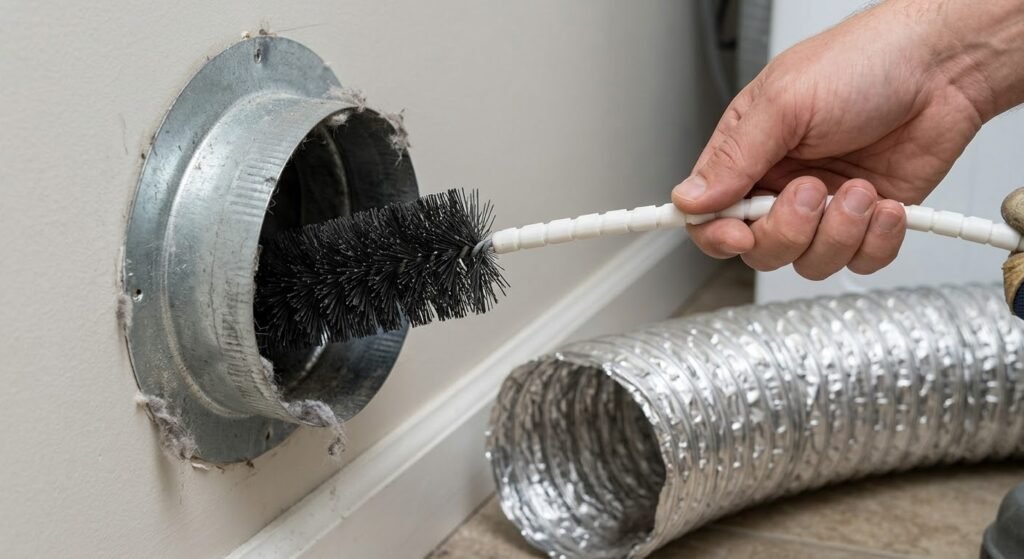
Whirlpool’s instruction is to check the vent hose behind the dryer for kinks, crushing, or excessive length, and to clear lint from both the hose and the wall connection. Crushing catches people out most often. Sliding the dryer back against the wall folds the duct flat, and once folded it stays that way through every load afterward.
Whirlpool also states that aluminum foil and plastic venting are not recommended, since both collapse or crush easily. If yours is the thin white plastic or accordion foil type, switching to semi-rigid metal ducting is worth doing whatever else you find, because it holds its shape under pressure from the appliance.
semi-rigid metal dryer duct
Clearance matters as much as material. If there is not enough room behind the unit for the duct to turn without folding, a periscope-style vent fitting is made for that situation and runs flat rather than looping. dryer vent periscope.
The vent run through the house
The section between the wall and the outside is where lint quietly accumulates over years. GE recommends cleaning the ductwork completely at least once a year. Whirlpool puts exterior venting on a one to two year schedule, or sooner when drying performance drops.
If yours has never been cleaned and the dryer has been slowing down, this is the likely restriction. A vent brush kit with linking rods reaches along a typical run and pulls packed lint back toward you rather than compacting it further in. dryer vent cleaning brush kit.
Length is a separate issue from cleanliness. A run that is too long, or that contains several bends, chokes airflow even when spotless. Whirlpool directs owners to their model’s installation documentation for the specific limits, since the allowance depends on the dryer and on how many elbows the route includes.
The outside vent hood
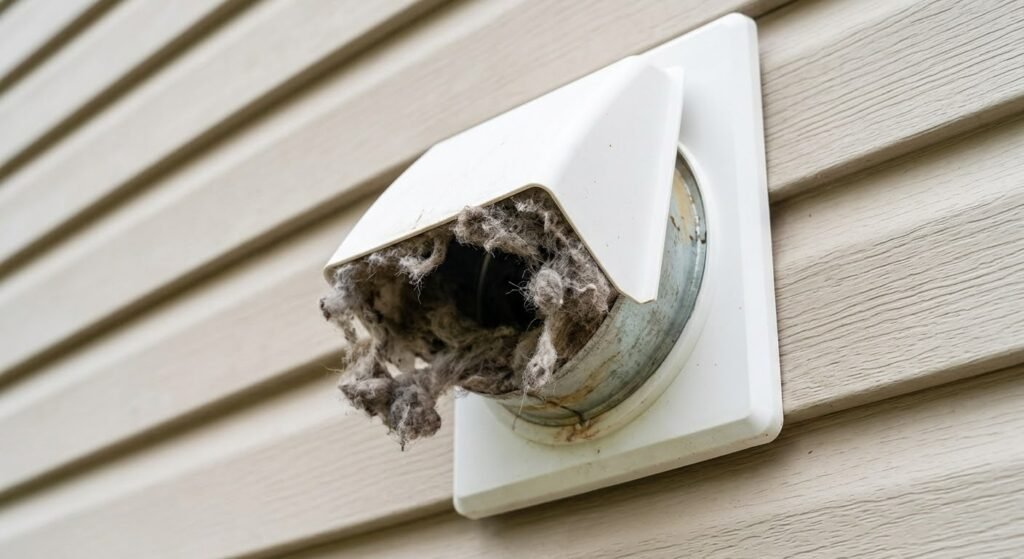
GE’s guidance includes making sure the outside wall cap or damper opens easily. Go outside with the dryer running and hold a hand near the hood. Steady warm air should be pushing out.
Weak airflow at the hood, after you have already cleaned the duct, points at the hood itself. Damper flaps stick, get painted shut, pack with lint, or get blocked by a bird nest. Screened covers clog particularly fast, because lint catches on the mesh from the inside where nobody looks.
If the dryer does not heat
An electric dryer that tumbles normally but never warms points at the power supply or a failed heating component. GE’s troubleshooting begins with the household fuse or circuit breaker serving the dryer, and that is the right first stop.
Reset the breaker once. If it trips again, stop and call an electrician. A breaker that keeps tripping is doing what it was designed to do, and resetting past it is not a repair.
Beyond the breaker, a dryer that will not heat generally needs a heating element, thermostat, or thermal fuse replaced. On an electric dryer that is service work unless you are confident testing components inside an unplugged appliance. On a gas dryer, anything involving the burner, igniter, or gas valve belongs to a qualified technician without exception.
When the load is the problem, not the machine
Some long cycles have nothing wrong with them. GE notes that drying time varies with the heat source, the load size, the fabric type, how wet the clothes were going in, and the condition of the exhaust venting. Cottons hold more water than synthetics, so towels and shirts are not comparable loads.
Worth ruling out before you take anything apart:
• Overloading. Air has to move through the load, not around it. A packed drum tumbles as one mass and the middle stays wet.
• The washer’s spin. Clothes leaving the washer soaked rather than damp make the dryer look slow. Run one load through an extra spin and see whether dry time changes.
• Cycle choice. Whirlpool notes that automatic cycles perform better than timed ones, and suggests selecting a different cycle if clothes are not reaching the dryness level you want.
• Mixed loads. One heavy item among light ones means the cycle either runs long for the heavy piece or stops while it is still damp.
If bed sheets keep tangling into one damp bundle, this guide to stopping sheets from balling up in the dryer covers that specific problem.
Sensor cycles that stop early
Dryers with automatic cycles read moisture through metal contact strips inside the drum. Residue from fabric softener and dryer sheets can build up on those strips over time, which may cause the dryer to read clothes as drier than they are and end the cycle early.
Cleaning them is reasonable maintenance on many models, but the recommended method varies and some manuals specify what not to use. Check yours before wiping anything inside the drum.
Keeping airflow from closing down again
Airflow does not fail all at once. It narrows gradually, which is exactly why the change feels like the dryer getting old rather than something fixable.
• Clear the lint screen every load, and wash it periodically to remove residue.
• Clean the full duct run on a yearly schedule, or sooner if drying slows. Pets and heavy use shorten that interval.
• Check the outside hood seasonally for lint and nests.
• Leave enough clearance behind the dryer that the duct is not crushed when the unit goes back against the wall.
Lint is highly flammable, and it collects in the one place hot air passes through constantly. That makes the cleaning schedule a safety matter as much as a performance one.
When to stop and call someone
Whirlpool advises arranging service when long dry times continue after cleaning, when the dryer does not heat, when error codes appear, or when there are unusual noises. A few more clear lines:
• Anything on a gas dryer involving the supply line, burner, or igniter. If you smell gas, leave the house and call the gas utility from outside.
• A breaker that trips more than once. That is electrical work, not appliance work.
• A vent run you cannot reach or trace. Long runs, routes through ceilings, and roof terminations are duct-cleaning service jobs.
• Any scorching smell, or a cabinet too hot to touch. Stop the dryer and unplug it.
Whirlpool also suggests what to have ready for a service visit: model and serial numbers, a plain description of the symptom, the steps you already tried, and the type and approximate length of the vent run. That last detail is the one most homeowners cannot answer, and having it shortens the appointment.
Frequently Asked Questions
Q. My dryer is only a couple of years old. Can the vent already be the problem?
A. Yes. Whirlpool notes that connecting a new dryer to existing house venting can still produce long dry times. The age of the dryer says nothing about the condition of the duct behind it, and a new machine on an old run inherits the restriction.
Q. Is cleaning the lint screen every load enough on its own?
A. It handles what the screen is designed to catch, but fine lint still passes through and settles further along the run. The screen and the duct are separate maintenance items on different schedules.
Q. Does this differ between a gas dryer and an electric one?
A. The airflow side is identical, and so is the entire vent path. The difference is on the heat side: a gas dryer that will not heat involves the burner and gas components, which is not homeowner territory.
Q. Should drying take longer in winter?
A. It can. GE notes that drying time varies with how wet the clothes are and with venting conditions, and a colder, damper laundry area gives the dryer more work to do. A modest seasonal change is normal. A cycle that has doubled is not.
Conclusion
Two cycles for one load is a specific enough symptom to trace. Run the heat test to find out which half of the dryer is failing you, then follow the air from the lint screen outward until you reach the point where it stops moving freely. In many cases the restriction turns out to be within reach of a brush and an afternoon, and anything past the burner, the breaker, or an unreachable duct run is where the job stops being yours.