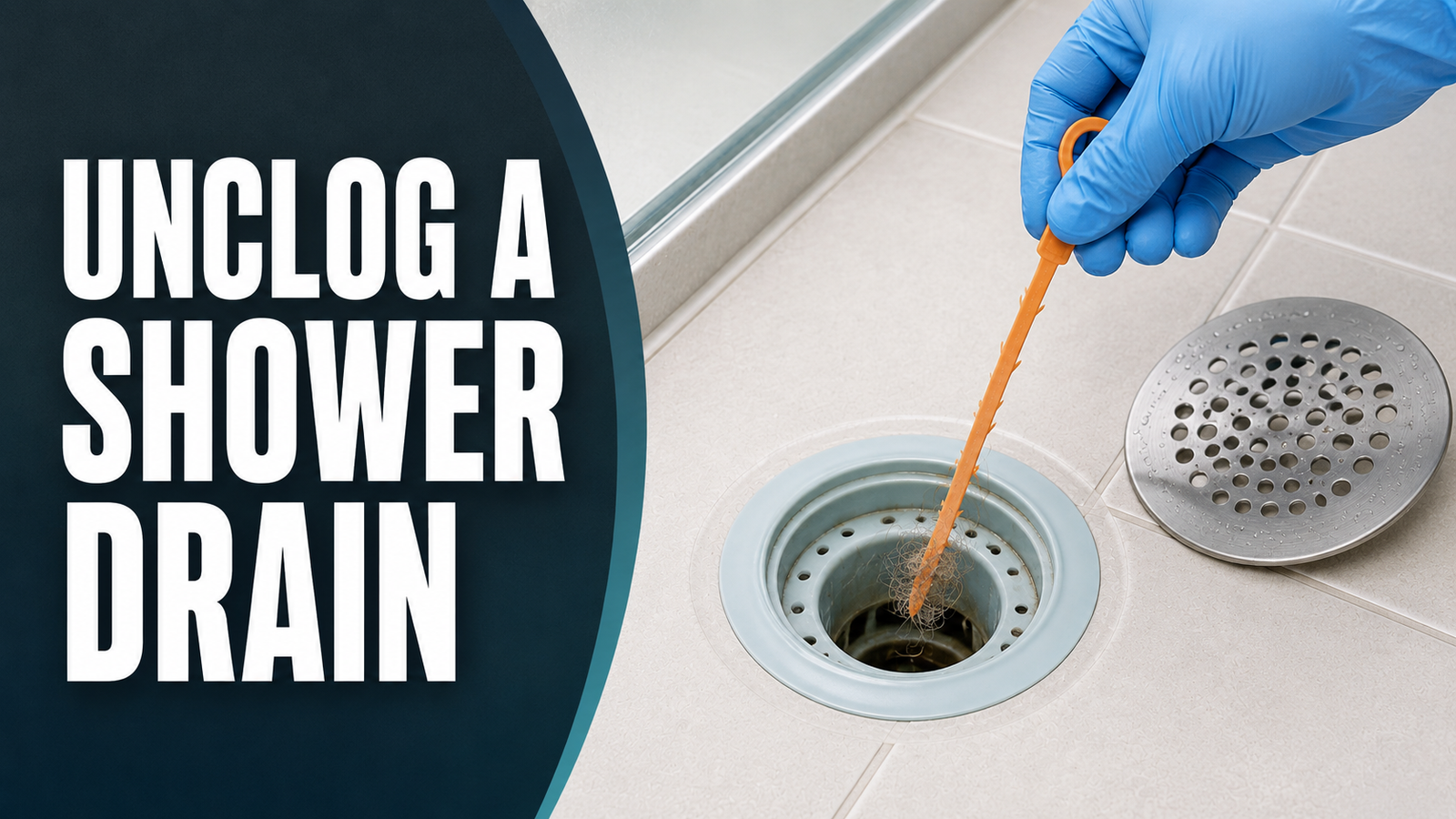
The safest way to unclog a shower drain is to begin with physical removal. Take off the removable drain cover, pull out accessible hair with a purpose-built plastic drain tool, and test the flow. If the drain remains slow, try a cup plunger followed by a small manual drain auger.
Avoid starting with boiling water, improvised wire hooks, or a baking soda and vinegar mixture. These methods may be ineffective or unsuitable for some drain components. If someone has already poured a chemical drain opener into the standing water, do not add another cleaner, plunge the drain, or insert a tool that could splash the chemical back toward you.
Determine Whether the Clog Is Local
A shower that drains slowly while nearby sinks and toilets work normally usually has a localized obstruction. Hair, soap residue, and other debris commonly collect near the drain opening or farther down the shower’s drain line.
Other symptoms may indicate a larger plumbing problem:
What You Notice
Possible Scope
Appropriate Next Step
Only the shower drains slowly
Local hair or soap buildup
Try the DIY steps below
Water stops after visible hair is removed
Deeper localized blockage
Try a plunger or manual auger
Several fixtures drain slowly
Shared branch or main drain problem
Contact a plumber
The shower backs up when a toilet is flushed
Possible shared drain blockage
Stop using the affected fixtures and call a plumber
Dirty water or sewage enters the shower
Possible sewer backup
Avoid contact and arrange professional service
The drain repeatedly clogs
Recurring buildup or a pipe problem
Have the drain evaluated
These signs cannot identify the exact location by themselves, but they help determine whether a simple shower-drain repair is reasonable.
What You Will Need
The exact tools depend on the drain cover and the depth of the obstruction. Gather:
- Waterproof household gloves
- A flashlight
- Old towels
- A small container for standing water
- The correct screwdriver for the drain cover, if required
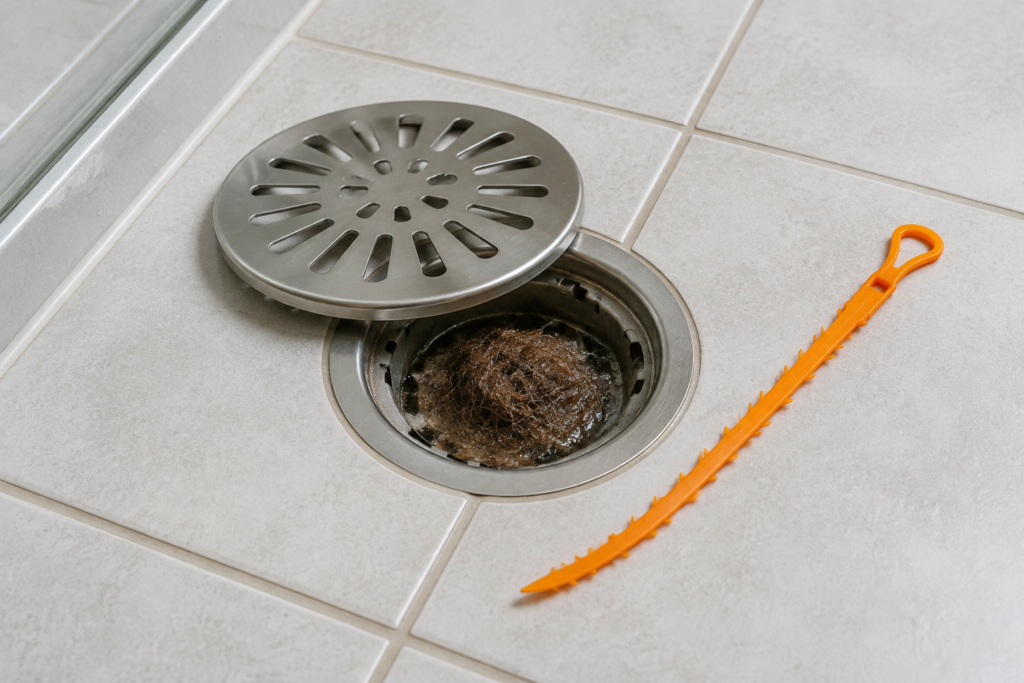
- A flexible plastic hair-removal tool
- A small cup plunger
- A manual drum auger designed for small drain lines, if needed
- Mild dish soap and a soft cleaning brush
- A trash bag for removed debris
Do not substitute a knife, screwdriver, metal pick, or sharpened wire hanger for a drain tool. An improvised tool can scratch the drain finish, become stuck, or push the obstruction farther into the pipe.
Before Opening the Drain
Stop running water and remove enough standing water to see and work around the drain. Put on gloves and place an old towel beside the shower to hold wet tools and the drain cover.
Inspect how the cover is attached. Some covers lift or twist out, while others use screws or locking tabs. Remove only the component designed to come out. Do not pry against tile, cut caulk, or loosen the drain body unless you know how that particular assembly is constructed.
If a chemical drain opener is already present, keep children and pets away and follow the product’s label. Corrosive drain cleaners can cause serious burns, particularly when they splash from a blocked drain. Contact a plumber and tell the plumber which product was used.
How to Unclog a Shower Drain
1. Remove Accessible Hair and Debris
Lift off the removable drain cover. If it has screws, put them somewhere they cannot fall into the drain.
Use gloved fingers to remove debris that is clearly within reach. Insert a flexible plastic hair-removal tool only as far as it moves without excessive force. Twist or move it gently according to its directions, then pull it upward slowly.
Hair and residue may come out in several smaller clumps rather than one large obstruction. Dispose of the material in the trash instead of rinsing it into another drain.
2. Clean the Drain Cover and Opening
Hair caught directly beneath the cover can immediately begin collecting new residue. Wash the removable cover with warm water, mild dish soap, and a soft brush.
Wipe buildup from the accessible rim of the drain without pushing it into the pipe. Avoid metal scrubbers and abrasive cleaners that may damage the finish.
Run a small amount of water to test the drain. If it now empties normally without pooling, reinstall the cover and proceed to the prevention section.
If mineral spots remain elsewhere in the shower, use a material-safe method to remove hard water stains from glass shower doors.
3. Plunge the Drain if It Is Still Slow
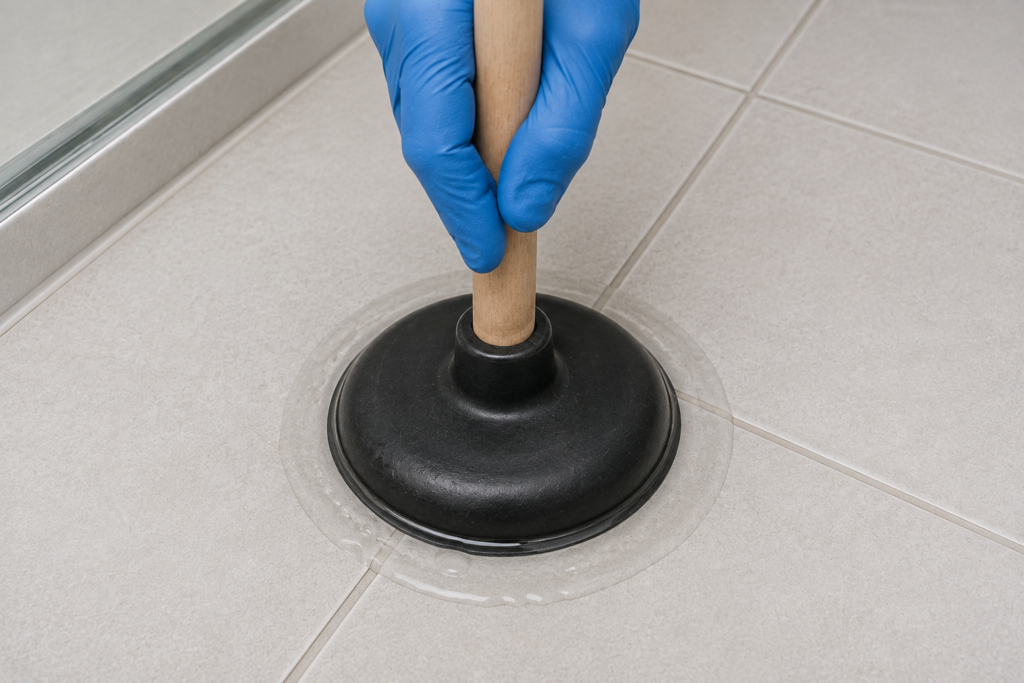
A cup plunger can help move a localized obstruction that sits beyond the reach of a plastic hair tool.
Place the plunger directly over the drain and add enough water to cover the rim of the rubber cup. Press down gently to remove trapped air and establish a seal. Use several controlled up-and-down strokes while keeping the cup centered.
Lift the plunger and observe the water. Repeat once if the flow improves but remains slow. If plunging makes no difference, continuing forcefully may only move the blockage without removing it.
Mechanical methods such as plungers and drain snakes are commonly recommended before harsher chemical treatments. Oatey’s shower-drain guidance describes both methods while noting that persistent blockages may require a plumber.
4. Use a Manual Drain Auger for a Deeper Clog
A small manual drum auger may reach an obstruction beyond the drain opening. Follow the tool manufacturer’s directions because cable size, feeding mechanisms, and operating methods vary.
In general:
- Feed the cable into the drain gradually.
- Rotate the drum in the instructed direction.
- Stop when you encounter resistance.
- Work the cable gently rather than forcing it.
- Retrieve the cable slowly while continuing to rotate as directed.
- Remove collected material and clean the cable before storing it.
Resistance may come from a pipe bend rather than the clog. Stop if the cable kinks, becomes stuck, or requires substantial force. Powered drain-cleaning equipment presents additional injury and pipe-damage risks and is better left to someone trained to use it.
5. Test and Reassemble the Drain
Once debris has been removed, run warm tap water and watch the drainage. The water should leave without forming a growing pool around the opening.
Clean and reinstall the drain cover in its original position. Do not overtighten small screws, especially when they attach to plastic components.
Check the ceiling or accessible area below the shower if applicable. New moisture below the drain may indicate a disturbed connection or failed seal that requires professional repair.
Why Baking Soda and Vinegar Are Not a Reliable Clog Remover
Mixing baking soda with vinegar creates carbon dioxide bubbles, but a household drain is not airtight. The gas escapes through the opening instead of building enough pressure to dislodge a substantial blockage.
The reaction also is not generally strong enough to dissolve a dense plug of hair and oily residue. Poison Control’s drain-cleaner guidance recommends realistic expectations for this mixture rather than treating the fizz as proof that a clog is dissolving.
Baking soda may help absorb some surface odors, but visible hair and a slow drain still require physical cleaning.
Avoid Pouring Boiling Water Into an Unknown Drain
A shower drain may include PVC or ABS pipe, rubber seals, waterproofing components, adhesives, and finished metal or plastic parts. Their temperature limits are not identical.
For example, IPEX lists a service temperature of up to 140°F for its PVC drain, waste, and vent systems. Water boils at a substantially higher temperature. This does not mean one exposure will damage every drain, but it makes boiling water an unsuitable universal recommendation. Use normal warm or hot tap water after removing the obstruction instead.
Be Cautious With Chemical Drain Openers
Chemical drain cleaners may contain concentrated acids or alkalis capable of causing skin and eye burns. Some products also generate heat.
Never combine a drain opener with vinegar, bleach, ammonia, or another cleaning product. The CDC advises never mixing bleach with another cleaner because hazardous fumes or reactions may result.
If the home uses a septic system, the EPA specifically recommends avoiding chemical drain openers and using a plunger or plumbing snake instead. Follow the product label and local disposal guidance if you already possess an unwanted chemical product rather than pouring it into a drain.
When to Call a Plumber
Stop DIY work and arrange professional assistance when:
- Multiple drains are slow or backing up
- Toilet use sends water into the shower
- Sewage or contaminated water enters the shower
- The blockage returns soon after removal
- A manual auger becomes stuck
- The drain leaks into the room below
- The drain body or surrounding shower surface appears loose
- You suspect damaged, collapsed, corroded, or incorrectly installed piping
- A chemical drain opener is sitting in the blocked drain
- Mechanical removal and controlled plunging produce no improvement
A plumber may need a longer cable, inspection camera, or drain-line access point that is not available through the shower opening.
How to Prevent Another Shower Drain Clog
A removable hair catcher is usually the most practical preventive measure. Choose one compatible with the drain design and clean it before accumulated hair restricts the water flow.
Other useful habits include:
- Remove loose hair from the shower instead of rinsing it into the drain.
- Clean the drain cover and accessible opening periodically.
- Pay attention when drainage begins slowing rather than waiting for complete blockage.
- Avoid pouring oils, waxes, or thick products into the shower drain.
- Keep a simple record if the same drain repeatedly needs clearing.
- Include shower drainage in your seasonal home inspection routine.
Frequently Asked Questions
Q. Can baking soda and vinegar unclog a shower drain?
A. The mixture may create foam and temporarily affect some surface residue, but it is unlikely to dissolve a dense hair blockage. Physical removal, controlled plunging, or a correctly sized manual drain auger is more appropriate.
Q. Can I pour boiling water down the shower drain?
A. It is better not to pour boiling water into a drain when the pipe, drain body, seals, and waterproofing components are unknown. Remove the blockage mechanically and use normal warm or hot tap water to test the flow.
Q. Why does the shower drain smell even though it drains normally?
A. Residue may remain beneath the cover or along the accessible drain opening. Clean those surfaces and rinse them. A shower that has not been used for an extended period may also have a dry trap. Persistent sewage odor, gurgling, or odor affecting several fixtures should be investigated professionally.
Q. How do I know whether the main drain is clogged?
A. One slow shower usually suggests a localized problem. Several slow fixtures, shower backup when a toilet is flushed, gurgling, or contaminated water entering a low drain can indicate a shared branch or main-line problem.
Conclusion
Most localized shower drain clogs should be approached mechanically: remove accessible hair, clean the drain opening, plunge carefully, and use a manual auger only when necessary. Skip improvised wire tools, boiling water, and unverified chemical combinations.
If other fixtures are affected, sewage appears, the blockage quickly returns, or a tool becomes stuck, stop the DIY attempt and have the drain professionally evaluated.