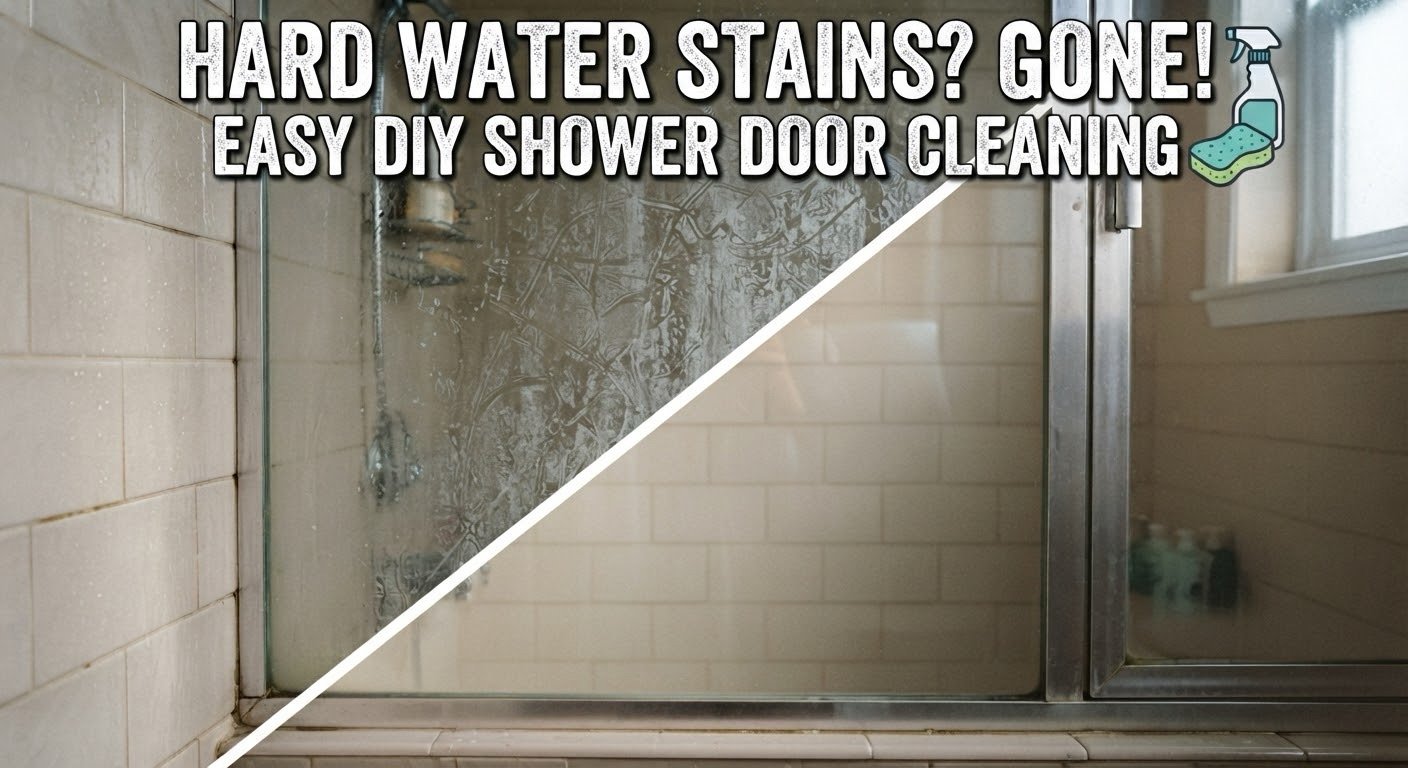
Hard-water spots form when water droplets evaporate and leave mineral deposits on the glass. Fresh deposits may appear as scattered white spots, while repeated buildup can create a cloudy film that ordinary glass cleaner does not remove. Start with a mild method and check the shower-door manufacturer’s care instructions before using an abrasive tool, acidic cleaner, or commercial stain remover.
Begin by washing away loose soap residue with warm water and a soft cloth. If the manufacturer permits an acidic cleaner, test diluted white vinegar on a small, inconspicuous area before treating the visible buildup. Rinse the glass thoroughly and dry it after cleaning. Use extra caution around coated glass, metal hardware, grout, and nearby natural stone because their care requirements may differ.
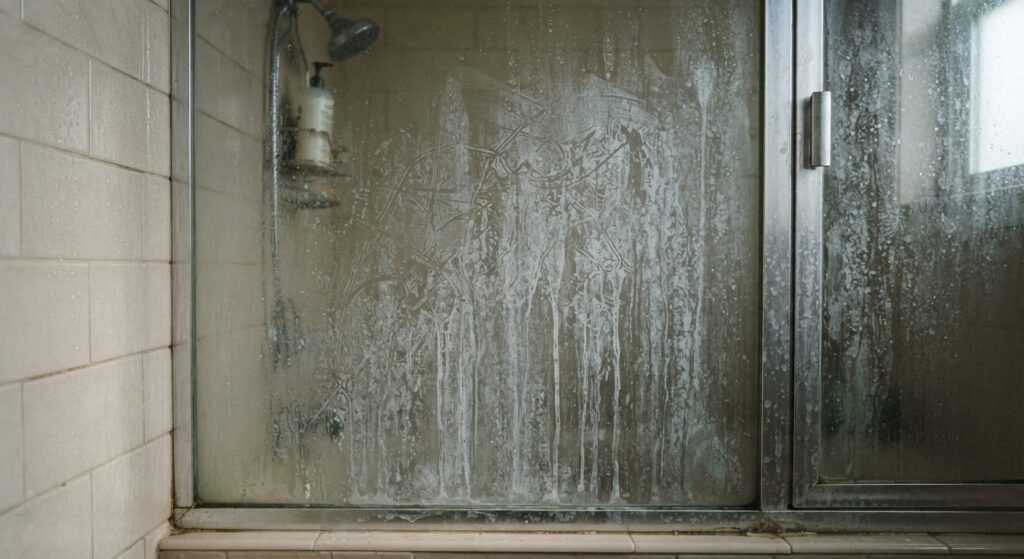
What Causes Hard Water Stains on Glass Shower Doors?
Hard water contains high levels of minerals, especially calcium and magnesium. Every time water splashes onto your shower doors and dries, small mineral deposits remain on the surface.
Why Hard Water Stains Get Worse Over Time
Fresh mineral deposits are relatively easy to clean. However, repeated exposure to hard water causes layers of minerals to accumulate. As the buildup thickens, standard glass cleaners often become ineffective.
Why You Should Remove Hard Water Stains Quickly
Many homeowners view hard water stains as purely cosmetic. In reality, leaving them untreated can create bigger problems.
Reduced Glass Transparency
Mineral deposits block light from passing through the glass, making the shower appear dirty and neglected.
Increased Cleaning Difficulty
Small stains can often be removed in minutes. Severe buildup may require multiple cleaning sessions.
Potential Glass Damage
Long-term mineral exposure can cause etching, which permanently damages the glass surface.
Less Attractive Bathroom Appearance
Even a clean bathroom can look poorly maintained if the shower doors are covered in mineral stains.
The Most Effective Way to Remove Hard Water Stains
For uncoated glass whose manufacturer allows acidic cleaners, diluted white vinegar may help loosen mineral deposits. Do not use it automatically on treated or coated glass, and protect nearby stone, grout, and metal hardware. Test a hidden area first and stop if the finish changes.
Supplies You’ll Need
- White vinegar
- Spray bottle
- Soft sponge
- Microfiber cloth
- Warm water
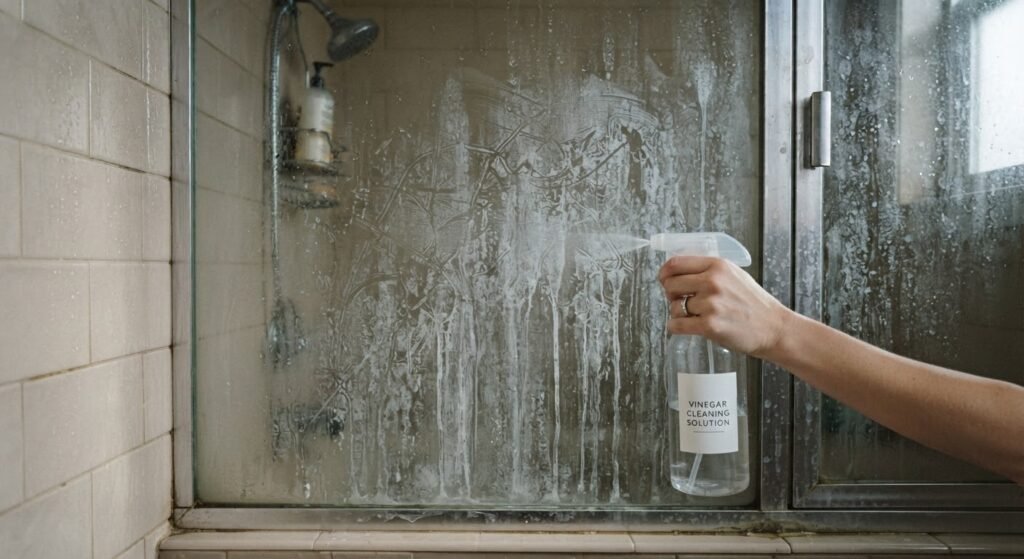
Step 1: Prepare the Cleaning Solution
Mix equal parts white vinegar and water in a spray bottle. Use this solution only if the shower-door care instructions permit acidic cleaners. Do not heat the vinegar, and never mix it with bleach or other cleaning products.
Step 2: Spray the Entire Glass Surface
Lightly mist only the stained glass, keeping the solution away from surfaces that are not approved for acidic cleaners. Apply enough to wet the mineral deposits without allowing the liquid to pool or run onto nearby stone, grout, or metal hardware.
Step 3: Let It Sit
Follow the contact-time guidance in the shower-door manufacturer’s care instructions. Do not allow the solution to dry on the glass. If no guidance is available, first use a brief test on a small, inconspicuous area before treating a larger section.
Step 4: Scrub Gently
Wipe the tested area with a clean microfiber cloth or a nonabrasive sponge using light pressure. Avoid steel wool, abrasive pads, and scraping tools unless the shower-door manufacturer specifically approves them.
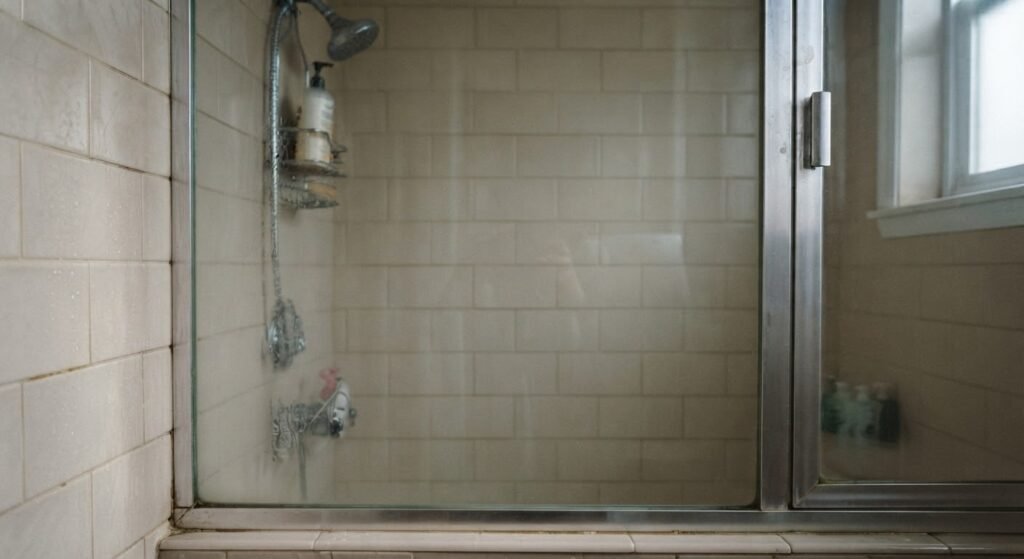
Step 5: Rinse and Dry
Rinse the glass with clean water until no cleaning solution remains, then dry it with a clean microfiber cloth. Immediately rinse and wipe any nearby surface that was accidentally splashed.
How to Remove Stubborn Hard Water Stains
If deposits remain after one gentle cleaning cycle, rinse and dry the glass before trying anything stronger. Do not automatically apply more pressure. A cloudy mark that does not change after cleaning may be etched glass rather than removable mineral buildup. Check the manufacturer’s care instructions before using an abrasive paste, polishing compound, or stronger commercial cleaner.
Consider a Baking Soda Paste Only If Approved
Baking soda is abrasive enough to affect some coatings and finishes. Use it only if the shower-door manufacturer permits a mild abrasive cleaner. Test it on a hidden area first and apply minimal pressure.
Prepare a Small Test Amount
Mix a small amount of baking soda with enough water to form a soft paste. Prepare only enough for the hidden test area. Use this method separately from vinegar or other cleaners, rinsing the glass thoroughly before switching methods.
How to Apply
- Apply a thin layer of paste to the small test area.
- Wipe gently with a damp microfiber cloth using minimal pressure.
- Rinse the area immediately with clean water and dry it.
- Inspect the glass for scratches, haze, or coating changes. Stop using the paste if any change appears.
Commercial Cleaners for Severe Buildup
If a mild method does not remove the deposits and the glass does not appear etched, choose a commercial mineral-deposit remover specifically labeled for shower-door glass. Confirm that it is compatible with any glass coating and nearby materials. Follow the product label for ventilation, protective equipment, application, and contact time, and never mix it with another cleaner.
How to Prevent Hard Water Stains from Returning
Prevention mainly means removing water droplets before they evaporate and leave minerals behind. Use a routine that is compatible with the glass coating, focusing first on squeegeeing and drying the surface after use. Bathroom ventilation helps control moisture, but it does not remove dissolved minerals from the water.
Use a Squeegee After Every Shower
After showering, use a clean, soft-edged squeegee from the top of the glass toward the bottom. Wipe away the water collected along the lower edge and follow any care instructions provided for coated glass.
Dry the Glass Completely
Use a clean, dry microfiber cloth to remove droplets left around the glass edges, handle, and hinges. If the cloth picks up visible grit or residue, switch to a clean section rather than rubbing it across the glass.
Apply Water Repellent Coating
Use a water-repellent product only if it is approved for the shower door’s glass and finish. Some factory-coated doors require specific care products, so check the manufacturer’s instructions before applying anything and follow the product label exactly.
Install a Water Softener
If mineral buildup occurs throughout the home, confirm the water hardness through your utility’s water-quality report or a reliable test before buying equipment. A properly selected water softener can reduce calcium and magnesium, but it requires installation and ongoing maintenance and may not be necessary for a problem limited to one shower door.
Common Mistakes to Avoid
Continuing to Scrub Unchanged Cloudiness
If a cloudy area does not improve after an approved cleaning method, stop repeated scrubbing. The surface may be etched or the coating may be damaged rather than covered by removable mineral deposits. Check with the shower-door manufacturer before trying a stronger or more abrasive method.
Skipping the Drying Step
When hard-water droplets evaporate on the glass, they can leave new mineral residue behind. Dry the surface after rinsing and, when practical, after routine shower use.
Final Thoughts
Match the cleaning method to the shower door’s glass and finish. Begin with warm water and a soft cloth, and use diluted vinegar or a mild abrasive only when the manufacturer permits it. Test a hidden area, rinse completely, and dry the glass. If cloudiness remains unchanged, avoid increasingly aggressive scrubbing because the surface may be etched or the coating may already be damaged.
FAQ
Q. What causes hard water stains on glass shower doors?
A. Hard water stains occur when water containing minerals like calcium and magnesium evaporates from the glass surface, leaving mineral deposits behind.
Q. Does vinegar really remove hard water stains?
A. Diluted white vinegar may help loosen some mineral deposits on uncoated glass, but it is not appropriate for every glass coating or nearby material. Use it only when the shower-door manufacturer permits acidic cleaners, and test a hidden area first.
Q. How long should vinegar sit on the glass?
A. Follow the contact-time guidance in the shower-door manufacturer’s care instructions rather than using one universal time. Do not allow the solution to dry on the glass. If no guidance is available, begin with a brief test on a hidden area and rinse it completely.
Q. Can hard water stains permanently damage shower glass?
A. Long-term mineral buildup can contribute to persistent cloudiness or surface etching, but a mark that remains after cleaning may also involve damage to a coating or finish. Stop using abrasive methods if the appearance does not improve, and consult the shower-door manufacturer when the cause is unclear.
Q. Is baking soda safe for glass shower doors?
A. Not always. Baking soda is mildly abrasive and may affect certain coatings or finishes. Use it only if the shower-door manufacturer permits a mild abrasive cleaner, test a hidden area first, and apply minimal pressure.
Q. What is the fastest way to prevent hard water stains?
A. Remove water droplets before they dry on the glass. A clean, soft-edged squeegee followed by a dry microfiber cloth is a practical routine when both are compatible with the glass coating. How often this is needed depends on shower use and water hardness.
Q. How often should I clean my shower doors?
A. There is no universal schedule. Inspect the glass regularly and clean it with an approved method before visible deposits become heavy. A frequently used shower or harder water may require more frequent care. Follow the shower-door manufacturer’s recommended cleaning schedule when one is provided.
Q. Should I install a water softener?
A. A water softener may help when reliable testing confirms hard water and mineral buildup affects multiple fixtures or appliances. It is not automatically necessary for a problem limited to one shower door. Consider the water-quality results, installation requirements, and ongoing maintenance before choosing a system.
If standing water is also draining slowly, this shower drain unclogging guide covers the safer steps to try before using harsh chemicals.