
A musty closet needs more than fragrance spray. The odor often comes from trapped humidity, damp fabrics, dirty shoes, poor airflow, or moisture affecting a wall, shelf, or floor. Until that source is corrected, scented products may only cover the smell temporarily.
To freshen up a musty closet properly, remove everything, identify any moisture problem, clean and dry the empty space, refresh affected clothing, and improve airflow before putting your belongings back. If you find visible mold or continuing water damage, address that problem before treating the closet as an ordinary odor issue.
Quick Answer: How to Freshen Up a Musty Closet
Empty the closet and separate anything that smells damp or stale. Inspect the walls, ceiling, shelves, baseboards, carpet, and stored items for moisture or visible growth. Clean suitable surfaces with a mild detergent, let the closet dry completely, wash or professionally clean affected clothing, and return only dry belongings with enough space for air to move.
If the odor returns soon after cleaning, look for an unresolved leak, condensation problem, high indoor humidity, or hidden damp material.
Why Does a Closet Smell Musty?
A musty odor is commonly associated with damp, poorly ventilated spaces, but it does not automatically prove that there is an extensive mold problem. Several sources can create a similar smell:
- Clothing stored before it was completely dry
- Damp towels, coats, workout clothes, or laundry hampers
- Shoes carrying perspiration, dirt, or outdoor moisture
- High indoor humidity combined with limited airflow
- Condensation on a cold exterior wall or pipe
- A slow plumbing, roof, or wall leak
- Damp carpet, cardboard, shelf liner, or stored luggage
- Dust and organic debris collecting in an enclosed space
- Mold growth on clothing, drywall, wood, carpet, or other materials
Start by determining whether the odor is coming from one item or from the closet itself. Smell individual garments, shoes, storage containers, and the empty closet. If the closet still smells after everything has been removed, investigate the room’s surfaces and nearby moisture sources.
How to Freshen Up a Musty Closet Step by Step
1. Empty and Sort the Closet
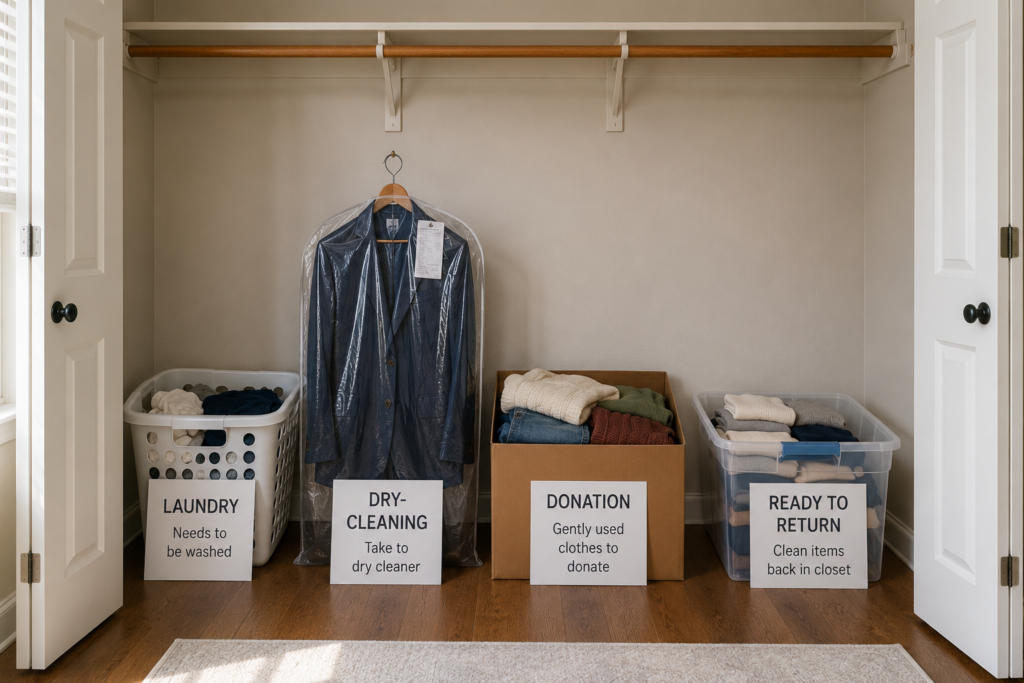
Remove everything, including hanging clothes, shoes, boxes, baskets, shelf liners, and items stored on the floor.
As you empty the closet, divide the contents into practical groups:
- Clean and odor-free items
- Washable items with a musty smell
- Dry-clean-only or delicate items
- Damp or visibly affected belongings
- Items to discard, donate, or relocate
Do not return clean clothing to the closet while you are still investigating. It can pick up the odor again, especially if the closet remains damp.
Move musty items away from clean laundry. If a garment has visible spotting or appears moldy, avoid shaking it indoors because this can release dust and spores into the air.
2. Look for the Moisture Source
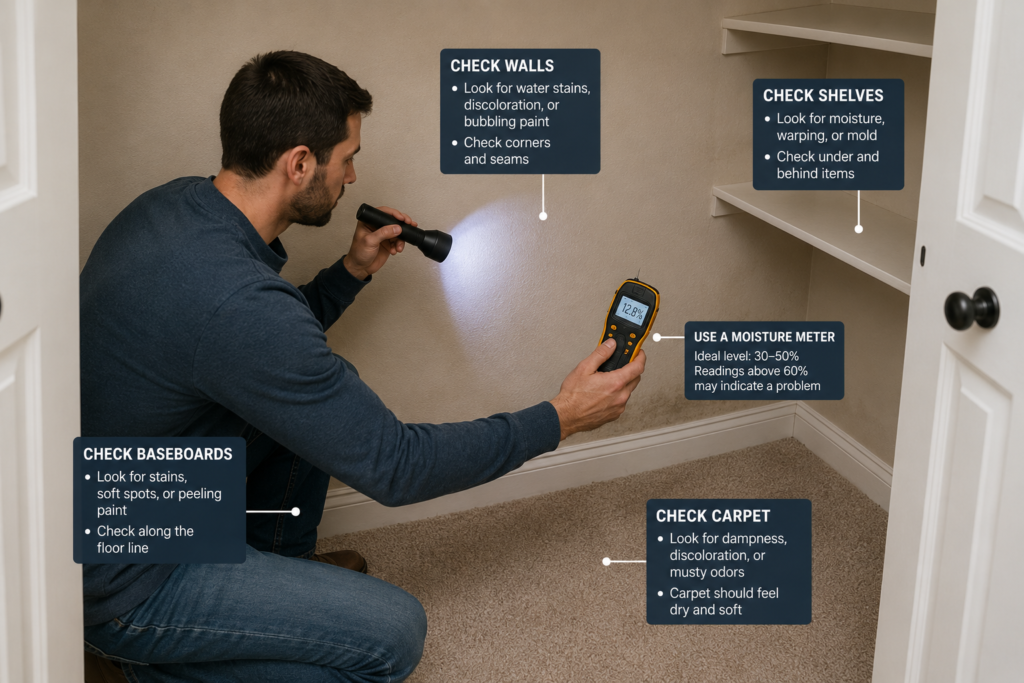
Use a flashlight to inspect the closet carefully. Check:
- Corners and exterior-facing walls
- The ceiling and areas below bathrooms or plumbing
- Baseboards and the lower part of drywall
- Carpet edges and flooring
- The back and underside of shelves
- Areas behind storage bins
- Pipes, vents, and access panels
- The wall shared with a bathroom, laundry room, or utility space
Watch for staining, peeling paint, damp drywall, swollen wood, warped shelving, condensation, discolored carpet, or visible spotting. A closet beside a bathroom or on an exterior wall may be affected by a slow leak or condensation even when there is no obvious standing water.
A small humidity meter can help identify whether the area remains unusually humid. The CDC advises keeping home humidity no higher than 50% when possible, while recognizing that conditions can change throughout the day. Air conditioning or a dehumidifier may help, but an active leak or wet building material still needs to be repaired. See the CDC’s mold-prevention guidance for additional moisture-control information.
3. Clean the Empty Closet
If there is no visible mold or significant water damage, begin by removing ordinary dust and debris. Vacuum the floor, corners, shelf surfaces, baseboards, and clothing rods using an appropriate attachment.
For washable hard surfaces, use a small amount of mild detergent mixed according to its label. Dampen a cloth rather than soaking the surface, especially when cleaning painted walls, laminate shelving, or finished wood. Test the cleaner in an inconspicuous area first and check the surface manufacturer’s instructions when available.
After wiping, use a clean damp cloth if the product requires rinsing. Dry every surface thoroughly.
Keep these precautions in mind:
- Do not saturate drywall, particleboard, unfinished wood, or carpet.
- Do not combine household cleaning products.
- Never mix bleach with ammonia or other cleaners.
- Provide ventilation while using cleaning products.
- Wear gloves and appropriate eye protection.
- Keep cleaners and moisture-absorbing products away from children and pets.
If you see mold, do not aggressively dry-brush it or run an ordinary vacuum directly over it. For a small affected area that is appropriate for DIY cleaning, the EPA advises scrubbing mold from hard surfaces with detergent and water and drying them completely. Porous materials can be much harder to clean and may need to be removed. Follow the full EPA mold-cleanup guidance before proceeding.
4. Refresh Musty-Smelling Clothes
Check each garment’s care label before cleaning it. Wash machine-washable items with a suitable laundry detergent using the permitted water temperature and cycle. Avoid adding excessive detergent, which can leave residue if the washing machine cannot rinse it away effectively. For help with other clothing-care problems, see our guide on how to remove common clothing stains at home.
Dry the clothing completely before storing it. Depending on the fabric and care instructions, this may mean machine-drying, laying the item flat, or hanging it in a well-ventilated area. Be cautious with prolonged direct sunlight because it may fade some fabrics.
Take dry-clean-only garments, structured coats, leather, suede, and other specialty materials to an appropriate cleaner. Tell the cleaner about the musty odor or possible damp storage so the item can be evaluated properly.
If freshly washed clothing still smells musty, check whether the odor is coming from the washing machine, hamper, laundry room, or drying process. Repeatedly adding perfume or scent boosters will not correct residue, microbial buildup, or incomplete drying.
5. Dry and Ventilate the Closet
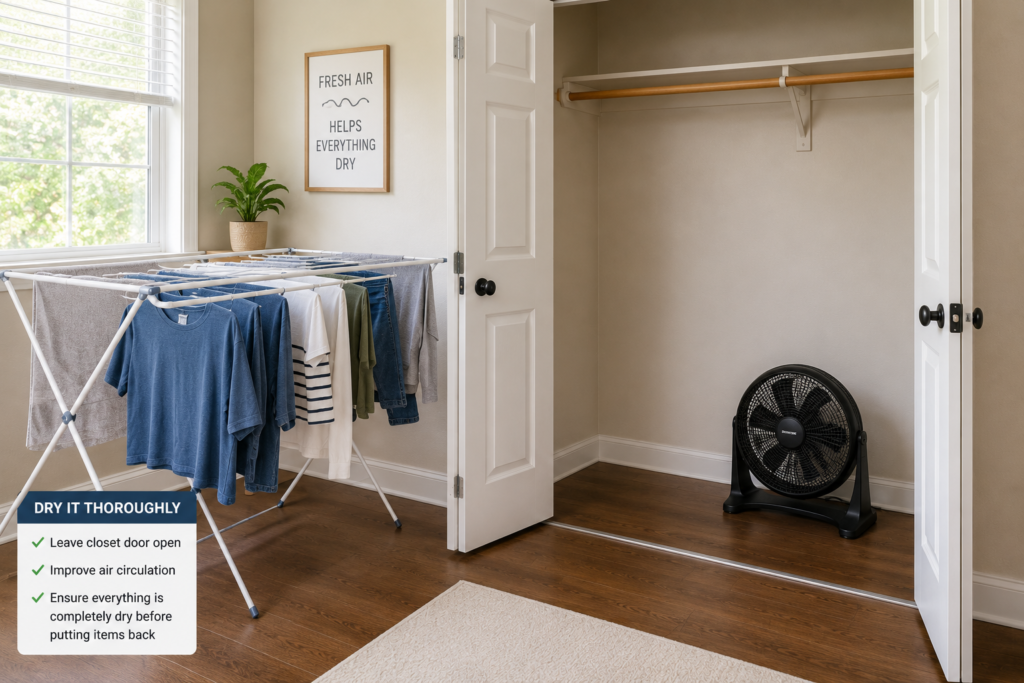
Leave the closet empty until the walls, shelves, flooring, and surrounding area are fully dry.
If you have not found visible mold, you can improve drying by:
- Leaving the closet door open
- Opening nearby interior doors
- Running the room’s air conditioning when appropriate
- Using a dehumidifier according to its instructions
- Increasing air movement with a fan
- Running nearby bathroom or laundry exhaust fans that vent outdoors
Do not place a dehumidifier in a cramped closet unless its manufacturer allows that setup and the unit has the required clearance, drainage, and electrical conditions. It may work more safely and effectively in the adjacent room with the closet door open.
The EPA specifically recommends opening closet doors to increase circulation, particularly when closets are colder than nearby rooms. Its home moisture-control guidance also emphasizes repairing leaks and using air conditioning or dehumidification when needed.
If visible mold is present, avoid directing a fan at the affected surface before cleanup. Strong airflow may spread contaminated dust or spores.
6. Return Clothes Without Overcrowding
Before restocking the closet, confirm that:
- Surfaces feel dry
- There is no visible moisture or condensation
- The musty odor is gone
- Clothing and shoes are completely dry
- Any leak or water source has been repaired
Leave some space between hanging clothes instead of packing them tightly together. Keep belongings away from any wall that has previously developed condensation, and avoid covering an air vent or return grille.
Choose storage based on the items and environment. Breathable garment bags can be useful for frequently accessed clothing, while sealed plastic containers may protect fully dry seasonal items from dust. However, sealed containers can trap existing moisture, so never pack damp or questionable clothing inside them.
Avoid placing cardboard boxes directly on a basement or closet floor that may become damp. Raised shelving or moisture-resistant containers can reduce contact with the floor, but they do not replace leak repair or humidity control.
How to Keep Clothes Smelling Fresh in Storage
A clean, neutral smell is usually a better sign than a heavily perfumed one. Strong fragrance can mask a developing moisture problem and may be unpleasant for people with fragrance sensitivities.
Use these habits to keep stored clothes fresh:
Store Only Completely Dry Clothing
Even slightly damp fabric can create an enclosed, stale-smelling environment. Pay particular attention to thick towels, coats, denim, workout clothing, swimsuits, and children’s outerwear.
Keep the Laundry Hamper Ventilated
Avoid leaving wet towels or sweaty clothing in a closed hamper inside the closet. Use a ventilated hamper and allow damp items to dry before adding them, or keep the hamper in a better-ventilated laundry area.
Let Shoes Dry Before Storing Them
Remove dirt, dry damp footwear, and clean shoes according to their material-specific instructions. Avoid placing wet shoes in closed bins or directly under hanging clothes.
Improve Routine Airflow
Leave the closet door open periodically if privacy and room use allow. Avoid pushing storage bins tightly against every wall. If a closet is consistently cooler or damper than the room, investigate insulation, ventilation, and condensation rather than relying only on odor products.
Monitor Humidity
A humidity meter provides more useful information than judging the air by feel. If humidity remains high, determine whether the cause is weather, inadequate ventilation, indoor moisture production, an oversized or malfunctioning cooling system, or a leak.
Clean Before Seasonal Storage
Wash or otherwise clean clothing before storing it for a long period. Food residue, body oils, dirt, and perspiration can contribute to odors and may attract pests.
Odor Absorbers and Moisture-Control Products
Odor-control products can support a clean, dry closet, but they should not be treated as repairs.
Product
What It May Do
Important Limitation
Activated-charcoal odor absorber
May reduce some enclosed-space odors
Does not repair leaks or remove mold
Open container of baking soda
May help with mild odors
Can spill and has limited effect on persistent moisture
Commercial moisture absorber
Collects some airborne moisture in a small area
Requires replacement and may create liquid that can spill
Cedar blocks or sachets
Adds a light scent
Does not remove a moisture source
Scented sachet
Adds fragrance
May only mask the odor and can bother sensitive individuals
Follow each product’s directions. Place containers where they cannot tip onto clothing, wood, carpet, children, or pets. Replace or recharge products only as directed by the manufacturer.
Common Closet-Freshening Mistakes
Covering the Smell With Fragrance
Sprays, dryer sheets, candles, and sachets may temporarily change the smell, but the odor will return if damp material remains.
Returning Clothes Too Soon
A closet can feel dry on the surface while carpet padding, drywall, or particleboard remains damp. Do not restock until you have corrected the source and the space is fully dry.
Overcrowding the Closet
Closely packed clothing restricts airflow and makes it harder to notice moisture, leaks, or affected garments.
Storing Damp Laundry or Shoes
One damp item can make a small enclosed closet smell stale. Dry everything before storage.
Applying Too Much Liquid Cleaner
Soaking drywall, unfinished wood, or particleboard can add moisture to the very materials you are trying to dry. Use the least moisture needed for the surface.
Mixing Cleaning Products
Mixing products can create dangerous fumes or unpredictable chemical reactions. Use one suitable product at a time and follow its label.
Cleaning the Clothes but Ignoring the Closet
If every clean garment develops the same smell after storage, the closet, storage container, or surrounding building material likely needs attention.
Troubleshooting Odors That Keep Returning
What You Notice
Possible Source
Next Step
Only one garment or storage bin smells
Odor is confined to that item
Clean the item and its container according to care instructions
The empty closet smells musty
Wall, floor, shelf, carpet, or hidden moisture
Inspect the structure and check humidity
Odor becomes stronger after rain
Exterior leak, roof issue, foundation moisture, or humidity
Check surrounding surfaces and contact the property owner or a qualified contractor
Smell is strongest near shoes
Damp or soiled footwear
Clean and dry shoes before storage
Fresh laundry smells musty before entering the closet
Washing machine, hamper, or incomplete drying
Inspect the laundry process and equipment
Odor returns in one corner
Condensation, hidden leak, or affected porous material
Keep the area clear and investigate behind or around the surface
Condensation appears on a wall or pipe
High humidity or a cold surface
Reduce humidity and investigate insulation or pipe condensation
For renters, report leaks, staining, recurring dampness, and suspected building-related mold to the landlord or property manager promptly. Keep dated photos and written records of the condition and your communications.
When to Get Professional Help
Consider professional inspection or remediation when:
- The moldy area is larger than about 10 square feet
- The odor returns despite cleaning and moisture control
- Mold may be hidden behind drywall, built-in shelving, wallpaper, or carpet
- Drywall, insulation, subflooring, or other porous materials are extensively affected
- Water came from sewage or another contaminated source
- The closet has ongoing structural, plumbing, roof, or foundation leaks
- Mold may have entered the HVAC system
- You cannot determine why the area remains damp
- Occupants develop symptoms that may be related to the space
The EPA notes that mold covering more than about 10 square feet, extensive water damage, contaminated water, or suspected HVAC involvement may require additional guidance or professional assistance.
People with asthma, COPD, significant mold allergies, immune suppression, or underlying lung disease should not participate in mold cleanup. The CDC’s mold-cleanup recommendations provide further information about higher-risk individuals and protective equipment.
Frequently Asked Questions
Q. Is a musty closet smell always caused by mold?
A. No. Damp clothing, dirty shoes, dust, cardboard, stagnant air, and high humidity can produce similar odors. However, persistent mustiness can accompany mold or hidden moisture, so inspect the empty closet rather than assuming it only needs fragrance.
Q. Can baking soda remove a musty closet smell?
A. Baking soda may help reduce mild odors in a clean, dry closet, but it cannot fix a leak, dry wet drywall, or remove mold. Use it in a stable container where it cannot spill, and address the odor source first.
Q. What humidity level should I maintain?
A. The CDC advises keeping indoor humidity no higher than 50% when possible. Conditions vary throughout a home and over the course of a day, so use a humidity meter and also watch for condensation or damp surfaces.
Q. Do I need to wash every piece of clothing?
A. Not necessarily. Start with garments that smell musty, feel damp, have visible spotting, or were stored directly against an affected surface. Keep clean items separated until the closet has been cleaned and dried. Follow each garment’s care label.
Q. Is vinegar safe for cleaning a musty closet?
A. Vinegar is not suitable for every paint, wood finish, stone, metal, or fabric, and it should not be treated as a complete solution for mold or moisture. Check the surface manufacturer’s instructions, test any cleaner discreetly, provide ventilation, and never combine vinegar with bleach or other cleaning products.
Q. How long should I air out a musty closet?
A. There is no reliable universal time. Keep the closet empty and ventilated until its surfaces and flooring are completely dry, the odor is gone, and humidity is under control. If the smell returns after closing the door, continue investigating for moisture or affected porous materials.
Conclusion
Freshening up a musty closet starts with removing the source of the odor, not covering it. Empty the space, inspect for moisture, clean suitable surfaces safely, refresh affected clothing, and allow everything to dry before restocking.
Once the closet is clean, maintain airflow, store only dry belongings, avoid overcrowding, and monitor humidity. If you find recurring moisture, extensive mold, contaminated water damage, or affected structural materials, stop treating it as a simple odor problem and seek qualified assistance.