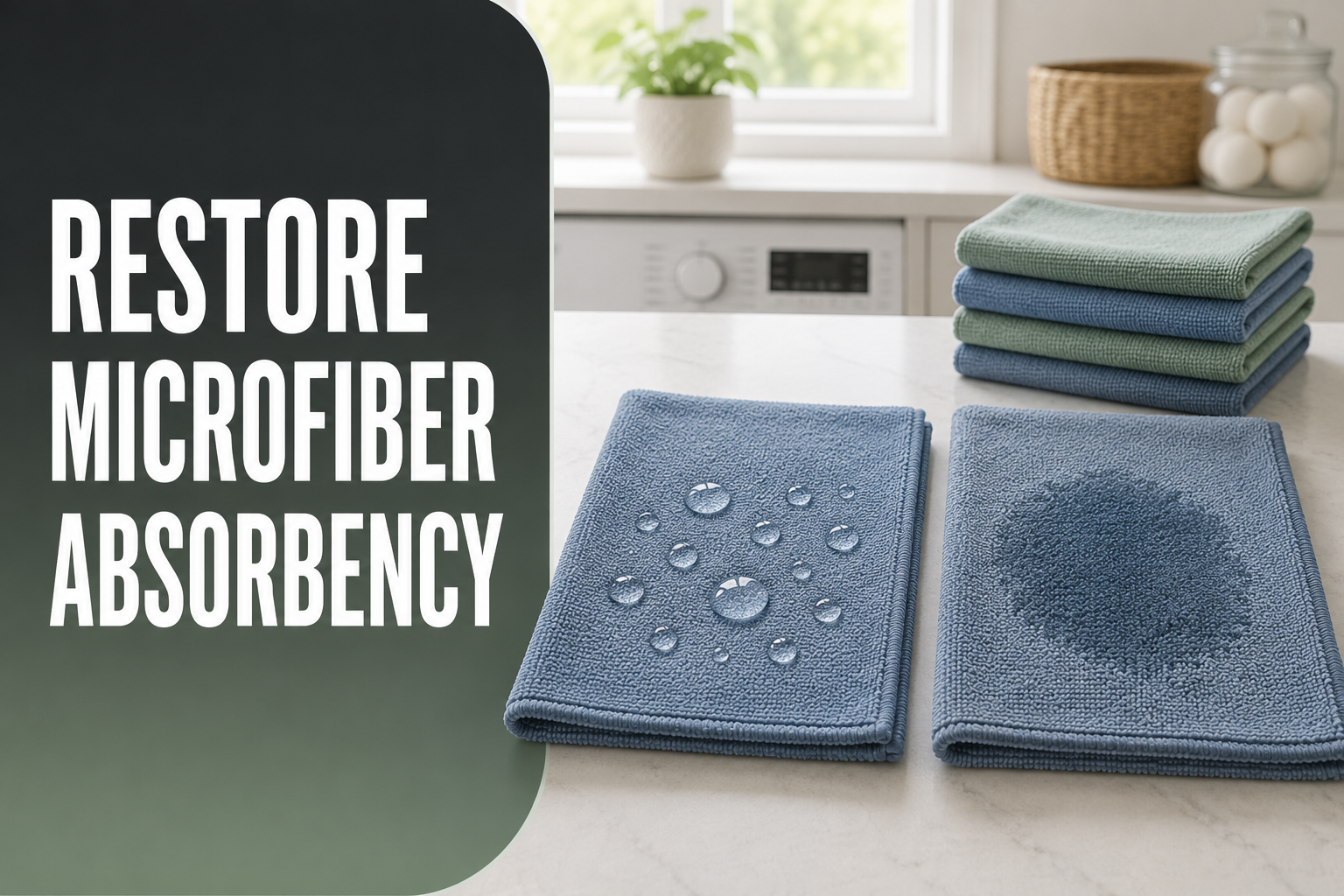
When microfiber cloths stop absorbing water, the fibers are often coated or clogged with fabric softener, dryer-sheet residue, excess detergent, grease, wax, or polish. Rewashing the cloth separately with an appropriate amount of plain detergent—without softener—and rinsing it thoroughly can often restore its performance.
Not every cloth can be recovered. Excessive heat, ironing, harsh bleach, or permanent contamination may physically damage the fibers. Check the cloth’s care label before choosing a wash temperature or stronger treatment because microfiber products do not all use the same blend, weave, or construction.
Why Microfiber Cloths Lose Their Absorbency
Microfiber cloths rely on very fine fibers and the small spaces within their fabric structure to collect water, dust, grease, and debris. When those spaces become coated or filled, the cloth may push water across a surface instead of drawing it in.
Several problems can produce similar symptoms.
Fabric Softener and Dryer-Sheet Residue
Fabric softeners and dryer sheets leave conditioning ingredients on fabric. That coating may interfere with a microfiber cloth’s ability to contact and collect water.
Many microfiber manufacturers specifically prohibit these products. E-Cloth’s care guidance explains that softener and dryer-sheet residue can obstruct the small spaces within and between its fibers. Norwex and The Rag Company publish similar restrictions for their microfiber products.
Excess Detergent or Incomplete Rinsing
More detergent does not necessarily produce a cleaner cloth. Using too much for the load size can leave residue, particularly when the washer uses a small amount of water or the rinse is inadequate.
A cloth affected by detergent may feel stiff, become unusually fragrant, produce suds when rinsed under clean water, or leave streaks on glass. Whirlpool notes that excessive detergent can leave residue and that an extra rinse may help remove detergent that remains in a load.
Grease, Wax, Polish, and Cleaning Products
Microfiber can collect oily material effectively, but that material still has to be removed during laundering. Cloths used with furniture polish, car wax, cooking grease, oily skin products, or concentrated cleaners may remain coated after an ordinary wash.
A greasy cloth may feel slippery or tacky and can transfer smears to a clean surface. Mixing it with lightly soiled glass or dusting cloths can also spread the contamination through the load.
Lint From Other Laundry
Washing microfiber with cotton towels, fleece, or other lint-producing fabrics can leave loose fibers caught in its surface. This may not completely stop water absorption, but it can make the cloth lint, streak, or feel less effective.
Manufacturer recommendations differ: some permit mixed loads, while others instruct owners to wash microfiber only with non-linting materials. Separating the cloths during a restoration wash avoids adding more lint while you diagnose the problem.
Excessive Heat or Chemical Damage
A hot dryer, iron, direct contact with a radiator, or an unapproved boiling treatment can deform some synthetic fibers. Chlorine bleach may also weaken products whose manufacturers prohibit it.
The appropriate temperature varies significantly. Some E-Cloth products permit hot washing or boiling in plain water, while The Rag Company warns against exceeding the temperature specified for its towels. A treatment approved for one brand should not be applied automatically to another.
Identify the Most Likely Cause
The cloth’s behavior can point toward the next reasonable step.
What You Notice
Possible Cause
First Step to Try
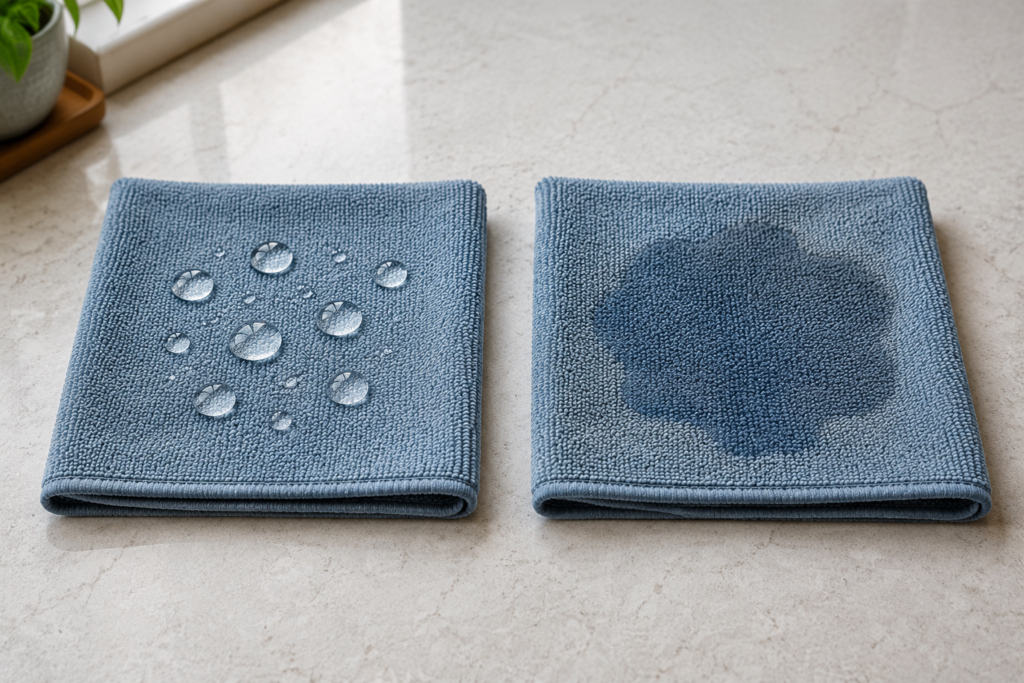
Water forms beads and rolls away
Softener, dryer-sheet, wax, or polish coating
Rewash without additives and use an extra rinse
The cloth feels stiff or produces suds when rinsed
Detergent or mineral residue
Rewash with correctly measured detergent and rinse thoroughly
The cloth feels greasy or leaves smears
Oil, polish, or cleaning-product residue
Separate it and use the maker-approved degreasing instructions
The cloth leaves lint behind
Washing with lint-producing fabrics
Rewash separately from cotton and fleece
The surface looks flattened, shiny, or matted
Heat or physical damage
Inspect for permanent damage before rewashing
A new cloth repels water
Manufacturing residue or product-specific finish
Wash it once according to its care label
Different microfiber designs serve different purposes. A thin glass-polishing cloth will not hold water like a plush drying towel, so compare the cloth with its previous performance or with another cloth of the same type.
How to Restore Microfiber Cloth Absorbency
1. Read the Care Instructions
Check the sewn-in label, packaging, or manufacturer’s website. Confirm:
- The permitted water temperature
- Whether machine washing is allowed
- Whether the cloth may be tumble-dried
- Whether bleach or specialty laundry products are prohibited
- Whether boiling is specifically approved
- Whether the cloth should be washed separately
If the brand or material is unknown, use a conservative approach: warm rather than extremely hot water, no bleach or softener, and air-drying away from direct heat.
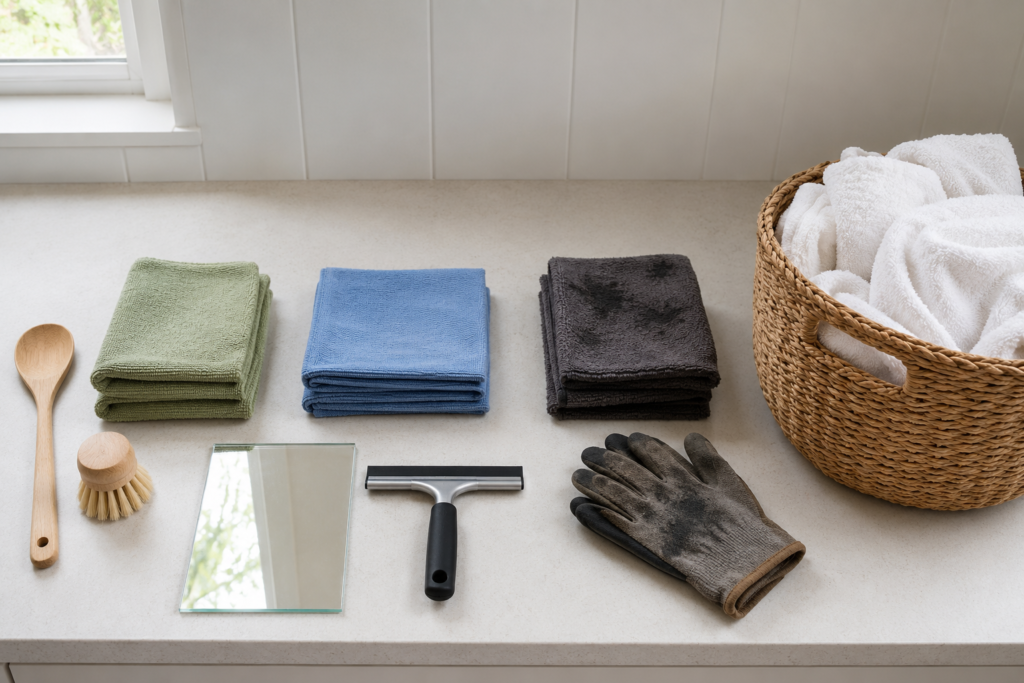
2. Sort the Cloths by Their Previous Use
Separate kitchen grease cloths, bathroom cloths, glass-polishing cloths, automotive towels, and cloths exposed to strong cleaning products.
Do not place a cloth contaminated with solvents, fuel, pesticides, uncured finishes, or another hazardous product into ordinary household laundry without checking that product’s safety and disposal instructions. Washing may spread the contaminant to the appliance and other fabrics.
3. Rinse Out Loose Residue
Rinse the affected cloth under warm water if its care label permits. Gently work the fabric with your hands and watch for:
- Unexpected suds
- Oily water
- Strong fragrance
- Cloudy residue
- Transferred color
Continue until the water becomes clearer. Avoid aggressive scrubbing, twisting, or brushing that could mat the pile.
For a heavily greasy cloth, follow the manufacturer’s degreasing directions. Do not pour hand-dishwashing liquid into a clothes washer; it can produce excessive foam and is not formulated for machine dosing.
4. Rewash Without Softener
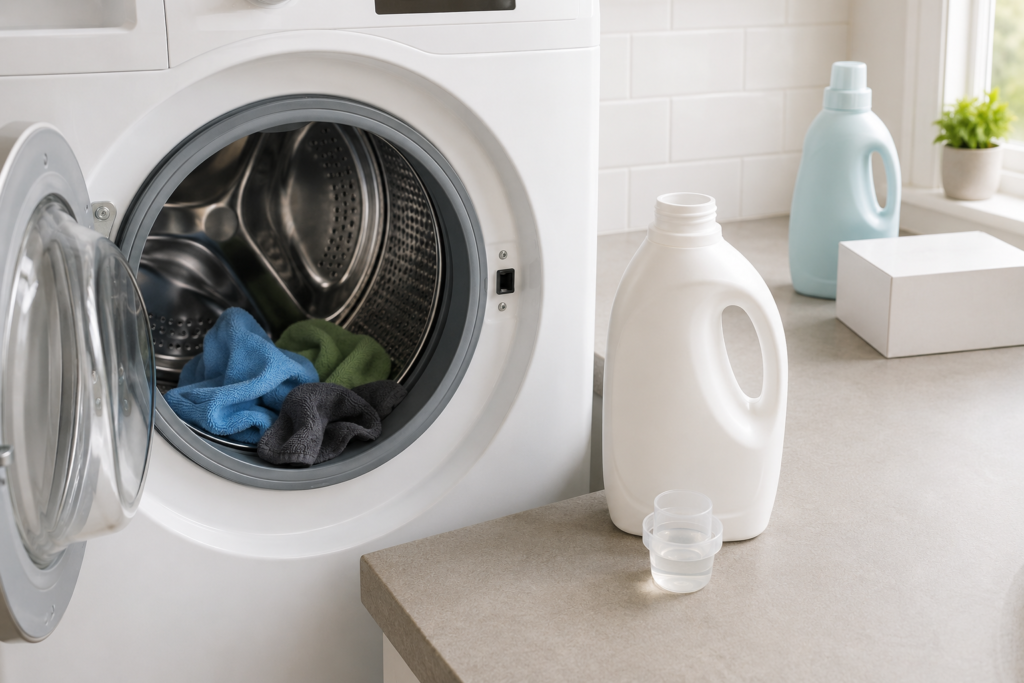
Place the microfiber in a separate or non-linting load. Use a plain laundry detergent that does not contain fabric softener and measure it according to the detergent label, washer type, load size, and soil level.
Select the cloth manufacturer’s approved water temperature. Warm water is a practical default only when the care label permits it. Avoid automatically choosing the hottest setting in an attempt to strip the fibers.
Do not add:
- Liquid fabric softener
- Dryer sheets or in-wash softening sheets
- Chlorine bleach unless specifically approved
- Scent beads
- Wax-containing laundry products
- An improvised combination of household cleaners
5. Add an Extra Rinse When Needed
Use an extra-rinse option if the cloth previously received too much detergent or still feels soapy. The goal is to remove suspended soil and laundry-product residue rather than deposit another substance onto the fibers.
After washing, rinse a small section under clean water. Persistent foam or a slippery feel suggests that more rinsing may be necessary.
6. Dry Without Adding Another Coating
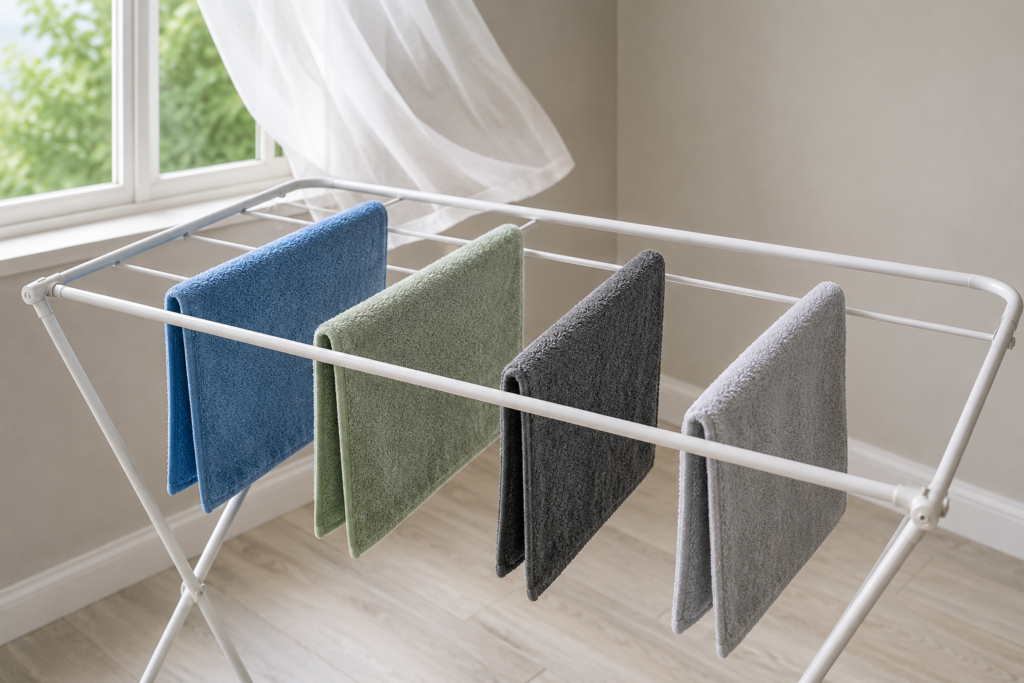
Air-drying is a conservative choice for an unidentified microfiber cloth. Hang or lay it where air can circulate, away from a radiator, heater, or other concentrated heat source.
If the care instructions permit machine drying, use the specified setting—often low heat or no heat—and do not add a dryer sheet. Never iron microfiber unless the manufacturer explicitly allows it.
7. Test the Cloth After It Is Fully Dry
Place the clean, dry cloth on a clean waterproof surface and add a small drop of water. This is a practical household comparison rather than a standardized absorbency test.
A restored cloth should draw in or spread the water more readily than it did before washing. Also test it during its intended task: a glass cloth should wipe without heavy streaking, while a drying towel should pick up water instead of pushing it forward.
If the cloth still repels water, repeat the detergent-free-additive wash and thorough rinse once if residue is still evident. Repeated aggressive stripping is unlikely to repair fibers that have been physically damaged.
Should You Use Vinegar, Baking Soda, or Boiling Water?
These treatments are not universal microfiber restorers.
Diluted vinegar is sometimes used in laundry to address certain residues, but it is not necessary for the basic restoration method. Compatibility may depend on the cloth, washing machine, dyes, and other products already present. Never combine vinegar with chlorine bleach.
Baking soda may affect odor or wash-water conditions, but it does not rebuild damaged fibers or automatically remove wax and softener coatings.
Boiling is appropriate only when the exact manufacturer authorizes it for that particular cloth. Some E-Cloth products include boiling in their care instructions; many other microfiber products do not. When the brand is unknown, do not assume boiling is safe.
When the Cloth May Be Permanently Damaged
Replacement or reassignment to a less demanding cleaning job may be more practical when:
- The fibers appear melted, shiny, flattened, or fused
- The cloth was ironed or exposed to concentrated heat
- The edges are separating or the fabric has thinned substantially
- A strong chemical permanently changed the color or texture
- Grease, wax, or hazardous material remains after approved cleaning
- The cloth continues transferring residue to clean surfaces
- Absorbency does not improve after residue has been thoroughly removed
A stain by itself does not prove that a cloth has stopped working. Evaluate its texture, odor, water pickup, and whether it transfers material during use.
How to Prevent the Problem From Returning
Keep microfiber cloths performing consistently by:
- Skipping fabric softener and dryer sheets
- Measuring detergent for the actual load size
- Separating greasy cloths from polishing and drying cloths
- Keeping microfiber away from lint-producing laundry when recommended
- Rinsing heavily soiled cloths before residue dries
- Air-drying or using only the approved dryer setting
- Storing cloths only after they are completely dry
- Color-coding cloths by cleaning task to reduce cross-contamination
Frequently Asked Questions
Q. Can microfiber recover after fabric softener was used?
A. It often can when the problem is a removable coating. Rewash the cloth promptly with plain detergent, no additional softener, and a thorough rinse. E-Cloth specifically recommends immediate rewashing for its products after accidental softener or dryer-sheet exposure. Results depend on the cloth and how much residue is present.
Q. Why does a new microfiber cloth repel water?
A. A new cloth may contain loose manufacturing fibers or residue and may need laundering before its first use. Follow the original care instructions rather than applying a harsh stripping treatment.
Q. Can microfiber be washed with ordinary bath towels?
A. Recommendations vary. Some manufacturers permit mixed loads, while others prohibit washing with lint-producing cotton. For a cloth that is already linting or performing poorly, washing it separately from cotton is the more useful diagnostic step.
Q. Is hot water necessary to restore absorbency?
A. Not always. Warmer water may help remove some oily soil, but the permitted temperature depends on the product. Use the warmest temperature approved by the cloth’s manufacturer rather than assuming that hotter is better.
Q. Does a stained microfiber cloth need to be replaced?
A. Not necessarily. Discoloration can remain even when the cloth is clean and functional. Replacement is more appropriate when the fabric is physically damaged, remains contaminated, transfers residue, or no longer performs its intended task after proper washing.
Conclusion
Microfiber cloths usually stop absorbing because something is coating or filling the fine spaces that collect water. Start by eliminating fabric softener, excess detergent, lint, and oily residue through a correctly dosed wash and thorough rinse.
Use the cloth’s own care instructions for water temperature and drying. If the fibers are melted, permanently matted, chemically damaged, or still greasy after approved cleaning, laundering cannot restore their original structure.
For ordinary cotton kitchen cloths that develop an odor instead of losing absorbency, see this guide to freshening sour-smelling dishcloths.